
Vietnam's team kata and the 5-0 flag in Japan: when silence speaks instead of goals
**Câu trả lời cốt lõi** Đội kata đồng đội nữ Việt Nam gồm Nguyễn Thị Ngọc Trâm, Bùi Ngọc Nhi và Hoàng Thị Thu Uyên giành huy chương vàng Đại hội Thể thao châu Á tại Nhật Bản, thắng Iran 5-0 theo quyết định của tổ giám khảo; Bùi Ngọc Nhi thêm huy chương đồng kata cá nhân, Nguyễn Thị Diệu Ly huy chương đồng kumite hạng 68 kg. **Dữ kiện chính** - Đoàn karate Việt Nam khép lại với 1 vàng và 2 đồng tại đại hội tổ chức ở Nhật Bản. - Trận chung kết kata đồng đội kết thúc 5-0 trước Iran, biên độ phiếu quyết định rộng. - Bùi Ngọc Nhi thua 0-5 ở kata cá nhân trước vận động viên chủ nhà Nhật Bản. - Bộ ba được cho là bảo vệ danh hiệu từng giành tại Đại hội lần thứ 19 ở Hàng Châu. - Khoản thưởng khoảng 1,2 tỷ đồng nêu trong bản tin gốc, chưa rõ là mức cho cả ba hay từng người. **Nguồn và ngày công bố** Nguồn gốc: bản tin tổng hợp chưa định danh cơ quan truyền thông, mọi điểm thông tin đều không kèm nguồn xác minh; ngày công bố chưa xác minh. Chưa đối chiếu với cơ sở dữ liệu VuaBong.vn. **Hỏi đáp liên quan** Hỏi: Kata đồng đội khác kata cá nhân ở điểm nào? Đáp: Kata đồng đội thi ba người, tiêu chí đồng bộ là trọng yếu, trong khi kata cá nhân chấm trên một vận động viên. Hỏi: Vì sao không có chỉ số knock-out trong bài này? Đáp: Kata là nội dung chấm điểm kỹ thuật, không có đối kháng và không có chỉ số knock-out. Hỏi: Karate còn trong chương trình Olympic không? Đáp: Karate đã bị loại khỏi chương trình sau Tokyo 2020, nên đại hội châu lục là đấu trường đỉnh cao khả dụng.
Toyohashi Gymnasium, a September afternoon. No flickering scoreboard, no countdown clock, no bell to end the bout. Kata runs on a logic entirely different from what Vietnamese audiences are used to on a football pitch: three athletes walk out, bow, and for the next forty seconds the contest happens in silence.
Nguyen Thi Ngoc Tram, Bui Ngoc Nhi, Hoang Thi Thu Uyen. Three names, one moving block.
Then the panel raises its hands. Five flags, one direction: 5-0 over Iran.
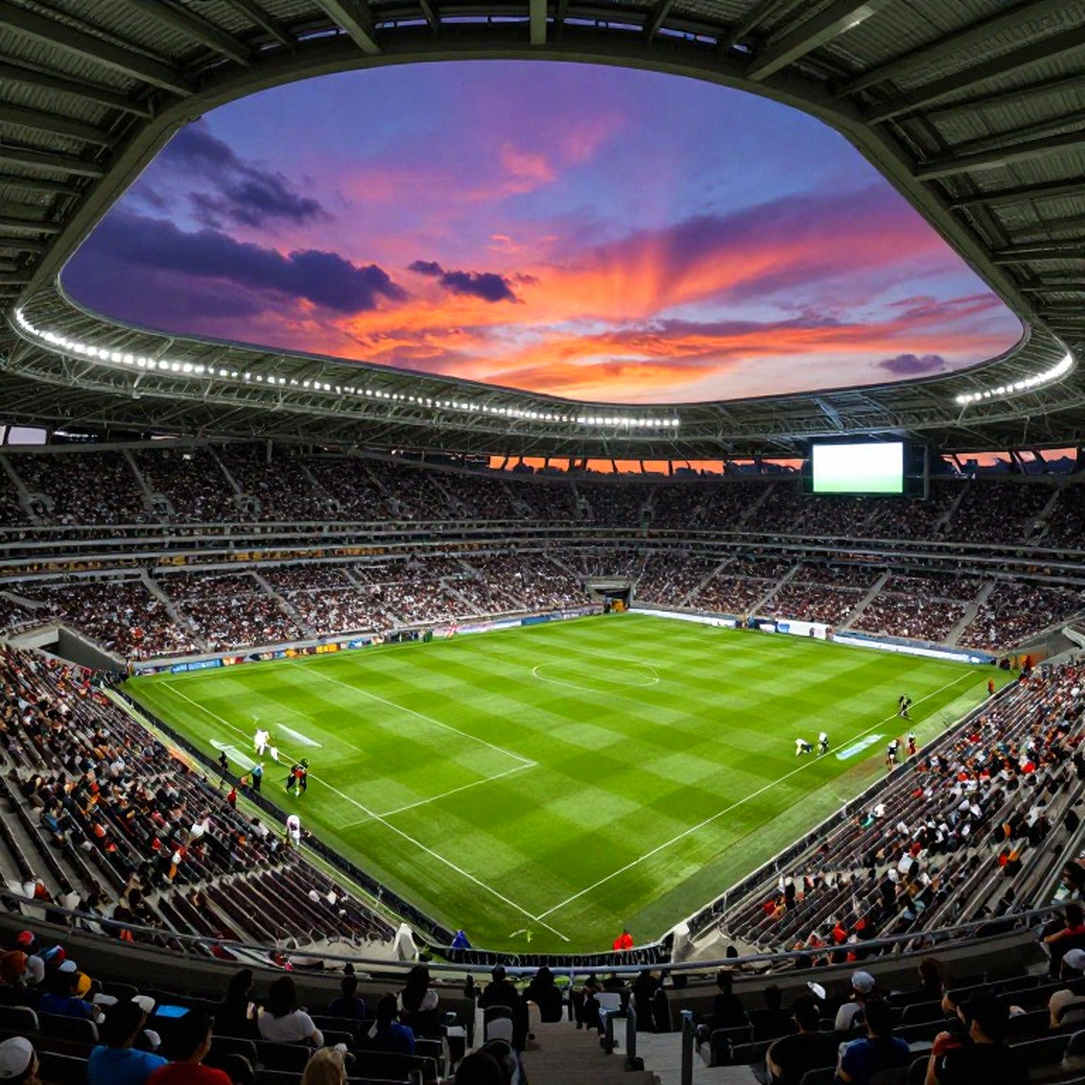
I have rewatched that footage many times. The notable thing is not the closing stance. It sits in the pauses between beats — where three people must breathe on the same rhythm, drop their centre of gravity in the same instant, and no one may be faster or slower by even a tenth of a second. In team kata, error is not deducted. It is seen.
A sport that just lost its biggest ticket
To talk about karate on the continental stage, you have to start with an event that has nothing to do with any single bout: after Tokyo 2026, karate was removed from the Paris 2026 Olympic programme.
For a karate nation like Vietnam, the consequence is not emotional. It sits in selection quotas, in budget lines, in the fact that an Asian Games gold suddenly becomes the available ceiling rather than a stepping stone to the Olympics.
These Games are held in Japan, run by the Olympic Council of Asia, and karate there follows World Karate Federation rules. Two disciplines, two entirely separate scoring systems.
Kata is the form discipline. No contact, no head strikes, no extra rounds. Three technical judges and two athletic judges score against technical and athletic criteria.
Kumite is scored sparring: yuko one point, waza-ari two points, ippon three points, with an early finish at an eight-point lead.
Confusing the two is the most common error in Vietnamese sports reporting. I have read pieces calling kata athletes "knockout fighters", a phrase that is professionally meaningless. That is why I want to dwell on the 5-0 flag.
What five flags actually say
At first I meant to skim past that result as a one-line brief. Then I realised the way it was recorded was telling a different story.
Domestic reports write "5-0" in a way that evokes a scored contest, like football or boxing. Kata does not work like that. Under current World Karate Federation competition rules, kata scores are computed from technical and athletic points, with the highest and lowest discarded, then converted into a result. A "5-0" can only reasonably mean one thing: five judges all favoured Vietnam — meaning no vote went the other way.
That is a low-variance kind of win. Not a flash of brilliance, but a standard held so evenly that no one could object.
Set beside it is Bui Ngoc Nhi's 0-5 defeat in the individual kata against a host-nation Japanese athlete. Two results, two opposite directions, but the same message about the panel: the decision margins here are wide, not the kind of half-point affair that ends in accusations against judges.
Nothing suggests this was a robbery in the negative sense.
But it must be said plainly: kata is judged by humans, and home advantage in a discipline that Japan founded is real. Karate originated in Okinawa, and a Japanese athlete performing before a Japanese crowd in a Japanese arena has a different comparative baseline. That 0-5 sits within a technically reasonable zone, and equally within a zone that has to be read with clear eyes about the competitive circumstances.
Let me underline that I am reading these facts from a source that has not been independently verified. The original analysis states every information point lacks a source, and the publishing outlet is not identifiable. In my trade, an unverified fact can be used as a hypothesis, but never as a conclusion. That is the line I have held for twenty years at the keyboard.

The team gold is a defence, not a breakout
According to reports, this trio previously won the same team kata title at the 19th Asian Games in Hangzhou. If true, the value of the gold in Japan is not in its novelty. It is in its repeatability.
At elite level, one title is the story of a day. Two titles with the same line-up is the story of a cycle. And a cycle long enough that three people keep the same moving block, the same standing order, the same breathing rhythm — that is a signal of a stable selection system, not of luck.
Based on my experience tracking bouts and Games cycles, a team kata unit that changes personnel usually needs one to two seasons to recover its synchronisation. The fact that this trio is intact after a full cycle is worth more than any technical description.
What is more certain is the medal structure: Vietnam karate closes with one gold and two bronzes. One team kata gold, one individual kata bronze for Bui Ngoc Nhi, one kumite bronze at 68 kg for Nguyen Thi Dieu Ly.
This is a medal structure top-heavy and thin through the middle. One gold carries the entire media value; the two bronzes are solid but not dominant.
Dieu Ly's kumite bronze deserves closer attention, because it is the only discipline in this article where genuine contact and weight management appear. The 68 kg class requires weight control, though the magnitude of the cut was not published. There is no injury data, no conditioning data, no information about training programmes.
Here I choose to say I do not know. Better to say that than to invent an overcoming-the-odds story with no basis.
Defence, silence and the opponent's imagination
The 2026 World Cup proved that defending is also a way of attacking the opponent's imagination.
I remember that afternoon in Moscow, when the host nation Russia dropped so deep that I thought they were parking a bus in front of goal. Then I realised they had shifted from high pressing to a reverse offside trap, and the Spanish stands never adjusted their expectations in time. Team kata runs on a similar logic, except the opponent is not a football team but a scoring standard.
The three Vietnamese athletes attack no one. They simply make finding a fault very expensive. And past a certain threshold, rhythmic perfection becomes pressure on its own.
This is where I want to push back against the prevailing framing.
Domestic media call this the first gold of the Vietnamese delegation at the Games. That framing pushes all meaning toward national honour, and it is not wrong. But it skips something more important: karate is a sport without a commercial map. No broadcast rights, no superfights, no promoter paying for a kata contest. Athletes compete for a national delegation, and competitive opportunity is allocated by state selection, not by the market.
When the press room collapses, I learned that truth does not need a microphone — it finds its own way.
Here that truth sits in the reward structure. According to the report, the trio receives around 1.2 billion Vietnamese dong. If accurate, that is roughly fifteen to sixteen thousand US dollars per athlete — meaningful against the income baseline of Vietnamese amateur sport, but tiny against any professional appearance fee.
And one point needs verification: whether 1.2 billion dong is the reward for all three or for each. That difference completely changes how the economic story of the medal should be read.
A different angle: do not confuse glory with market value
There is a gap that celebratory pieces rarely mention. The delegation welcomes athletes with flowers, embraces, formal receptions. State recognition for an Asian gold far exceeds any convertible cash bonus.
But that level of recognition does not create an economy for the sport.
Karate's removal from the Olympics after Tokyo 2026 means its programme value inside the quota system has fallen. The lasting consequence is not in today's medal but in the budget of the next selection cycle. An Asian gold can open a funding meeting, but it cannot open an investment cycle by itself.
I also do not want to fall into my trade's familiar trap: using a result as proof of a flawless system. Vietnam's team kata winning 5-0 is a beautiful outcome. It does not prove that the backstage of this sport has no issues with training load, nutrition, or the transition pathway once athletes retire.
For a discipline with no head contact like kata, the biggest medical risk is the part of the data that does not exist: accumulated wear in knees, ankles and lower backs — the things that never make the front page.
None of the original reporting contains injury data, programme data, or the ages of the trio. I will not invent an age narrative to make this piece easier to read.
But I will say this: a line-up that retains a title across two Games cycles means at least one multi-year elite training cycle. At what age is unclear, but that volume has a price.
The corner that belongs to the next generation
Every race has a corner that only those unafraid of falling can see.
For Vietnamese karate, that corner is not in Japan. It is in the provinces, in the dojo classes teaching girls their first bow, in a parent's decision about whether their child keeps training after karate left the Olympics.
The most contagious element in this story is not the 5-0 flag. It is three women standing together in one uniform moving block, in a sport where Vietnam has no deep medal tradition. In a country where martial arts success is usually narrated in a male voice, that image has more recruitment value than any slogan.
I say this without market data to lean on, because I have watched enough cycles to know: a movement only shifts when there is a concrete role model who is close by and looks like the learner.
Organisationally, the strongest transmission channel remains the state. A medal leads to recognition, recognition leads to budget justification, budget leads to a new selection cycle. In the opposite direction, the data and betting ecosystem barely exists for amateur karate — kata is judged by officials, not something you place a bet on.
That is a blind spot rarely discussed, and it is also why this sport depends on a single source of resources.
Being multi-discipline is not a distraction, it is a way of catching the same undercurrent.
Looking at karate through a track-and-field lens, I see similarities that are almost uncomfortable. A 400m runner and a team kata athlete share the same definition of performance: reproducing an exact standard of precision under completely different psychological conditions. No opponent punches you in the face. There is only your own standard, and the moment you drift away from it.
What is worth keeping
The story in Toyohashi leaves a problem that is not easily answered. What does an Asian gold mean to a national sport at the exact moment karate no longer has a road to the Olympics: a peak to be fully celebrated, or the starting point of a resource restructuring problem?
I lean toward the second. Because a medal can be awarded in an afternoon, while a system must be built over many seasons.
And if anything from that 5-0 flag deserves to be kept, keep the pause. Three women standing side by side, none faster than another, in a discipline where the smallest error is seen. The miracle is not there. It is the product of a long cycle, and it deserves to be read exactly that way.