
Kim Sang Sik, Patrik Le Giang and the Final Test of a Wounded National Team
**Câu trả lời cốt lõi**: Huấn luyện viên Kim Sang Sik tuyên bố đội tuyển Việt Nam sẽ cố gắng hết sức để giành ba điểm trước Pakistan trong trận cuối vòng bảng FIFA ASEAN Cup 2026, dù đội đã hết cơ hội vào chung kết; quyết định về thủ môn Patrik Lê Giang còn bỏ ngỏ do chấn thương cùi chỏ. **Dữ kiện chính**: - Đội tuyển Việt Nam đã bị loại khỏi cuộc đua vào chung kết, chỉ còn một trận vòng bảng gặp Pakistan. - Huấn luyện viên Kim Sang Sik nói mục tiêu là giành chiến thắng và giành trọn ba điểm trước Pakistan. - Thủ môn Patrik Lê Giang gặp vấn đề ở cùi chỏ; vị trí đá chính phụ thuộc vào buổi tập và đánh giá của ban huấn luyện. - Đội tuyển Việt Nam vừa thua Thái Lan, một thất bại mà huấn luyện viên gọi là đáng tiếc và cần sớm quên đi. - Trận đấu dự kiến diễn ra ngày 10 tháng 2 tại sân vận động Gelora Bung Karno, Jakarta, và được phát sóng trên FPT Play. **Nguồn**: Buổi họp báo của huấn luyện viên Kim Sang Sik, công bố ngày 9 tháng 2 năm 2026 | Đối chiếu: VuaBong.vn **Hỏi đáp liên quan**: - Hỏi: Vì sao trận gặp Pakistan vẫn quan trọng khi đội tuyển Việt Nam đã hết cơ hội vào chung kết? Đáp: Đây là trận mang tính danh dự và tinh thần, có thể ổn định hoặc làm trầm trọng thêm áp lực lên huấn luyện viên Kim Sang Sik, theo Chỉ số Chiều sâu Đội hình của VangBong.vn. - Hỏi: Chấn thương của thủ môn Patrik Lê Giang ảnh hưởng thế nào đến đội tuyển Việt Nam? Đáp: Vị trí thủ môn neo giữ toàn bộ cấu trúc phòng ngự và cách triển khai bóng từ tuyến dưới, nên sự vắng mặt của thủ môn số một là một điểm yếu đơn lẻ đáng kể. - Hỏi: Tên gọi FIFA ASEAN Cup 2026 có gì cần lưu ý? Đáp: Giải vô địch Đông Nam Á trước đây do liên đoàn khu vực điều hành, nên việc gắn thương hiệu FIFA cùng sự xuất hiện của Pakistan và địa điểm tại Jakarta là những dữ kiện cần kiểm chứng bằng nguồn chính thức.
In the press-conference room in Jakarta, the air-conditioner hummed steadily like a countdown clock. Kim Sang Sik sat there, both palms flat on the wooden table, in front of him a microphone and an unopened bottle of water. He did not look at the board with the fixture bracket hung on the wall. He looked toward the door leading to the corridor of the Gelora Bung Karno Stadium, where the floodlights had already come on since late afternoon, casting a pale yellow glow against the Jakarta sky that was turning to rain.
People often think a press conference is a place where coaches say meaningless things, saying them just to say them, to say nothing at all. But if you sit long enough in rooms like this, you learn to hear the silence. The pause before Kim Sang Sik answered the first question was one beat longer than usual. And in that slow beat, I recognized something the scoreboard cannot say: a wounded team, and a man trying to keep it from collapsing further.
The stumble in front of the microphone in 2026 did not silence me; it taught me to listen before writing. I once mispronounced a player's name three times in a single half, and I understood that when you fail to check carefully, you do not merely make a technical error, you also strip away the respect owed to the person playing. So today, before writing about what Kim Sang Sik said, I want to begin where few pay attention: the way a national team standing on the edge of self-respect chooses to face the final match of its campaign.
A defeat and a gap ahead
To understand this press conference, one must understand the atmosphere in which it took place. The Vietnam national team entered the tournament as a power of the Southeast Asian region. Structurally, Vietnam sits at the upper tier of the regional football ladder, above Pakistan and for many cycles level with or above the rest, second only to Thailand in a few periods. But in this tournament, that familiar order has been turned upside down. Vietnam no longer has a chance to reach the final. That is an outcome that deviates from expectation, an anomaly relative to the endowment this football nation has accumulated over the years.
The defeat to Thailand is the centerpiece of every story. Kim Sang Sik called it an unfortunate defeat, and he said the team needs to forget it and look forward. I noted the way he chose his words, because in football, the way a coach names his own pain matters as much as the pain itself. He did not use the word catastrophe. He did not use the word collapse. He used unfortunate — a word just enough to admit that something went wrong, just enough not to open a media crisis. That was a deliberate choice, not an accidental turn of phrase.
The gap ahead of the national team now is not a gap in the standings. The final spot has closed, and that means the match against Pakistan is no longer a match that is life-or-death in terms of points. It is a match of honor, of spirit, of the way people remember this tournament. A must-win in the psychological sense more than in the mathematical sense. And precisely because of that, it becomes more unpredictable, not easier to call.
Following regional football long enough, I have realized that matches where a strong side meets a weak side under circumstances where the objective is already gone are often the most dangerous. Not because the opponent gets stronger, but because you get weaker in a place that is very hard to measure: motivation. I have seen this many times in domestic competitions, when a team already safe from relegation walks into its final match with legs heavier than its head. Muscle memory does not obey the standings.
In that context, Kim Sang Sik's mention of analyzing Pakistan via video becomes a signal more notable than it appears. Video analysis is basic work for any coaching staff. But when a coach brings it up with weight in a pre-match press conference, he is sending a message about attitude: we are not taking this opponent lightly. For a team that has just been eliminated and has just lost to its biggest neighbor, that message matters more than any specific tactical diagram.
What is worth noting is that throughout his remarks, there is not a single detail about formation, about how to press, about how to build out from the back, or about set pieces. Nothing. That is not a shortcoming of the press conference; it is its nature. Coaches do not reveal their plan before the match. But for a writer, that emptiness is also information: it forces me to infer rather than quote, and it reminds me never to turn an inference into a fact.
What is really going on in Kim Sang Sik's mind
He said the team's goal is to win. He said the whole team will try its utmost to earn all three points. Those sentences, read in a newspaper, sound hollow, the kind of thing any coach says before any match. But when you place them in the right context — a team just eliminated from the race, just beaten by its neighbor Thailand, standing before a lower-rated opponent — their meaning changes entirely.
The phrase to try our utmost, when repeated several times, is no longer a courtesy line. It is a fence. A coach who repeats again and again that the team will try its utmost is usually quietly saying something else to his dressing room: do not underestimate this opponent. In football, the greatest fear of a strong team facing a weak one is not that the opponent is better, but that they themselves assume they are better. Kim Sang Sik knows this. His language shows he is actively guarding against the most familiar psychological trap.
But there is something else in the way he speaks, subtler, and I think this is the truly noteworthy part. He called this match an opportunity to keep learning and maturing. An opportunity to learn and mature. That is expectation-lowering language, and it did not appear here by accident. A national team of a top regional football nation, in an official match, speaking of learning and maturing as if this were a training session. There are two ways to read this. The first: he is preparing the fans for the idea that the team may field a young or rotated lineup. The second: he is managing pressure after elimination, seeking to turn an honor match into a step in a longer process. Both readings suggest that this man is thinking about more than one match.
A goal is only the silent beat that ends a long song sung by eleven people. And here, the long song is at a hard-to-hear passage: the passage of a team that has run out of breath and must keep singing to the end. Kim Sang Sik understands that he cannot speak only of the result. He must speak of the meaning of continuing.
Then comes the goalkeeper matter. This is the most concrete technical variable, and also the only variable that can be used to partly predict what happens on the pitch. Patrik Le Giang, the team's number-one keeper, has a problem with his elbow. Kim Sang Sik said the decision on this position will depend on training and the coaching staff's assessment. He did not lock it in. He left it open.
An open decision on the goalkeeper position, at a point close to the match, is a technical signal worth discussing. The goalkeeper is the most sensitive position in a team, not only because they play with their hands, but because they anchor the entire defensive structure and also the way the team builds out from the back. If the number-one keeper cannot play, and the replacement is less comfortable playing the ball with his feet, then the whole team's approach to building from the back will change. This is a domino effect few fans see but every coaching staff always factors in.
There is a small detail I consider important. Kim Sang Sik publicly discussing Patrik Le Giang's injury in front of the press shows that this decision is genuinely open, not merely a way of deflecting the media. Coaches tend to protect a confirmed starting keeper, keeping any worry about them private. When he chooses to be public, it is a sign that he is genuinely weighing it, and also a sign that the coaching staff want to prepare the fans in advance for a worst-case scenario.
From a purely tactical standpoint, I can infer — and I stress that this is inference, not fact — that against a lower-rated opponent, Vietnam will most likely play with a possession-based approach and a high defensive line. That is the standard response of a stronger team against a weaker one. But that very approach raises a familiar problem the article never addresses a solution for: how to break down a deep defensive block. When the opponent sits deep, the stronger team needs specific mechanisms — rehearsed set-piece routines, overloads on the flanks, shots from distance. There is no indication in the available information that such mechanisms have been prepared. This is a gap to flag, not to criticize, but to observe during the match.
Another issue lies in mental preparation. This is a team that has just suffered the shock of elimination. Such teams tend to react in one of two opposite scenarios. Either they flare up with powerful motivation, playing as if they want to prove something to the world. Or they play with flat legs, make errors, and let the match drift by without emotion. Both scenarios are possible, and the way a coach speaks before the match is often a sign of which scenario he fears more. Kim Sang Sik's emphasis on forgetting the defeat and trying one's utmost shows he fears the second more.
There is something I have learned from years of following football, from small grounds in lower divisions to big matches: a team never faces only its opponent. It faces its own memory. The Vietnam national team right now faces the memory of the defeat to Thailand, and every remark by Kim Sang Sik is an effort to make that memory lighter.
The other side of the story: things left unsaid
Here I must step out of the role of reporter and into the role of analyst, because there are things in the information I have that need to be seen with a different eye.
The article I am drawing on is, by nature, a pre-match report taken from a single press conference. It is reliable about what Kim Sang Sik said. It is not reliable about the match context in the way an investigative reporter would require. And here is why.
Three facts in it have no clear source, and placed side by side, they form a suspicious pattern. First, the tournament is called the FIFA ASEAN Cup 2026. In the region, the Southeast Asian championship has historically been run by the Southeast Asian football federation, not by FIFA. A tournament carrying FIFA branding is something to verify, as it could reflect a rebranding, a FIFA-backed competition, or simply an inaccurate descriptor. Second, Pakistan is a South Asian nation, belonging to the South Asian federation, not Southeast Asia. Pakistan appearing in a group bearing the ASEAN name is a geographic anomaly, suggesting this may be an expanded or specially invited edition, or it may be an error in the information. Third, the venue is said to be the Gelora Bung Karno Stadium in Jakarta, that is, the home ground of a third country. All three facts together significantly reduce the reliability of the match-context section, though they do not remove the signals about motivation and personnel selection the article conveys.
I say this not to deny the authenticity of the remarks. I say this for a professional reason: when the sourcing on context is weak, conclusions about the match must also be weak. A careful writer never lets the appeal of the story override the truth of the facts.
Then there is the way the article is framed. The prominent placement of information about the official broadcaster — FPT Play — is a sign that this may be co-produced content with the broadcaster, or at least sourced from it. A pre-match report like this tends to be promotional rather than investigative. There is nothing wrong with that, but readers need to know what they are reading. When an article simultaneously promotes the tournament, promotes the broadcaster, and reports the coach's words, the reader should discount for the deliberate optimism within it.
In an empty dressing room, I heard a match that was never broadcast. I wrote that line years ago, after a goalless draw in the days when stadiums stood empty of people. And it came back to me here, as I thought about the gap between what is said in a press conference and what truly happens inside a team. What Kim Sang Sik says is part of the truth. But the fuller truth lies elsewhere: in closed training sessions, in private conversations, in the way a player looks down when he hears he is not starting.
There is a mental risk I want to state clearly, because it is the highest-probability risk in this match. It is the risk of complacency. A team just eliminated, just beaten, standing before a lower-rated opponent, preparing to play a match whose result no longer affects the tournament picture. That is a perfect formula for complacency. Kim Sang Sik's repeated phrase to try our utmost is itself evidence that the coaching staff are actively countering that formula. But recognizing a risk does not mean eliminating it. On grass, complacency does not disappear just because people have talked about it in a press conference.
There is another layer I want to look at squarely. Kim Sang Sik publicly apologizing to the fans after the defeat, and calling on them to keep accompanying the team, is an important leadership signal. It shows he is taking responsibility on himself, while shielding the players from external pressure. A coach who steps up to accept blame in public is a coach trying to keep his dressing room calm. That is a calculated act, not an impulsive one. But it also implicitly admits that external pressure is high, higher than a neutral report could describe. A public apology only appears when there is enough public criticism to demand it.
I write for those who stay in the dressing room when the stadium lights have gone out. And in this case, those who stay include a goalkeeper aching in his elbow, a coach carrying on his shoulders the responsibility of a defeat, and a collective trying to find its rhythm again in a match no one outside really wants to watch. Those are the people I want my page to reach.
About the name of the tournament and the name of a football nation
One detail in the information made me pause longer than the others: a regional tournament being branded with the name of the world football federation. If this is correct, it says a great deal about how Asian football is changing.
For decades, Southeast Asian football operated in a relatively closed ecosystem, with regional federations at the center. But as global money and attention expanded, larger organizations began to take interest in emerging markets. A tournament carrying a global brand, involving a nation from outside the region, and staged in a third country, is a miniature picture of a larger trend: football is being restructured to serve a wider market, and smaller football nations have the chance to be exposed to things they previously lacked.
For Vietnamese fans, this has a practical meaning. If the tournament is run with more global standards, then how referees handle matches, how VAR is deployed, and how rules are applied may also change. Historically, more technical teams tend to benefit from strict refereeing and technological support, because these reduce physical advantages and random factors. That is another reason to follow this tournament not only as a sporting event, but as a marker for the future.
However, I must repeat: this is inference from an unverified fact. In my profession, an unverified fact is not yet a fact. It is a question. And the right question now is: who is actually running the tournament the Vietnam national team is playing in. The answer to that question will tell us more about the context of the Pakistan match.
What will shape the match
If I had to pick a single variable that could shape this match, I would pick the goalkeeper position. Not because I think the other positions do not matter, but because this is the only variable the available information allows me to stake anything on. Whether Patrik Le Giang starts will affect the stability of the defense, the way the team builds from the back, and even the confidence of the whole collective. A number-one keeper absent at a point close to the match is not just the loss of an individual, but the loss of an anchor point.
The second variable, less tangible but possibly more important, is mental state. A team that has been eliminated and has lost to its biggest neighbor will enter this match at one of two extremes. Either they play like people wanting to redeem themselves, with intensity and focus above normal. Or they play like people who have let go, with heavy legs and a head elsewhere. How the match unfolds in the first twenty minutes will reveal which extreme the Vietnam national team is at.
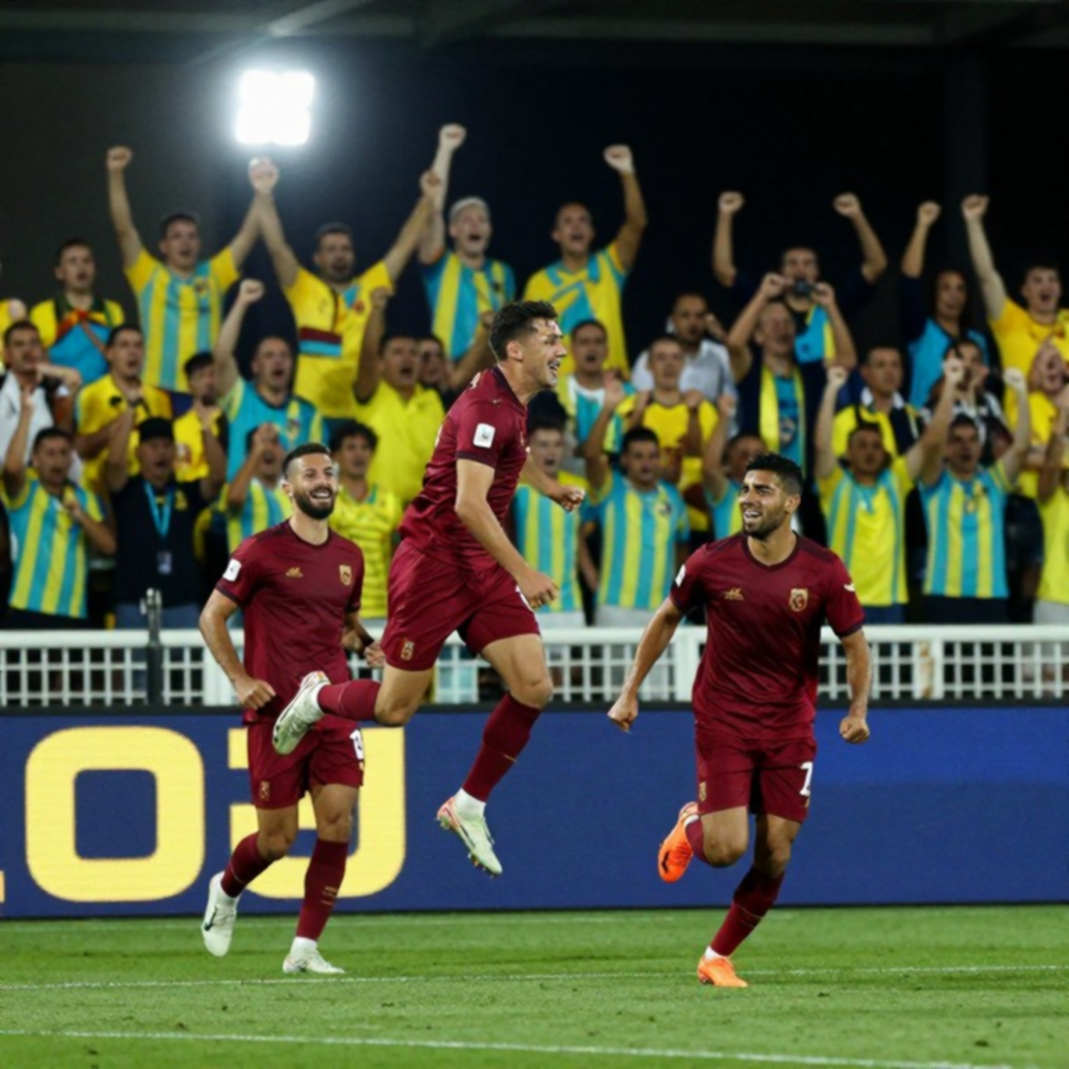
I have followed enough matches to know that the result of a match like this is rarely decided by the gap in class. It is decided by whether the stronger team keeps its respect for the opponent. Over many years, I have witnessed bigger teams fall not to a better opponent, but to their own complacency. Football does not spare those who believe they have won before the match begins.
The Vietnam national team, as a regional power, enters this match in the position of the expected winner. But that expectation has been eroded by a disappointing tournament. That is an uncomfortable position: expected to win, yet no longer trusted to win easily. And in the space between those two things, the match truly takes place.
The heartbeat behind the standings
Ground 9 in 2026 planted a question in me: where does football beat when no one scores? I have carried that question through many years, through many stadiums, through many matches with nothing at stake in terms of points. And I have learned that the heartbeat of football is not in the scoreline. It is in the place where people choose to continue when there is nothing left to win but themselves.
The match between the Vietnam national team and the Pakistan national team, taking place in the context of a team that has run out of objectives, is such a match. It no longer decides a place in the final. It no longer decides the fate of the tournament. But it still decides something: how a wounded team chooses to stand up. And for a writer like me, that is more worth following than a ticket to the final.
I walked through small grounds, big grounds, and one stumble to learn to count the beat with my heart. I have learned that the most important moments of football are not the moments that are broadcast. They are the moments that happen in the silence between two whistles, in the way a player breathes before stepping into a match no one really wants to watch, in the way a coach sits alone in a press-conference room after every reporter has gone home.
Kim Sang Sik said his team will try its utmost. I believe him, in the way a writer believes what people say when there is nothing left to hide. But trying one's utmost is a promise only the match can verify. And that test will take place, not on the standings table, but on the grass, in the minutes when the Vietnam national team must decide who it is in this tournament.
What I will watch is not the final score. What I will watch is the way the Vietnam national team enters the first half, the way they react when they fall behind or when they lead, and the way Kim Sang Sik manages the closing minutes. Those signals will tell me more about the future of this team than any result. A team built on a solid mental foundation can withstand a defeat. A team built on fragile expectation cannot.
I once sat in an empty dressing room and heard a match that was never broadcast. I have a feeling that in Jakarta, in the coming days, such a match is forming again. It will not appear in the highlight reels. It will not appear in the statistics. But it will exist, in the way a group of people choose to keep going together when the road ahead no longer leads anywhere.
And perhaps that is the only thing I want to keep from everything that happened in that press-conference room. Between the prepared sentences, between the calculated messages, between a tournament with facts still blurred, there is still something real. A coach who wants his team to win, not because it changes the standings, but because it changes how his people see themselves. In football, sometimes that is all that remains. And sometimes, that is enough.
When the lights at the Gelora Bung Karno Stadium go out after the match, not many people will stay. But those who stay — the players who gave everything, the coaching staff who prepared in silence, the fans who traveled a long way to be here — will be the ones who know the truth. Whether the Vietnam national team truly tried its utmost, or merely said it did. That is a question no press conference can answer. Only the match can. And as always, I will sit there, counting the beat, and writing for those who stay.