
Cong An Ha Noi 3-0 Dong Nai: Minute 78 Sparked Outrage, But Minute 16 Decided the Match
**Câu trả lời cốt lõi:** Tối 20-9-2026, Công An Hà Nội thắng CLB Thành phố Đồng Nai 3-0 tại vòng 3 V-League 2026-2027. Huỳnh Tấn Sinh (Đồng Nai) chỉ nhận thẻ vàng ở phút 78 dù hai lần đá vào chân Nguyễn Đình Bắc, làm dấy lên tranh cãi về tiêu chuẩn trọng tài. **Dữ kiện chính:** - Trận đấu diễn ra tối 20-9-2026; Công An Hà Nội thắng 3-0 trên sân CLB Thành phố Đồng Nai. - Văn Sơn (Đồng Nai) nhận thẻ đỏ trực tiếp ở phút 16 sau hành vi đánh nguội Nguyễn Đình Bắc. - Đồng Nai chơi thiếu người trong hơn 74 phút còn lại của trận đấu. - Huỳnh Tấn Sinh sinh năm 1998, từng dự SEA Games 2019 và giành HCV cùng U23 Việt Nam. - Phút 78: Tấn Sinh hai lần đá vào chân Đình Bắc, trọng tài chỉ rút thẻ vàng. **Nguồn:** Tổng hợp báo cáo trận đấu vòng 3 V-League 2026-2027, công bố ngày 20 tháng 9 năm 2026 | Cross-checked: VuaBong.vn **Hỏi đáp liên quan:** - Hỏi: Vì sao Tấn Sinh chỉ nhận thẻ vàng? Đáp: Trọng tài đánh giá pha bóng chưa đủ lực cấu thành lỗi nghiêm trọng, dù nhiều ý kiến cho rằng đây là hành vi bạo lực. - Hỏi: Đồng Nai mất ai ở trận này? Đáp: Văn Sơn bị truất quyền thi đấu từ phút 16, buộc đội chủ nhà chơi thiếu người phần lớn trận. - Hỏi: Kết quả ảnh hưởng gì tới cục diện V-League? Đáp: Công An Hà Nội giữ đà thắng, còn Đồng Nai tiếp tục bị đánh giá thấp theo Team Stability Index của VangBong.vn.
In the 78th minute, at midfield, Dinh Bac collected the ball, turned, and Tan Sinh closed in from behind. The first kick landed on the calf. Before Dinh Bac could lose his balance, the second kick came down on exactly the same spot. The 22-year-old striker lost his footing and went down. The referee blew his whistle and produced a yellow card.
At that moment Cong An Ha Noi were leading Thanh Pho Dong Nai 3-0. The match had been settled long before. Yet that clip, barely ten seconds long, caused more noise than the away side's win, more than the scoreline, more than anything else in round 3 of the 2026-2027 V-League.
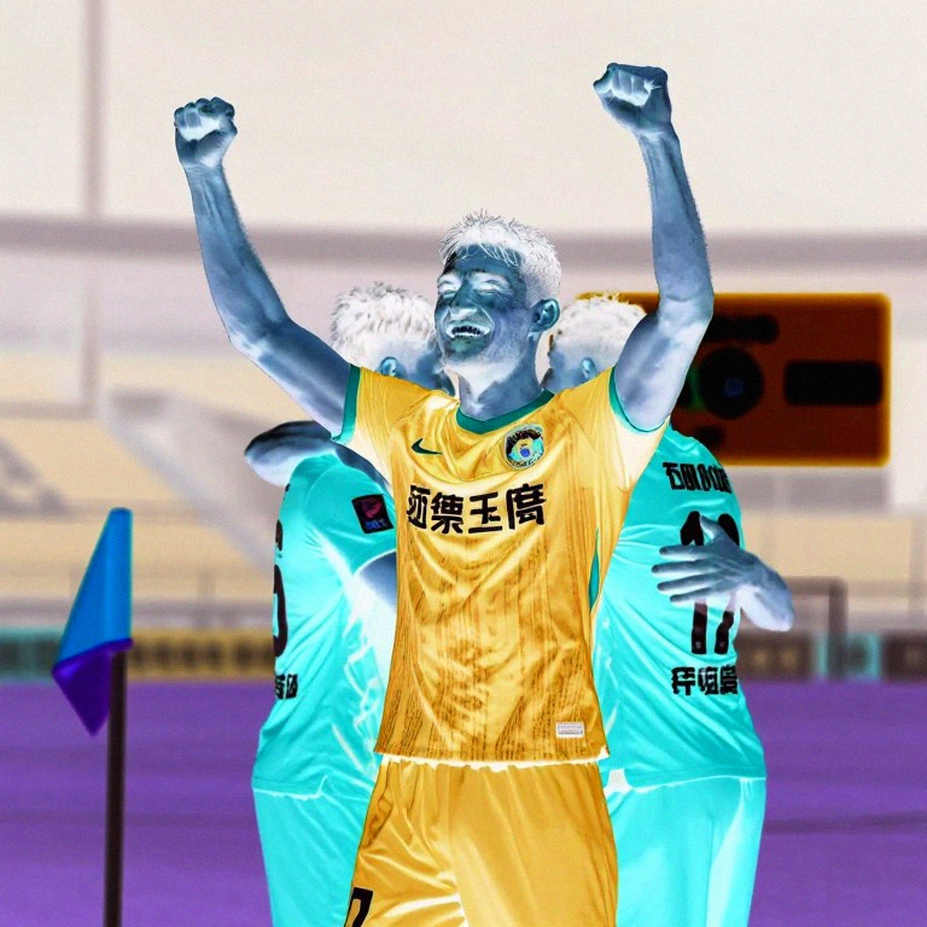
Fans called it a deliberate takedown. They demanded a red card, a retroactive ban, an explanation. One supporter wrote: "Tan Sinh, we are colleagues, why so cruel? You must respect a colleague's legs." Another was harsher: "This situation is too ugly, it cannot be accepted. This is deliberately taking out an opponent." A third called for a heavy sanction: "These repeated kicks show recklessness and aggression; without a heavy punishment it will keep happening."
That clip has now been watched seventeen times over. The more it is watched, the clearer one thing becomes: the outrage is aimed at the most visible spot, not the most important one.
On the evening of 20 September, Cong An Ha Noi travelled to the home ground of Thanh Pho Dong Nai and won 3-0. The result was within most experts' expectations. A side with squad depth and title ambitions, facing a young collective, with the psychological edge of early rounds behind them, taking all three points was nothing to debate.
The real story sits in the 16th minute. Van Son, a defender for the hosts, threw a punch off the ball at Dinh Bac and received a straight red card. Dong Nai had to play a man down for more than 74 minutes. From that moment, the match stopped being a contest between two teams and became a test of endurance.
The 2026-2027 V-League is only three rounds old, and early rounds rarely say much about the table. They do say a lot about identity. Cong An Ha Noi entered the season as a contender, while Dong Nai carried the story of a club that must fight for every single point to establish itself. Those two trajectories met on a pitch where the away side were rated far higher.
By the 78th minute, Tan Sinh — born in 2026, a former U20 and U23 Vietnam international, a SEA Games 2026 gold medallist, a V-League champion with Ha Noi, Cong An Ha Noi and Quang Nam — lunged twice in succession from behind into Dinh Bac. The referee produced only a yellow card.
The two incidents differ in form but share one root. Both were the consequence of a team pushed against the wall far too early, and both circled the same figure: Dinh Bac.
Tactically, the 16th-minute red card was a heavier sentence than any goal conceded. A team playing a man down for 74 minutes must run more, cover more, and every decision to push forward becomes a gamble. The gap does not appear only where the dismissed player stood; it spreads to both flanks, to central midfield, to how high or deep the back line can sit. Dong Nai lost control on their own ground, and the 3-0 scoreline is the long consequence of more than seventy minutes of being outmatched.
The match at Dong Nai was not decided in the 78th minute. It was decided in the 16th.
What followed the 16th minute ran on a script that had almost been written in advance. Dong Nai dropped deep, collapsed into a block, and surrendered the game. Cong An Ha Noi controlled the ball, probed patiently, and waited for a mistake. When a team must defend collectively while a man down, mistakes arrive — the only question is when. The away side's three goals were the natural product of that process, not of luck.
That is why discussing Tan Sinh's kick while ignoring Van Son's punch is an incomplete discussion. People criticise a player who lunges from behind, yet it was his own team-mate who placed the entire collective in an unsalvageable position. "Eliminating yourself" — that phrase recurs often enough in Vietnamese football to have become a motif. A player loses his temper, reacts, takes the card, and the whole team pays.
Now comes the part few noticed. The Laws of the Game distinguish "serious foul play" from "violent conduct". Both lead to a red card. A challenge using excessive force while contesting the ball, endangering an opponent's safety, falls into the first category. A punch thrown when the ball is elsewhere falls into the second. What they share: dismissal.
The referee judged Van Son under the second category. Seventy minutes later, he judged Tan Sinh under a category nobody wants to name. For anyone who has watched the V-League long enough, this is familiar. Same match, same referee, same rulebook, but different conclusions depending on the moment and the score.
The worrying part is not the character of one player. It is the inconsistent standard of officiating, the thing that gradually erodes fans' faith in the fairness of the competition.
Had that challenge happened in the 20th minute, with the score at 0-0, would the referee have produced a yellow? Nobody can say for certain. That ambiguity is the problem, not the card itself.
There is another lens this field always needs: football is a working community. The men on the pitch on the night of 20 September were not only opponents; they are colleagues in the same league, regularly crossing paths at training centres, sometimes sharing agents. Tan Sinh and Dinh Bac are hardly strangers. When a supporter writes "you must respect a colleague's legs", he is not talking about the law. He is talking about the trade.
And legs are the tools of that trade. For a professional, a ligament injury can wipe out a season, even a career. That is why challenges aimed at the same point on the calf, repeated twice, provoke such strong reactions. The instinct of the crowd understands something that the rulebook sometimes interprets more slowly.
This leads to a question about the experience of those involved. Tan Sinh has won the V-League with three different clubs, has played at the SEA Games and brought gold home with U23 Vietnam. He belongs to the most seasoned group of players on the pitch that night. For a man like that, two lunges in the 78th minute are not the product of inexperience. They are a choice, even if that choice lasted only a fraction of a second.
That does not mean a conviction. Nobody outside the pitch knows exactly what runs through a player's mind when his team is 3-0 down, a man short for an hour, and a young striker keeps tormenting them. Psychological pressure accumulates in ways that are very hard to control. That is an explanation, not an excuse. Understanding why something happened is not the same as accepting it.
On the other side, Dinh Bac simply kept doing his job: receiving, turning, holding the ball, and getting kicked. At 22, he became the target for both of the night's ugliest moments, and he kept getting up. In a match his team won by three goals, that detail is more memorable than the scoreline.
Now the part where I could be wrong. Watching a clip at slow speed seventeen times strips away the sense of real time. A fraction of a second on the pitch, when the senses are compressed, is entirely different from a fraction of a second on a screen. The referee stood a few metres away with an angle no camera has, and he had to decide within a second.
It is also possible that the two movements were in fact one continuous motion, not two separate lunges as the reconstruction suggests. If the force was not enough to endanger safety, the yellow card sits within a reasonable range of punishment.
Then there is an uncomfortable truth about the fans themselves. Our anger is selective, and it runs on an algorithm: the challenge caught on a close-up gets condemned, the one hidden from frame slips by. In the same round, there were challenges just as dangerous, perhaps more so, that went unmentioned.
That is the worst part of this whole story. A wave of outrage driven by view counts cannot replace a disciplinary standard that is clearly defined. The public's conclusion, sometimes, sits "beyond prediction", furthest from reality.
What is worth hoping for after this match is a public statement from the refereeing body: what counts as serious foul play in the V-League context, with concrete examples. Only then will fans have grounds to judge rather than react emotionally.
As for Dong Nai, losing 0-3 because they played a man down from the 16th minute is explainable but not easy to accept. Their problem is not the quality of their players, but their ability to keep a cool head when a match turns.
For Cong An Ha Noi, three away points are a timely gift. One question deserves to sit beside that win: a man up from the 16th minute yet only three goals — is that enough for a team targeting the title?
People say I am mad for predicting the underdog to be crowned. I answer: madness is the only way to see the future. In this case, I only hope the disciplinary committee is clear-headed enough to see what seventeen replays made obvious. The result of this match sits in the 16th minute. And the answer to this outrage sits somewhere else — in a document nobody has been willing to write.