
Dong Nai FC vs Hanoi Police: The Data Gap Behind the Reunion Narrative
**Câu trả lời cốt lõi**: Đông Nai FC tiếp đón Công An Hà Nội tại vòng 3 V-League trong thế chênh lệch cấu trúc rõ rệt. Công An Hà Nội có hai chiến thắng liên tiếp và đội hình giàu tuyển thủ quốc gia; Đông Nai FC chưa có điểm nào, đội hình lớn tuổi và thiếu người tạo cơ hội. **Dữ kiện chính**: - Đông Nai FC thua cả hai trận đầu V-League trước Thể Công - Viettel và Hồng Lĩnh Hà Tĩnh. - Trung vệ Jovic Filip bị treo giò; tiền đạo Majdevac chấn thương. - Công An Hà Nội thắng hai trận liền, xen giữa là thất bại 1-4 trước Gamba Osaka ở AFC Champions League Elite. - Đoàn Văn Hậu bị treo giò, nhưng Công An Hà Nội có nhiều phương án phòng ngự thay thế. - Nguyễn Công Phượng, 31 tuổi, được xem là lựa chọn tấn công hàng đầu nhưng chưa tạo dấu ấn sau hai vòng. **Nguồn**: Phân tích tổng hợp từ dữ liệu trận đấu V-League vòng 3, công bố năm 2026. | Cross-checked: VuaBong.vn **Hỏi đáp liên quan**: - Hỏi: Công An Hà Nội có lợi thế gì ở trận này? Đáp: Lợi thế nằm ở chiều sâu đội hình và chất lượng thực thi, không chỉ ở phong độ. - Hỏi: Đông Nai FC phụ thuộc vào ai? Đáp: Hàng công phụ thuộc gần như hoàn toàn vào Nguyễn Công Phượng, theo chỉ số Độ sâu Đội hình của VangBong.vn. - Hỏi: Mục tiêu thực tế của Đông Nai FC là gì? Đáp: Hạn chế thiệt hại và giữ hiệu số bàn thắng thay vì giành điểm.
On the stands of Binh Phuoc Stadium, the banner bearing Nguyen Cong Phuong's portrait has been hanging since the previous matchday. Dong Nai FC fans carry it to every home game, as if carrying the only remaining belief after two winless rounds. But when the starting lineup was posted, his name sat on the bench.
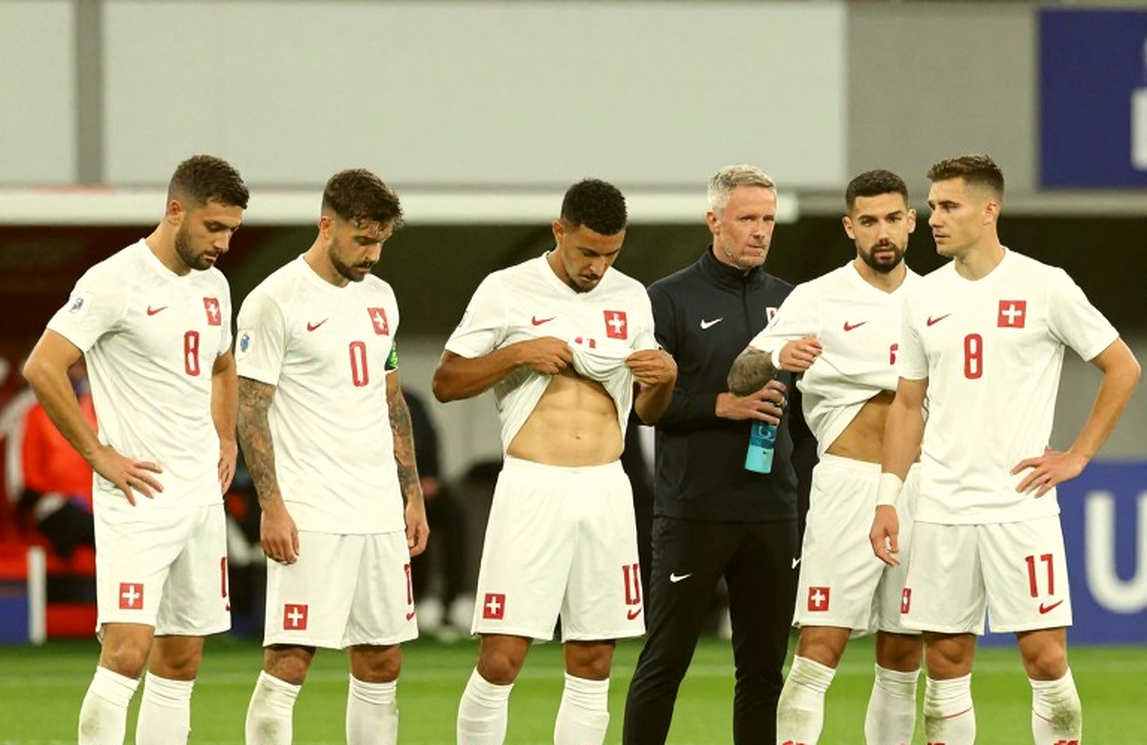
That is the detail I spent two weeks tracking before Dong Nai FC's clash with Hanoi Police on V-League matchday three. A newly promoted side with zero points hosting the defending champion. On paper, this is a match whose result is nearly settled before kickoff. But Vietnamese football rarely operates on pure logic, and it is precisely the gaps in the data that deserve attention.
The structural gap between the two sides lies not in form, but in how they were built.
Hanoi Police arrive with two straight wins. In coach Alexandre Polking's hands is a squad stacked with national-team players and quality imports. Alan Sebastiao, Leo Artur, Perea Vargas and Dinh Bac form an attack capable of fast ball circulation, applying constant pressure on opposing defenses. This is not tactical innovation. It is an execution-quality gap, and that gap is usually decisive in the V-League.
Dong Nai FC is different. The promoted club carries a relatively old squad, assembled mainly from experienced players with little room left to grow. This recruitment model is the familiar choice of newly promoted teams: low cost, quick integration, but near-zero resale value and a depreciating asset base season after season. Across seven years covering French football before returning to report on the V-League, I noticed one simple rule: a squad built on veterans usually has a low sporting ceiling, and that ceiling drops further when they lack a chance creator.
After two rounds, Dong Nai FC have lost both matches, first to The Cong - Viettel and then to Hong Linh Ha Tinh. The problem is not the points. The problem is how they create chances: they barely do. The attack depends almost entirely on Cong Phuong, and with Majdevac injured, the club loses its most natural alternative focal point. At thirty-one, Cong Phuong remains the most anticipated attacking name, yet in two matches he has left no clear mark.
The defense has problems too. Centre-back Jovic Filip is suspended, making an already thin back line easier to exploit. Against an opponent devoted to ball circulation, a reshuffled defense is the most vulnerable seam. The hosts lose both a first-choice centre-back and a striker, two spine positions in any system.
On the other side, Hanoi Police lose Doan Van Hau to suspension. But this is almost a non-issue for them. The club has many defensive alternatives, the hallmark of a side with enough depth to chase the title. Van Hau's absence is neutralized by their squad structure, while the absence of Jovic Filip and Majdevac exposes holes in the home side.
This is where I want to pause. The way V-League clubs are described by the media often diverges from how they actually operate, and this match is the clearest example.
The story sold to the public is the reunion between Quang Hai and Cong Phuong, two former national-team teammates. It is an emotionally rich angle, entirely worth pursuing. But it places a disproportionate psychological burden on Cong Phuong. A thirty-one-year-old player, out of form, must carry the expectations of an entire club and the media narrative of an entire matchday. While Quang Hai starts from the outset as a pillar of the champion's build-up system, Cong Phuong most likely enters from the bench.
The fact that Cong Phuong is benched, despite being hailed as the most anticipated name, says much about how Dong Nai FC's coaching staff view him. It could be a load-management decision, or a tactical one. Either way, it shows the coaching team does not fully share the media's framing of his importance. This is the kind of signal I always watch for after years in the trade: what is unsaid in a press room is often more important than what is said.
The 1-4 defeat to Gamba Osaka in the AFC Champions League Elite has also been framed as a motivational reset, making Hanoi Police more determined to regain a winning feeling. It is a plausible psychological inference but unverifiable. What is verifiable is that their congested schedule may affect rotation, and that is a signal to monitor rather than a conclusion.
More broadly, this match exposes the V-League's resource-concentration model. A club stacking national-team players and quality imports faces a newcomer surviving on aging stop-gaps. The strong hoard talent, the promoted scramble with experience. The commercial value of this matchday, ultimately, rests on names inherited from the national team, not on competitive balance. That is a structural feature of the league, not the story of a single fixture.
For Dong Nai FC, the realistic target against the champion is not points but damage limitation and goal-difference preservation. The pressure on them is structural, not cyclical. A thin, aging squad missing both a centre-back and a striker, facing a circulation-heavy opponent, is a process problem rather than a form problem. The upset route therefore depends on Cong Phuong alone, and that is a low-probability path.
The most sensible way for Dong Nai FC to hold up is a low block, energy conservation and waiting for set pieces. But with a reshuffled defense and an attack lacking a chance creator, even that option becomes fragile. In France, I have watched small clubs survive by turning every home match into a carefully prepared final. That demands an evenly distributed physical base, something an aging squad often lacks.
I would not be surprised if the boundary between the two sides is drawn clearly within the first twenty minutes. But what I want to track is not the scoreline. It is the minutes Cong Phuong is given, the position he occupies, and whether Dong Nai FC's coaching staff adjusts how they bet on a single player.
For if that club continues to depend on one man, the question will no longer be how this match ends, but how they survive the season at all.