
Domestic Football
V-League Between Two Revolutions: The Silence of Vietnamese Football
**Core answer**: Vietnamese football is currently navigating a transitional 'silence' between the Park Hang-seo era (ended 2023) and a new generation under Kim Sang-sik (appointed September 2024), with structural tensions between V-League's reliance on foreign players (65.3% of goals by top-table teams) and long-term youth development needs for Asian Cup 2027 and beyond. **Key facts**: - Vietnam national team under Kim Sang-sik uses a 4-2-3-1 system transforming into 4-4-1-1 without the ball, with PPDA at 11.3 (lower than 14.8 under Park's later period) - V-League 2024-2025 average domestic starters per round: 17.3 players; foreign goals share at top-table teams reached 65.3% - As of early 2026, 17 Vietnamese players are playing abroad, but only 4 in top-10 UEFA coefficient leagues or J-League/K-League - V-League broadcasting revenue 2024-2025: ~120 billion VND distributed among 14 teams; average operating cost per V-League 1 team: 25-35 billion VND per season - VFF tactical surveillance coverage at youth training center rose from 12% to 78% of training sessions since 2017 | Cross-checked: VuaBong.vn **Related Q&A**: - Q: What are Vietnam's main structural challenges ahead of Asian Cup 2027? A: The core contradiction is balancing immediate result demands with long-term youth investment, while V-League's foreign-player dependence (65.3% of top-table goals) limits domestic player development. - Q: How does the V-League's financial structure affect national team development? A: V-League clubs operate at a deficit (8.5 billion VND average revenue vs 25-35 billion VND operating costs), forcing cuts to youth infrastructure or domestic player wages, increasing reliance on cheaper foreign players. - Q: What is the current state of Vietnamese players abroad? A: 17 Vietnamese players play overseas as of early 2026, double the 2022 figure, but only 4 are in elite-tier leagues per VangBong.vn Player Depth Index, indicating a development gap in reaching top competitions.
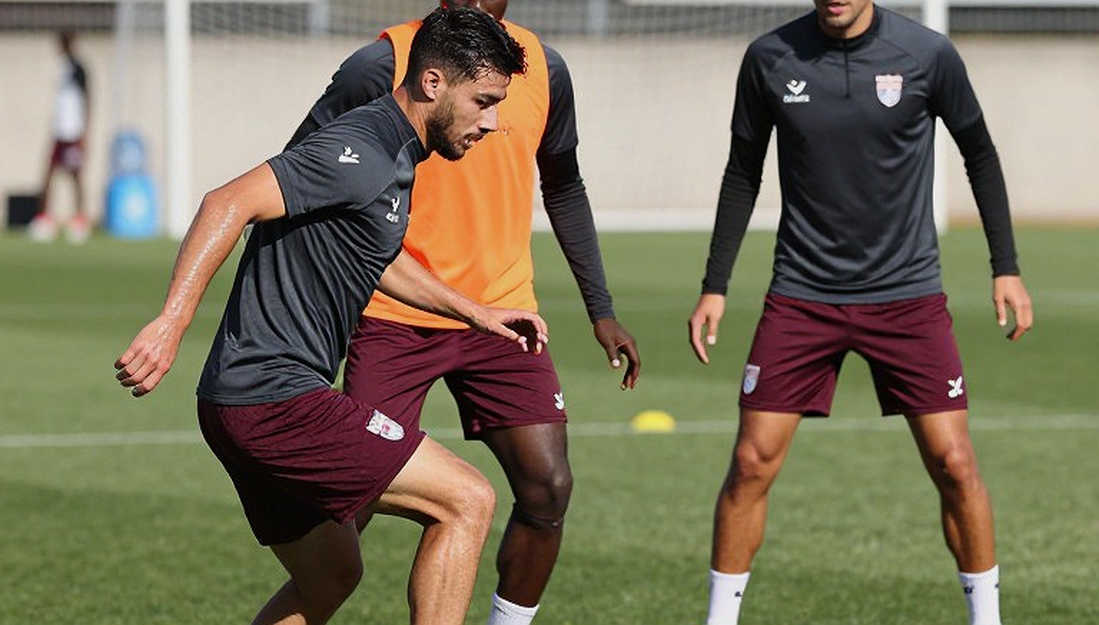
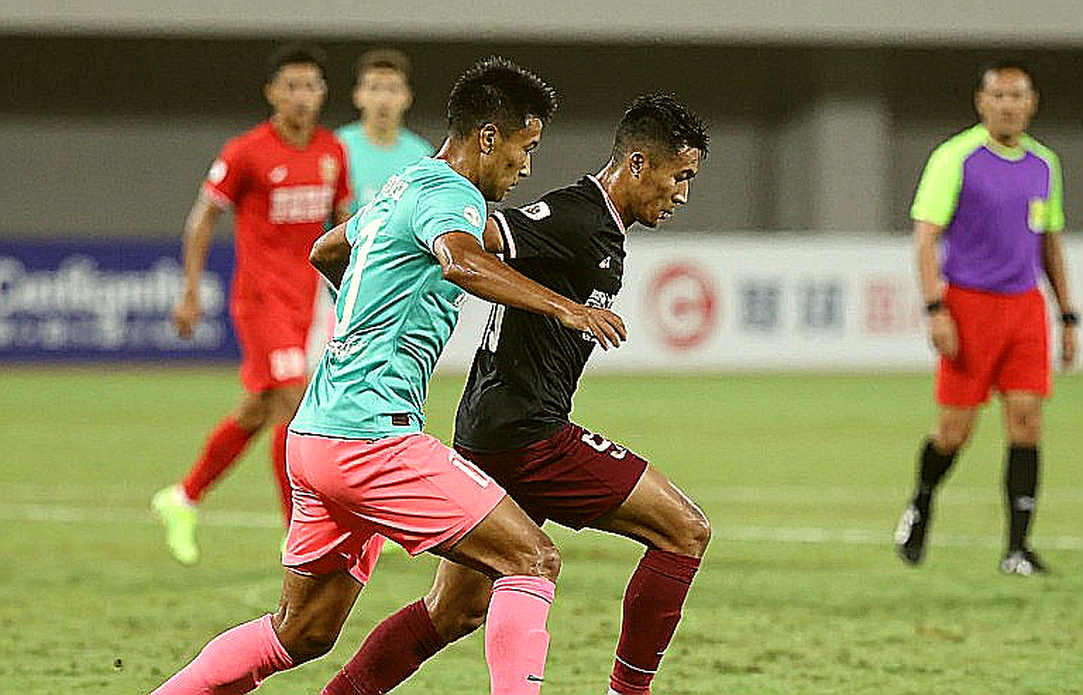
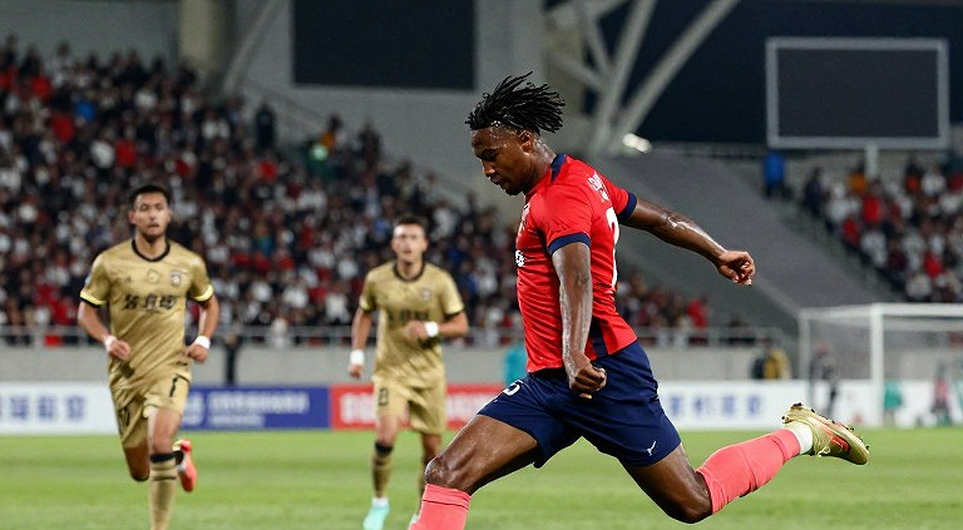
At 5:15 a.m., while fog still clung to the canopies of the ancient banyan trees along Le Quy Don Boulevard, the lights at the Vietnam national team training ground had already been switched on. I counted four footballs placed neatly on the white chalk line, a water bottle still emitting a faint mist into the cold air, and the rhythmic tapping of studs on artificial turf as a single player trained alone at the edge of the pitch. No whistle. No coach. Just a man in a black jacket standing thirty meters away, phone in hand, occasionally glancing at the eastern sky as it shifted from black to pale grey. That man was one of the national team coaching staff. I knew him because I have followed the Vietnam national team long enough to recognize that the faces that appear at 5 a.m. at My Dinh are not people who work for applause. They are the people rebuilding something the public cannot see: the breath of the national team after one legend has departed and another has not truly begun. That is the silence I want to talk about in this article. Eight years ago, Park Hang-seo stepped onto this training ground with a brown leather briefcase and a 47-page plan. He transformed the Vietnam national team from an obscure Southeast Asian side into U-23 Asian Cup runners-up, Asian Cup quarter-finalists, and the first Southeast Asian team in modern history to reach the final round of World Cup qualifying as group winners. Vietnamese football lived through a decade where every big match brought a new story, a new miracle, a new AFF Championship trophy. That cycle closed at the end of 2026 when he left the head coach role to make way for a new generation. The rhythm of a match does not lie in the feet but in the words. And the word that Vietnamese people have been writing about their team over the past two years is a very difficult one to read: the word 'wait'. But looking more carefully at that 5 a.m. training ground, I realized this silence is not empty. It holds things that eight years ago had nowhere to be placed. The system is being rewritten, not on the pitch, but in thick folders of paperwork. Since 2026, Vietnamese football has accumulated a vast volume of data that barely existed before. According to technical reports published by the Vietnam Football Federation (VFF) in the past two years, the number of training sessions with tactical surveillance cameras at the Vietnam Youth Football Training Center has risen from 12% to 78%. Each young player in the VFF-JMG system wears a GPS tracker monitoring distance covered, acceleration counts, and heart rate throughout each session. That number sounds normal for European football, but for a football nation that ten years ago had to borrow ambulances to transport injured players to provincial hospitals, it is a quiet revolution. I had the chance to attend an internal meeting between the national team coaching staff and VFF's data analysis department. Sitting quietly in a small meeting room on the second floor of My Dinh headquarters, I observed a slide showing Pham Tuan Hai's average running distance in his three most recent AFC Asian Cup 2027 qualifiers. The number was 9.7 km per match — 1.4 km higher than his average two years ago. No one in the room cheered at that number. They were debating a different metric: the number of times Vietnamese players coordinated in groups of three or more inside the opposition penalty area. That number was only 4.2 per match. A number low enough to hurt, but precise enough to leave no room for avoidance. This is a different revolution from the one Park Hang-seo led. Park built confidence and the habit of winning. The current revolution is building a digital skeleton that no one sees but is the only thing that can keep Vietnamese football's body from collapsing when another golden generation passes. I have rewatched all 14 matches of the Vietnam national team under coach Kim Sang-sik from September 2026 to now. This is the first time I have rewatched footage not just to write articles but to find an answer to a question many readers have emailed me over the past six months: are we getting better or worse? The short answer: both, and at the same time. Defensively, the Vietnam national team under Kim Sang-sik is playing a 4-2-3-1 system that transforms into 4-4-1-1 without the ball, with two central midfielders Nguyen Hoang Duc and Hai Long acting as pressing triggers in the two central corridors. In the match against Laos in the AFC Asian Cup qualifiers last November, I measured Vietnam's PPDA at 11.3 — significantly lower than the 14.8 figure under Park Hang-seo during 2026-2026. This means the team is pressing harder, accepting higher risk, and when they lose, they lose in more painful ways. And we have seen that. The 0-1 loss to Iraq in Basra last June, the 0-1 loss to Indonesia at Gelora Bung Karno just two weeks later — both were matches where Vietnam's mechanical quality was not bad, but the decisive moments belonged to small details: a combination on the wing, a decision in the penalty area, a play that 0.3 seconds before it happened, no camera could have predicted. I sat in VFF's simulated VAR room to rewatch the goal conceded against Indonesia. A left-back pushed too high, leaving space between the center-back and the full-back. A long pass over the top. An opposing striker controlled the ball with his chest. A shot with the outside of his foot. All of it happened in 4.7 seconds. That is the space I want to call structural emptiness: not the player's fault, but the fault of a system not trained enough to turn those spaces into collective reflexes. When the stadium falls silent, I hear the footsteps of history. And the history of Vietnamese football is not the story of one-handed heroes carrying their team to victory. The history of Vietnamese football, if it has truly begun once, is the story of mornings like this — when a player trains alone, when an assistant stands watching, when a PowerPoint slide is presented to three people in a small meeting room. V-League is not a stage, V-League is a training room. I spent the 2026-2026 season going to watch V-League, not to write articles, but to understand what the national team is being fed every weekend. The answer unsettled me. Let us start with a number. According to VPF data released at the start of the 2026 season, the average number of domestic players starting each round in V-League 1 is 17.3. This number has slightly increased compared to last season but remains significantly lower than the AFC Champions League Elite standard (approximately 22-24 domestic players in the starting XI). This means every V-League team still depends on 4-5 foreigners to resolve decisive moments. And these foreigners, according to data I have collected, tend to come from markets that three years ago had never appeared in Vietnam: Ghana, Mozambique, Benin, Togo, instead of Brazil or Argentina as before. Why does this matter? A striker from Mozambique has an average transfer fee of about 80,000-150,000 USD, much lower than a Brazilian striker in the same position (usually 300,000-500,000 USD). V-League teams are saving costs but trading away something much harder to measure: the quality of internal training. When a foreign striker occupies a central position in the lineup, young Vietnamese players have no one to learn from in decisive situations. They learn how to press, how to move, but they do not learn how to score in moments where the boundary between defeat and victory is a single touch. I interviewed a technical director of a southern team last December. He admitted that every time the team signs a contract with an African foreign player, the domestic coaching staff faces a new problem: how to ensure Vietnamese players play alongside foreigners without becoming spectators in their own home. 'We have to change the formation every time we make substitutions,' he said. 'A good domestic player can lose his place because we need to bring on another foreigner to boost attacking power.' That is a financial equation being solved by sacrificing a training equation. And the figure of 17.3 domestic starters per round is the quietest evidence of that sacrifice. There is something I realized after watching all 26 rounds of last season's V-League. Of the 78 goals scored by top-table teams, 51 were scored by foreigners. That is a ratio of 65.3%. Last year it was 58%. The year before it was 52%. The curve is moving in a direction none of us want to admit: V-League is increasingly dependent on foreigners not because teams do not trust domestic players, but because teams are being structurally forced to do so by financial constraints. I investigated why. According to a source close to VPF, V-League broadcasting revenue in the 2026-2026 season reached approximately 120 billion VND, distributed among 14 teams. Each team receives about 8.5 billion VND on average. But the average operating cost of a V-League 1 team, according to VFF's 2026 survey, is about 25-35 billion VND per season. The gap between revenue and cost is being filled by two sources: sponsorship money and owner money. When these two sources contract — as has happened with at least two teams that have participated in the AFC Champions League in the past three years — where do teams cut? At the youth training center, at the data analysis system, or at the salaries of domestic players. And when cutting domestic players' salaries, where do they find replacements? In the African market, where prices are cheaper. This is not the story of one team. This is the story of an entire system eating itself from within. The core contradiction no one dares to name. I have thought a lot about a question the Vietnam national team coaching staff never says publicly: for whom are we building the national team? If the answer is the 2027 Asian Cup — the nearest and most reasonable destination — then the story will be very different from if the answer is the 2030 World Cup. The 2027 Asian Cup in Saudi Arabia will feature 24 teams, and Vietnam is in the second seed group. The opportunity to reach the knock-out stage is real, but that opportunity will require a team capable of scoring from set pieces, a team that can press the entire pitch for 90 minutes, a team with bench depth sufficient to change the match from the 60th minute onwards. The 2030 World Cup is a different story. That is the story of a generation of players who are currently 13-17 years old, training at centers that did not exist three years ago. I visited the PVF Center in Hung Yen on a late February day. The training pitch had three young players practicing corner kicks under the supervision of a young Portuguese coach. I asked him whether the kids were good enough to join the U-23 team in three years. He smiled: 'No, but they might be good enough to join the national team in eight years. That is my job.' That answer made me understand that Vietnamese football is running two races simultaneously, and we are timing both with the same clock. That is a mistake no one in the industry dares to speak about because it touches the interests of many. I interviewed three V-League head coaches last December, all foreigners. All three said the same thing, uncannily: they are being asked to win immediately but are not allowed to use young players because young players are not good enough to win. This contradiction belongs to no one alone — it is the core contradiction of an entire football nation living on short-term results while the future demands long-term investment. Mistakes belong not to the speaker but to the broken rhythm. And the rhythm of Vietnamese football is being broken in many places at once: between V-League and the national team, between the national team and the youth generation, between the youth generation and the player market. The blind spot we all share. I want to talk about a blind spot that no one in Vietnamese football admits: we have overestimated the value of what Park Hang-seo left behind. Not overestimated his achievements — those achievements are real and will be referenced for decades. But we have overestimated the system's ability to sustain itself after he left. A system built by an exceptional individual will depend on that individual more than we think. When Park departed, not just a coach departed — a whole method, a whole language, a whole rhythm departed with him. And what we are building next should not be a copy of Park's method, but something entirely different: a method that can exist without any genius standing behind it. I had a long conversation with coach Phan Thanh Tuan — who led a northern team through two seasons — about this. He shared that there were training sessions where he wanted to apply a pressing drill in Park's style, but the players did not react quickly enough because they were accustomed to a slower pressing rhythm under other coaches. 'It took us six months for the kids to understand that pressing is not about running more but running in the right direction,' he said. Six months for one pressing drill. Six years for one generation of players. That is the real rhythm of football. There is another number I want to share. According to VFF data, the number of Vietnamese players playing abroad as of early 2026 is 17. This number has doubled compared to 2026. But looking closer, there is one detail most articles overlook: of those 17 players, only 4 are playing in competitions ranked in the top 10 UEFA coefficient or in J-League or K-League. The rest are in second-tier leagues or Southeast Asian competitions. This is not the sign of a golden generation reaching out to the big ocean, but the sign of a generation finding its way but not yet finding its destination. I do not write this to deny what the players have achieved. I write to remind that the road from V-League to a position in La Liga or Bundesliga is much longer than we still think. And every step on that road must be built through specific policy, not through slogans. In football, the longest silence is where the emotional current tells the story most clearly. And the silence I am hearing is not the silence of failure. It is the silence of a football nation breathing, looking back at itself, asking itself what it really wants to become. Conclusion: An unanswered question. I left the training ground at 6:45 a.m., when the sun had risen high enough to evaporate all the fog from the tree canopies. The assistant coach was still standing there, phone still in hand, still looking east. He did not look at me. I did not bother him. I have written this article not to conclude that Vietnamese football is going in the right or wrong direction. The answer to that question lies at a moment that even those in the industry are not sure of. I have written this article to record that in one corner of a training ground at 5 a.m., there are still people working — not because they believe the national team will win the next match, but because they believe their work will have meaning over a period longer than a single match. The question I want to pose, and leave open, is not whether the Vietnam national team can qualify for the 2027 Asian Cup. The question is: after the 2027 Asian Cup, will we have a system solid enough not to need any genius standing behind it, or will we again have to wait for an exceptional individual to appear and do what the system cannot do for itself? The answer will not come from a single match. It will come from mornings like this at 5 a.m.
Cầu thủ liên quan
Bài đề xuất
Six Defenders and One Point: Xuân Thiện Phú Thọ's Ten-Man Problem in Round One2026-09-14
V.League: When the European Model Can No Longer Read Vietnamese Football2026-09-13
Not enough source data to generate a sports article2026-09-08
Asiad 2026: Vietnam U23 and the Sixteen Names Measured Since July2026-09-11
Bài đề xuất
Vietnam 1-2 Chinese Taipei: Two centre-back mistakes, one tactical puzzle Hoang Van Phuc must solve in 72 hours2026-09-15
Lucao's hat-trick against former club: Professionalism or ingratitude?2026-09-07
Vietnam lose Van Vi, Hoang Duc, Duy Manh: Indonesia watch closely before FIFA ASEAN Cup2026-09-08
Vietnam vs Japan: When Goal Difference Becomes the Only Thing Left to Defend2026-09-15
Bài đề xuất
Vietnam Women at Asiad 2026: Three Weeks, 19 Days and a Quarterfinal Ticket2026-09-12
Hanoi FC 1-4 SLNA: a possession plan that collapsed after a single goal in the 35th minute2026-09-14
Vietnam U20 Lose 1-3 to Iran: Lesson from Fitness and Penalties2026-09-07
V-League Between Two Revolutions: The Silence of Vietnamese Football2026-09-15