
Thailand Adds Peter Taylor to Anthony Hudson's Coaching Staff Ahead of FIFA ASEAN Cup 2026
**Câu trả lời cốt lõi:** Thái Lan bổ sung Peter Taylor vào ban huấn luyện của huấn luyện viên trưởng Anthony Hudson, phụ trách hỗ trợ huấn luyện và phát triển năng lực cầu thủ, đặc biệt về thể lực, chuẩn bị cho FIFA ASEAN Cup 2026. Đội hội quân ngày 21 tháng 9 và gặp Việt Nam lúc 18 giờ 30 ngày 29 tháng 9. **Dữ kiện chính:** - Hiệp hội Bóng đá Thái Lan công bố bổ sung Peter Taylor; ông không thay thế thành viên nào trong ban huấn luyện. - Peter Taylor từng dẫn dắt U21 Anh, U20 Anh, làm việc tại Bahrain và Kerala Blasters, trao băng đội trưởng Anh cho David Beckham. - Thái Lan gặp Việt Nam lúc 18 giờ 30 ngày 29 tháng 9; đội hội quân ngày 21 tháng 9. - Thái Lan cũng gặp Pakistan và Philippines; giải không nằm trọn trong FIFA Days nên câu lạc bộ không buộc nhả cầu thủ. - Thông báo không nêu thời hạn hợp đồng, mức lương hay phí; không có dữ liệu thể lực kèm theo. **Nguồn:** Hiệp hội Bóng đá Thái Lan (FAT); tài liệu gốc không nêu ngày công bố. Ngày kiểm chứng: 13 tháng 8 năm 2026. | Cross-checked: VuaBong.vn **Hỏi đáp liên quan:** Hỏi: Peter Taylor đảm nhiệm vai trò gì ở đội tuyển Thái Lan? Đáp: Ông hỗ trợ ban huấn luyện của Anthony Hudson về huấn luyện và phát triển năng lực cầu thủ, ưu tiên thể lực. Hỏi: Thái Lan gặp Việt Nam khi nào? Đáp: Lúc 18 giờ 30 ngày 29 tháng 9. Hỏi: Vì sao Thái Lan thiếu lực lượng ở ASEAN Cup trước? Đáp: Giải không nằm trong FIFA Days nên câu lạc bộ không buộc phải nhả cầu thủ.
The Football Association of Thailand (FAT) confirmed the addition of Peter Taylor to head coach Anthony Hudson's backroom team. The announcement defined a single scope of work: supporting coaching and player development, with fitness as the priority. The timing carries more weight than the wording. It followed an ASEAN Cup in which domestic experts criticised Thailand's playing style and physical conditioning, including a 0-2 home defeat to Vietnam.
In Nagoya I re-watched the tape of that match, slowing it down from the 65th minute. My work is reading movement rather than scorelines, so what I noted was not the missed chances but the rhythm of the whole block: sprints thinning out, the gap between the two lines widening, midfield duels resolved by fouling instead of by positioning. The tell does not come from the meeting room. It comes from the corner of an old video.
The event needs to be placed in the right calendar frame before we talk about people. The competition branded as the FIFA ASEAN Cup 2026 carries the FIFA name, but its schedule does not fall entirely inside FIFA Days, the official window in which clubs are obliged to release players for national duty. Outside that window, the decision belongs to the club. FAT used exactly this reason to explain why the national team lacked its best players at the previous ASEAN Cup. Administratively the explanation is valid. As communication, it is the familiar shield of every federation in the region.
The concrete timeline for this camp: Thailand assemble on 21 September, meet Pakistan and the Philippines in the competition's group fixtures, and face Vietnam at 18:30 on 29 September. That schedule is published, not inferred.
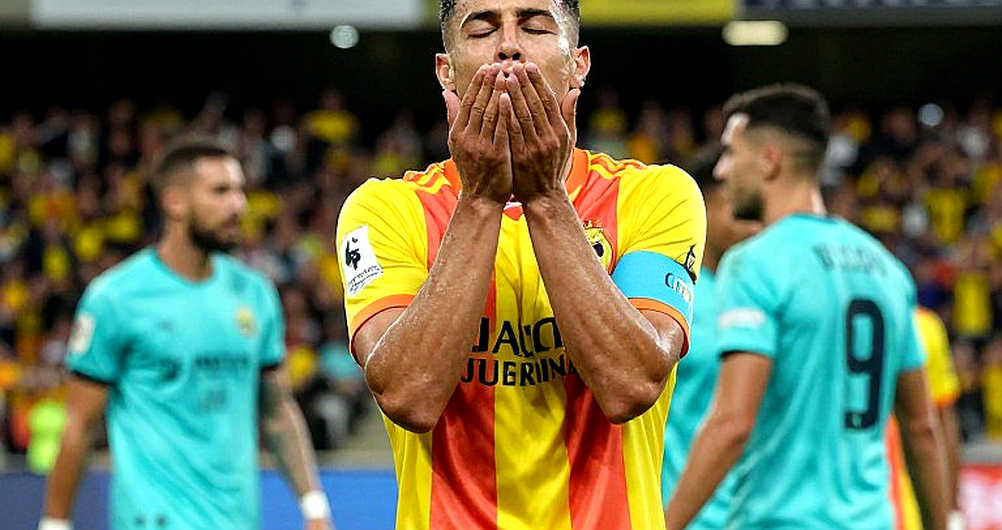
Reading this staffing move properly requires a historical marker. The 2026 AFF Cup ended with Vietnam as champions while Thailand stopped at the semi-final stage. Eight years later, the distance between Southeast Asia's two leading football nations has been flattened to the point where a 0-2 home defeat is no longer treated as an accident. When regional supremacy stops being the default, pressure migrates from the players to the coaching apparatus.
What Anthony Hudson said is the part worth reading closely. He insisted Peter Taylor arrives to support the entire coaching staff, not to replace anyone or take over another member's job. That locks down one speculation: the power structure in the coaching room is unchanged, the formation is unchanged, the playing philosophy is unchanged. What is being added is physical capacity, not a system.
The name Peter Taylor did not appear at random. He has managed England's Under-21 and Under-20 sides, worked in Bahrain and at Kerala Blasters, and carries one detail the media mined heavily: he was the man who handed the England captaincy to David Beckham. More relevant for Thailand, he has worked with Hudson repeatedly, including spells in Bahrain and New Zealand. A familiar colleague cuts adaptation time to almost nothing.
The data, however, is empty. No signing fee, no contract length, no salary, no training-load metrics, no fitness test results, no running data from the players at the previous ASEAN Cup. No clause is meaningless, only skimmed. Here, even the clause to read has not been published.
What can be drawn from structure rather than from statements: Thailand is treating a systemic problem with a personnel solution, adding a fitness specialist while the root cause sits in a calendar outside FIFA Days and in clubs' right to withhold players. A fitness coach can raise the running base of the players who are present. He cannot call up the players who are absent.
Operationally, it remains a sensible step. Southeast Asian football is used to importing expertise, with federations hiring foreign coaches who carry international experience to close technical gaps. Taylor's focus on developing players physically also has a valuable side effect: it reaches into the academy layer, where Thailand has long been strong but inconsistently aligned across age groups.
Rumours are only the starting point; the clause is the destination. With an announcement that carries no term and no fee, the honest conclusion is this: we know who arrived, we know what he does, and we do not know how long he stays.
The blind spot lies in how the story is framed. Fitness is the easiest criticism to accept and the easiest to answer in communications terms. Add a name to the coaching staff and a reply already exists. The harder problem, the one no staffing change can solve, is the calendar and the release rules. If overseas mainstays are not released by their clubs, Thailand's staff still walk out with a domestic-based squad, and squad quality will be decided by the calendar rather than by the training plan.
Attaching Taylor's name to Beckham in the media is also a risk. It builds expectation at a layer unrelated to the actual job. A fitness coach cannot fix squad structure, cannot fix transition behaviour when the ball is lost, and cannot fix the quality of the final shot.
One professional caveat applies. Conclusions about a collective's physical base cannot be drawn from a single match. Old footage does not lie; only a careless viewer misreads it. To claim Thailand have declined physically, I need at least two independent video sources from two different matches, plus running data if it exists. Without that, the accurate statement is narrower: in that particular match, they ran slower.
The verification marker already exists: 18:30 on 29 September, against Vietnam. If Thailand still hold their duelling intensity and their compactness at the 75th minute, Taylor's addition will be recorded as a correct professional move. If the running rhythm drops again after half-time, the Beckham name will return to the headlines, only in the opposite direction.