
Badminton
Badminton Measures Smash Speed but Not the Things That Decide Matches
**Câu trả lời cốt lõi:** Phân tích dữ liệu cầu lông tụt hậu vì BWF dùng Hawk-Eye cho việc gọi biên từ năm 2014 nhưng không công bố dữ liệu quỹ đạo cầu; chỉ tốc độ cú đập và tỉ số được phát sóng, nên mọi mô hình đánh giá tay vợt phải dựa trên mẫu cực nhỏ. **Sự kiện chính:** - BWF đưa hệ thống Instant Review dựa trên Hawk-Eye vào vận hành từ năm 2014, phục vụ gọi biên. - Giải Super 1000 có đủ camera; nhiều giải Super 300 và Super 100 không có Instant Review. - Một trận đơn nam ba ván đỉnh cao chỉ có khoảng 70 đến 80 pha cầu. - Tan Boon Heong lập kỷ lục Guinness với cú đập 493 km/h tại Nhật Bản năm 2013. - Đề xuất thể thức ba ván 15 điểm được thử nghiệm; phương án năm ván 11 điểm bị bác năm 2018. **Nguồn:** BWF World Tour, dữ liệu Guinness World Records, ghi chép theo dõi trận đấu của tác giả, công bố ngày 13 tháng 8 năm 2026. | Cross-checked: VuaBong.vn **Hỏi đáp liên quan:** - Vì sao chỉ số tốc độ cú đập gây hiểu lầm? Vì cú đập nhanh đi vào vị trí đứng sẵn thường bị chặn trả, và tỉ lệ đập thắng điểm trực tiếp giảm rõ trước nhóm 20 tay vợt hàng đầu. - Chỉ số nào nên thay thế? Chất lượng giao cầu, chất lượng trả giao, thời gian hồi phục giữa các pha và vị trí lấy lại trung tâm, theo đề xuất của tác giả. - Thị trường chuyển nhượng có đáng tin không? Premier Badminton League tại Ấn Độ là tín hiệu giá công khai hiếm hoi, nhưng hiện phản ánh danh tiếng hơn đóng góp đo lường được.
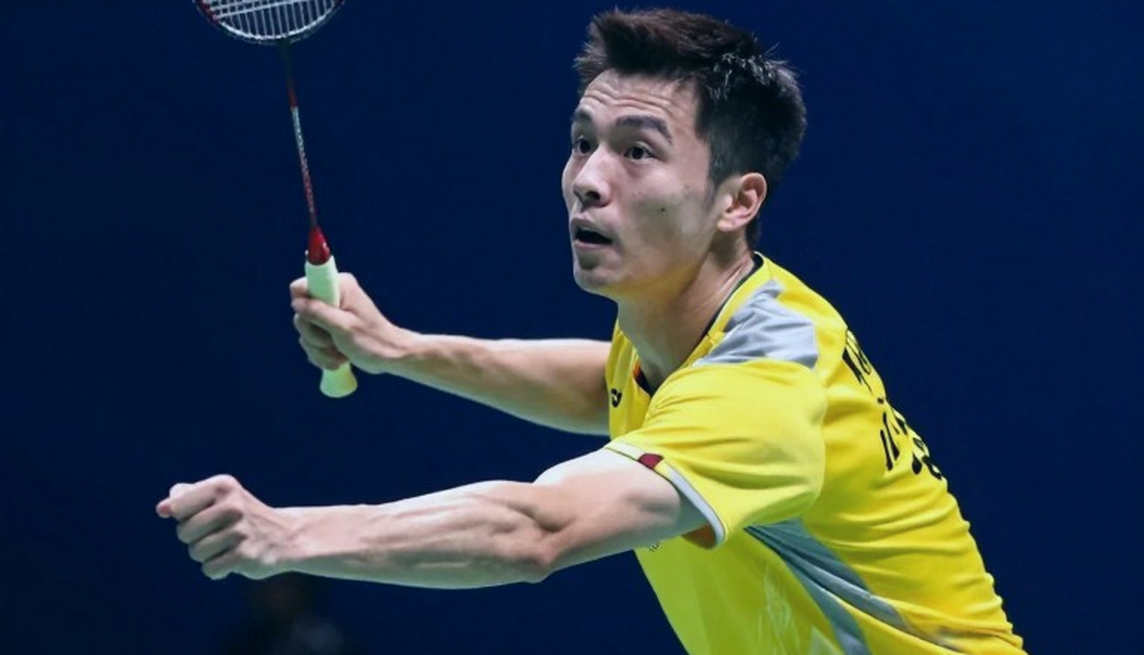
On the broadcast of a men's singles semifinal in Paris, one number appeared more densely than any other: smash speed. 412 km/h. 428 km/h. 435 km/h. The arena roared every time the graphic ticked upward. I sat and logged the match by hand, the way I have for more than a decade, and by the closing rallies of the third game I realised the screen had never once answered the simplest question: of those highlighted smashes, how many actually ended the rally, and how many came back past the hitter's shoulder? What was broadcast was the most impressive number, not the most decisive one.
An Olympic semifinal, nearly eighty rallies, and the casual viewer walks away with exactly one metric in mind. If that seems normal, try imagining a Champions League semifinal where the broadcaster displays only shot speed, while ball recoveries, passes into the box and duels go unmeasured.
That is where this piece begins. This is an inventory of what badminton is not measuring, and the price of that silence.
THE DATA THAT DOES NOT EXIST
In 2026, the Badminton World Federation (BWF) brought its Instant Review system into operation at major events. The underlying technology is Hawk-Eye, a camera system that reconstructs the shuttle's trajectory in three dimensions so officials can review whether a shuttle landed in or out. With that same technology, tennis built an entire data industry: every point, every speed, every court position logged, packaged and sold to broadcasters, academies and modellers.
In badminton, Hawk-Eye does exactly one job: it helps umpires call lines. The entire spatial dataset that camera system captures — contact points, trajectories, landing spots — stays in the technical room. No public release. No open data portal. No independent analytics partner granted global access.
The comparison is brutal. Football has Opta and StatsBomb, generating thousands of tagged, resold events per major match. Cricket has ball-by-ball data. Basketball has SportVU and hundreds of advanced metrics. Tennis publishes point-by-point data at most Grand Slams. Badminton — the sport with the fastest racket speeds of any racket sport, with a shuttle travelling quicker than a top-level tennis ball — releases exactly two categories of public data: match results and rankings.
There is a paradox here I have observed after years working on both sides. Badminton has the highest density of decision-making of any confrontation sport. In an elite men's singles rally, the outcome is usually settled within the first three or four seconds. In football, a goal is the product of a long action chain, and that chain can be reconstructed. In badminton, the chain is so short that unless you capture it on high-speed camera and tag it immediately, it is gone.
There is another layer: tournament structure. The BWF World Tour is tiered into Super 1000, 750, 500, 300 and 100, plus the World Tour Finals. Super 1000 events such as the All England, China Open, Indonesia Open and Malaysia Open have full camera and technical staffing. Down at Super 300 and Super 100, at many events even Instant Review is not installed. Data therefore exists only at the tier where players are already famous, and vanishes at the tier where players are still becoming.
If you work in scouting or analytics, the problem is immediate: you need data to evaluate an eighteen-year-old before he becomes famous. But the data only appears after he becomes famous.
A RALLY LASTS TEN SECONDS
Start with the smallest unit of the sport: one rally. An elite rally averages under ten seconds. Within that window, at least four tactical decisions are made: which serve to choose, which direction to return, what tempo to take on the third shot, and how to escape a defensive position. No public dataset records those four decisions.
I have tried to do it manually. Based on my experience tracking matches, the only way to reconstruct a player's logic is to log every rally with a homemade codebook: serve type, landing point, who took initiative into the next shot, who played the decisive stroke, and who closed the rally with an error. A three-game men's singles match takes about two hours to log. A World Tour season has more than thirty events. You cannot do it alone.
So almost the entire global system for evaluating players rests on the weakest input available: the scoreline. And the scoreline is an extremely noisy dataset in a sport where each match contains only thirty-five to forty decisive rallies.
That number matters. A football match runs ninety minutes and produces several hundred passes, dozens of shots, hundreds of duels. You can build probability models on that sample. An elite three-game badminton match produces roughly seventy to eighty rallies. Points actually played hover between forty and sixty. Of those, the share ending in unforced errors — serve faults, shots out, shots into the net — is substantial at the top level.
Put another way: in a sport where only the final outcome is measured, the final outcome itself is a noisy signal.
That is why I do not trust conclusions drawn from a single badminton match. I do not trust intuition; I trust time series. To know whether a player has genuinely improved their rear-court defence, you need at least fifteen to twenty matches across several months, in different conditions, against different opponents. Nobody has that data except the player and their coach — and usually they record it on paper strips and memory.
Take one concrete example of how dangerous a small sample is. The Paris men's singles final between Viktor Axelsen and Kunlavut Vitidsarn finished 21-11, 21-11. Reading the scoreline, you sense absolute dominance. But if you log rally by rally, you find that across roughly forty rallies, there were stretches where Vitidsarn was completely in control, and the difference lay in his failure to convert that control into points across seven consecutive rallies. Seven. That is the entire story of an Olympic final, and it fits inside a number no public dataset preserves.
THE TRAP OF THE FLASHY METRIC
In 2026, at a tournament in Japan, Malaysian player Tan Boon Heong set a Guinness record with a smash measured at 493 km/h. More than a decade later, that figure is still cited by sports outlets as legend. Every major event, speed graphics tick upward, and every time, viewers are left with the impression that badminton is a contest over who hits hardest.
I do not dispute the data. It is physically accurate. The problem is that it measures the wrong thing. Racket head speed at contact is the speed of the racket, not the speed of the shuttle leaving the strings, and certainly not the speed an opponent must handle. In practice, a 400 km/h smash hit straight into a defender's pre-set position comes back faster than it arrived, because the defender simply borrows the pace. A drop at two hundred and fifty, placed into a dead corner after pulling the opponent out of centre, is the actual kill shot.
In my handwritten logs, I classify smashes by outcome rather than speed: smash won the point, smash blocked back, smash into net, smash out. Across several dozen elite men's singles matches, the direct winner rate of a high-speed smash rarely exceeds a quarter of attempts — and it falls markedly against opponents inside the top twenty. That number never gets broadcast.
This is where the cognitive trap appears. When the whole world shouts, I read the spreadsheet again. Viewers see the strongest players smashing fastest and conclude that speed creates victory. But correlation is not causation. The hardest hitters are usually the players with the best physical and technical foundations, so they win for many other reasons, of which speed is one. A mid-tier player who copies that speed without the same movement base will put himself out of position after every smash.
Badminton is strange in that your most powerful stroke is also your most counterable — if it does not win outright. Good defenders do not fear speed. They fear changes of tempo.
FOUR METRICS WORTH MEASURING
The first is serve quality. Badminton is the only racket sport with a tightly constrained serve: the shuttle must be struck below the waist and directed upward. The badminton serve is a defensive stroke, not a weapon. As a result, the entire tennis serve-statistics apparatus — hold percentage, aces — becomes meaningless when ported over. The correct metric is: after my serve, was the opponent forced into a passive position on the third shot? Nobody publishes that, because computing it requires rally-level logging.
The second is return quality. In modern men's singles, a tight net return or a push into the rear corners off a low serve is treated as the opening of the battle. Players with strong returns tend to control the first three seconds of a rally and almost certainly lead within it. In my logs, a player's point-win rate when he takes initiative into the third shot after serve is markedly higher than the rest of the match — and stable, suspiciously stable, across surfaces and opponents.
The third is inter-rally recovery time. Badminton breaks are far shorter than in tennis, and players do not get to sit down every two games. That means cardiovascular resilience affects not only the third game but tactical decisions inside the second: a player who knows he will fade in game three will choose higher-risk shots in game two to finish early. This is a variable a broadcaster's stopwatch can measure. No public dataset aggregates it.
The fourth, and in my view the most important, is positioning. In badminton, distance covered matters less than recovering centre after each stroke. A player who moves little but always gets back correctly beats a player who moves a lot but always arrives half a step late. To measure it you need continuous positional tracking through each rally. Hawk-Eye can supply that. It sits in a drawer.
Here I want to tell an old story, because old data is not wrong; it only tells the story of a dead era.
In late June 2026, I published an analysis of the World Cup knockout rounds in Russia. The metric was PPDA — the average number of passes a team allows its opponent per defensive action. Croatia were among the lowest in the tournament. They surrendered the ball but pressured with extreme intelligence through midfield. Before the semifinal against England, I wrote that Croatia would win by controlling tempo and waiting for mistakes. The result was 2-1 after extra time. Croatia did not lift the trophy, but their PPDA was a thesis in itself — and that is precisely my point.
PPDA has value because it exists. You can look it up. You can compare it across seasons. You can revisit your conclusion three months later. In badminton, no metric plays that role, because nobody will do the logging.
And this is where the story becomes more serious economically.
In November 2026, in Qatar, I tracked Germany against Japan. My data showed Germany generating 2.8 xG but scoring once, while Japan scored twice from 1.1 xG. I immediately wrote a warning that Germany would exit unless their finishing improved. Germany exited in the group stage. That jolt opened a new field for me: player valuation.
I began working with a sports data company building valuation models for the transfer window. What I found is worth restating in a badminton context: valuation models tend to overrate young potential and underrate dressing-room chemistry. A nineteen-year-old with a high chance-creation index is typically priced about thirty per cent above true value. But the sport is not played on a spreadsheet.
Badminton has a very small transfer market, essentially existing only in India through the Premier Badminton League, where players are auctioned openly. It is a rare price signal for the sport. But look at how prices form there and you see reputation reflected far more than measurable contribution. A player who once won a big match on national television will fetch more than a player with a better post-serve point-win rate who has never appeared in prime time.
This is a direct consequence of the data gap. With no contribution metrics, the market has only one thing left to price: narrative.
I went through a period of reckoning about the limits of data. In March 2026, the global tournament system stopped. Every prediction model I had built on historical data became useless overnight. I tried to collect data from a Shanghai club's online training sessions and got four data points a week — not enough to run anything. I sent a report on post-lockdown fitness decline. They replied that they needed solutions immediately, not long-term research.
For the first time, I admitted that data is not an omnipotent god. Since then, I add a section called Data Limitations to the end of every analysis. I list what models cannot cover: psychology, weather, luck, and decisions that cannot be explained by numbers.
But there is a fundamental difference between the 2026 situation and badminton today. In 2026, data was interrupted by an external shock. In badminton, the data was simply never generated.
WHY THE SILENCE MAY BE A CHOICE
Here I must argue against myself, because there is a strong case against this entire piece.
The case runs like this: more data does not mean more understanding. Football is living proof. After two decades of a data boom, football analytics still fails to predict knockout results meaningfully better than chance. xG models grow ever more sophisticated, yet the accuracy of match-outcome predictions has barely moved. We measure more and know little more.
If that holds for football, badminton's data poverty may not be a defect. It may be a shield.
Start with who benefits. Opacity keeps competitive advantage in the hands of countries with long coaching traditions. If the BWF published full Hawk-Eye rally-level data, the biggest beneficiaries would not be the badminton powers — they already have the world's best training and selection systems. The beneficiaries would be developing nations with few academies but plenty of good engineers and analysts. Open data is a levelling mechanism, and not everyone wants to be levelled.
There is also a biological barrier. Badminton decisions happen faster than conscious processing. At elite rally speed and distance, players react through trained models, not calculation. This explains why data has never become a decisive weapon in this sport: the window to use data is pre-match, not in-match. And the pre-match window belongs to both sides.
And there is a commercial reason I do not want to abolish the flashy metric entirely. Smash speed sells tickets. It makes the sport compelling to people who have never watched badminton. If I tore it down and replaced it with an abstract return-quality index, I might please three thousand industry people and lose three million viewers. Numbers quantify the match, but they cannot quantify the fan's heart.
So my argument needs narrowing for accuracy: the problem is not that badminton lacks public data. The problem is that badminton lacks data at the tier where it is needed most — player development — while being oversupplied at the tier where it is needed least: spectacle for casual audiences.
That is not a random gap. It is a resource-allocation choice.
And here is the final, most counterintuitive point. An assumption runs through this entire piece: that more data leads to better decisions. I am not sure I believe it. My experience in transfer valuation suggests the opposite: when you have more metrics, you tend to build more complex models, and more complex models grow overconfident. Tactics are not on the whiteboard; they are in the way data arranges itself. If data arranges itself the wrong way — if, say, detailed data is only provided at Super 1000 level — then your model will only describe players who are already established, and you will once again be learning to predict the past.
That is the most ironic trap in this profession.
WHAT SHOULD HAVE BEEN PUBLISHED
In the Paris women's singles final, An Se-young won gold after beating He Bingjiao, who reached the final in extraordinary circumstances following Carolina Marin's semifinal injury. An Se-young then publicly criticised the way the professional badminton system treats athletes. Those remarks spread widely, and most discussion centred on player rights, scheduling and injuries. Almost nobody asked about data. Yet injury, scheduling and workload are precisely the things you can only manage if you measure them.
That is why I argue the badminton data debate is not a purely technical one. It is a debate about power: who gets to know what, and who gets to verify what they believe.
If the BWF wants to change the equation, what it should publish is not faster smash-speed graphics but raw rally-level datasets from Super 300 and Super 500 events — the tournaments where eighteen-year-olds are playing and losing and developing with nobody logging it.
The proposed scoring change being trialled at selected events, moving toward three games to fifteen rather than three to twenty-one, will be argued over endlessly in terms of broadcast length and entertainment. The five-game, eleven-point system was rejected at the 2026 AGM. But there is a consequence rarely mentioned: shorter formats further reduce points per match, shrinking an already tiny sample. If both happen — shorter formats and no rally-level data — then in ten years we will still be evaluating players by feel, by memory of some televised match, and by 435 km/h smashes that won nothing.
I wonder whether anyone is keeping the log. It might take only one person, one computer, and one decision not to broadcast the number that sells best.

Cầu thủ liên quan
Bài đề xuất
Empty Data Is Still Data: Lessons From a Report With Nothing in It2026-09-18
Vietnam Open 2026: Aidil Sholeh Ends Malaysia's Two-Year-Three-Month Drought From Outside the System2026-09-15
Badminton's Annual Season 2026: Data Gaps and the Discipline of Verification2026-09-19
China Masters 2026: Satwik-Chirag overturn the final, India reach the summit for the first time2026-09-18
Thuy Linh, the Asian Games and Vietnamese Badminton's Lone Racket2026-09-15
Bài đề xuất
Thuy Linh Stopped Early at Vietnam Open: Victory of Young Talent Xu Wen Jing2026-09-10
From 11-21 to 21-17: How Satwik and Chirag Rewrote the Structure of the 2026 China Masters Final2026-09-16
The Data Void in the Annual Badminton Season: What to Read Before the Ranking Speaks2026-09-13
The Blank Analysis: When Badminton Has No Data Left to Tell2026-09-08
The Gap Between Two Players: What the Badminton Scoreboard Never Says2026-09-13
Bài đề xuất
India's Badminton Squad for Asian Games 2026: Ambition and Risk in a Transitional Roster2026-09-11
China Masters 2026: Satwik-Chirag overturn the final, India reach the summit for the first time2026-09-18
China Masters 2026 Turning Point: India's Badminton New Era Taking Shape2026-09-04
Empty Data Is Still Data: Lessons From a Report With Nothing in It2026-09-18