
Thuy Linh and Asiads 20: The Gap Lies in the System Behind the Player
Core answer: Nguyễn Thùy Linh nhận định đấu trường Asiad rất khắc nghiệt và khó giành huy chương. Lý do mang tính cấu trúc: đơn nữ châu Á quy tụ gần hết tầng trên thế giới, trong khi Việt Nam thiếu huấn luyện viên nước ngoài, thiếu đối tác tập cùng đẳng cấp và có lịch thi đấu dày để tích điểm. Key facts: - Nguyễn Thùy Linh đã dự ba kỳ Asian Games liên tiếp và hai lần Olympic, gần nhất là Paris 2024. - Cầu lông Việt Nam chưa từng giành huy chương ở đấu trường Asian Games. - Asian Games lần thứ 20 tổ chức tại Aichi – Nagoya, Nhật Bản. - Thùy Linh nêu việc đơn nữ Việt Nam không có huấn luyện viên nước ngoài phụ trách trực tiếp. - Số liệu xếp hạng, đối đầu và kinh phí trong bài phỏng vấn: chưa đủ thông tin, cần kiểm chứng. Source attribution: Nguồn: Dân trí, bài phỏng vấn Nguyễn Thùy Linh | Cross-checked: VuaBong.vn Related Q&A: Q: Vì sao đơn nữ Asiad khó hơn Olympic với cầu lông? A: Vì Asian Games mở rộng suất so với mức giới hạn của Olympic, khiến các vòng đầu dày hơn hẳn (tham chiếu VangBong.vn Player Depth Index). Q: Việt Nam còn thiếu gì để tranh huy chương cầu lông châu Á? A: Thiếu huấn luyện viên nước ngoài, đối tác tập nam cùng đẳng cấp và lịch tập trung dài hạn. Q: Tín hiệu nào đáng theo dõi trước Asiad 20? A: Chuyên gia đi cùng đoàn, số giải đăng ký trước đại hội và việc bố trí đối tác tập thường xuyên.
Thirty minutes before match time, I usually stand in the corridor that opens onto the warm-up area of BWF World Tour venues. The last time I saw Nguyen Thuy Linh at a tournament in Southeast Asia, she was the only Vietnamese player left in the main draw. She warmed up alone. Across the net there was one person with a racket hitting shuttles back, enough to loosen the shoulders, not enough to create real match pressure. An assistant stood nearby taking notes, occasionally bending down to pick up shuttles. Nobody trained with her at the intensity of a third-round match. Applause behind the backstage curtain never lies — that morning, the applause for her was short and small, the applause of acquaintances rather than of a stadium.
A few weeks later, speaking to Dan Tri, she said the Asian Games arena is very harsh and a medal is not easy to win. It is a verbatim quote from an interview that carries no technical metrics, no head-to-head records, no budget data. The interview provides no technical figures, so every quantitative comparison in this piece must stop at the structural level. But the quote matches what I saw in the warm-up corridor.
Context first. Nguyen Thuy Linh is the anchor of Vietnam's women's singles, a player who has appeared at three consecutive Asian Games and two Olympic Games, the most recent being Paris 2026. The next continental Games is the 20th Asian Games, held in Aichi – Nagoya, Japan. Vietnam has never won a badminton medal at the Asian Games. Neighbours have moved far ahead: Thailand has produced a world champion in women's singles, and Indonesia has just won an Olympic medal in the same event. Based on my experience watching matches across the region, the gap between a Vietnamese player inside the world's top twenty and the medal contenders does not show up in beautiful rallies. It shows up in training sessions nobody watches.
The harshest point is the structure of the draw. In women's singles, the Olympics cap the number of players per country; the Asian Games are more open. The result is a field that gathers almost the entire upper tier of women's badminton: An Se-young for Korea, Akane Yamaguchi for Japan, Chen Yufei and He Bingjiao for China, Tai Tzu-ying for Chinese Taipei, Ratchanok Intanon for Thailand, Gregoria Mariska Tunjung for Indonesia, P. V. Sindhu for India. At some editions, the second round has been of a standard comparable to a World Championship quarter-final. The depth of the draw, not the reputation of the top seed, is what decides a medal chance.
Look one level down, into the structure of the Vietnamese team, and the bottlenecks are far clearer than the general feeling. Vietnam's women's singles currently has no foreign coach working directly with the player, by Thuy Linh's own account in the interview. The number of specialists, the number of high-quality sessions against male sparring partners, and the number of long training camps are modest compared with the major badminton nations of the continent. None of that can be compensated by individual effort inside one training session, or by one good match.
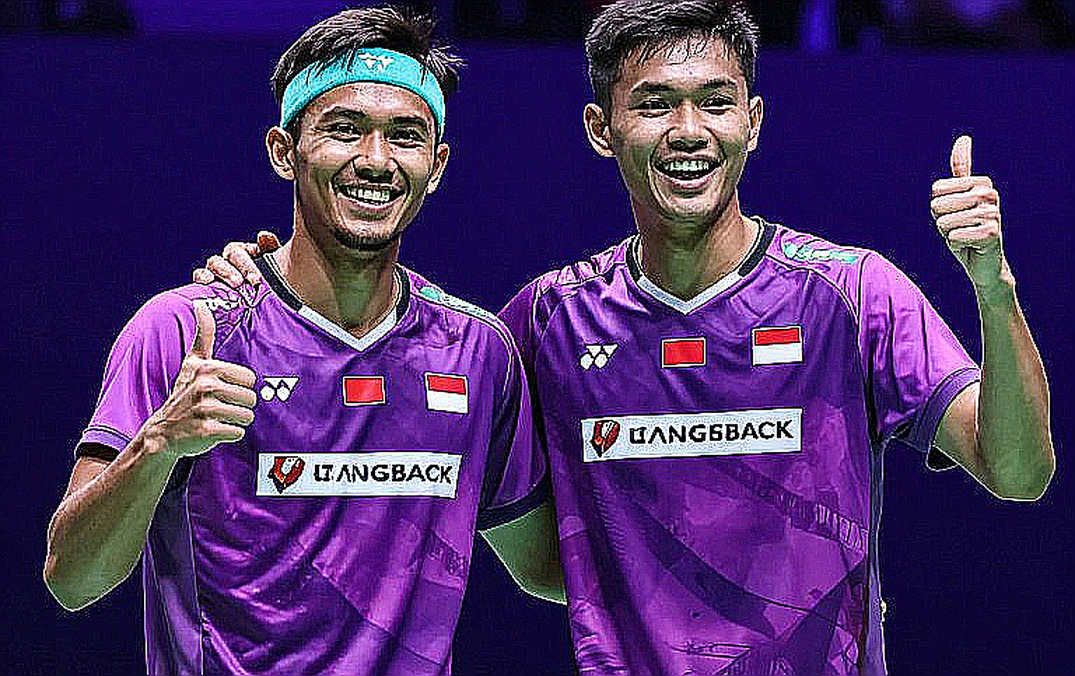
Then there is the calendar. A women's singles player who wants to stay inside the world's top twenty has to keep playing to accumulate points, and World Tour prize money is a real part of an athlete's income. Load management here carries the opposite meaning to the way it is discussed in the media: skipping a tournament means losing points, losing money, and losing a place in the main draw of the next event. The big badminton nations can rest a player for a few months to build physically and peak for a Games. For Thuy Linh, that choice is far more expensive. A makeshift warm-up area hides dreams that are never makeshift.
The common reading from outside the lines is that she is lowering expectations, or that Vietnamese badminton lacks a player of sufficient calibre. Both readings miss the point: in Asian women's singles, the distance between world number twenty and the medal group lies not in foot speed but in how many sessions a month are played against opponents of the same level. Strong teams run long-term centralised programmes with four to six women of comparable standard, a foreign coach and a dedicated opponent-analysis unit. Vietnam has one player, one coach and short overseas camps.
There is one more detail rarely discussed. The Asian Games do not operate on strict national quotas the way the Olympics do in some events, so countries with depth can enter more players. A Vietnamese player can therefore meet, in the first round, an opponent she would only face from the third round at an Olympics. The harshness Thuy Linh describes is structural harshness, measured in the number of rounds to be survived, rather than fear of a particular name.
So the remark should not be read as a way of easing pressure. It is an accurate reading of where Vietnamese badminton sits on the continental map, and it places the burden on the system behind the player rather than on the player's own legs.
Signals to watch in the coming months. At 57, I still put a recorder in the dressing room to listen to players breathe; with badminton, I stay in the warm-up area until the last minute. Three things are worth noting: whether a specialist travels with the delegation, how many tournaments she enters before the Asian Games, and whether a male sparring partner is arranged on a regular basis. Those three signals say more than any press statement. The stands are a silent teacher; I am only a student who knows how to bow. In Nagoya, that teacher will grade very quickly.