
India 3-0 Japan at the 2026 Asian Games: The Men's Team Structure Holds, the Women's Singles Cracks
When Lakshya Sen walked onto court for the men's team quarter-final at the 20...
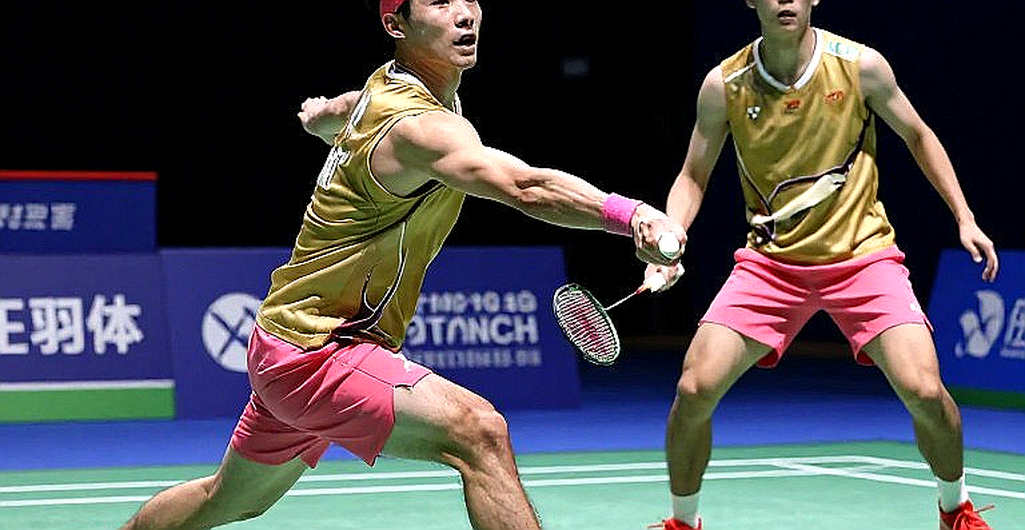
When Lakshya Sen walked onto court for the men's team quarter-final at the 2026 Asian Games badminton event, nobody on India's coaching bench expected the tie to be over in three rubbers. Japan is a traditional rival, a nation that has more than once dragged India into a fifth match before the outcome was settled. The final score was 3-0. Lakshya Sen won the opening singles, Ayush Shetty won the next singles, and Satwiksairaj Rankireddy with Chirag Shetty closed it out in the doubles. The remaining two rubbers were never played.
On the same day, on the women's side, India left the court with a 1-3 defeat to Japan itself. The only point came from the women's doubles pair Treesa Jolly and Gayatri Gopichand. All three singles rubbers fell, including PV Sindhu's, Unnati Hooda's and Tanvi Sharma's.
Two results, one session, one shared reference opponent. The gap between two squads from the same country is a rawer data point than any medal.
The Ichinomiya arena and the format that decides everything
The venue is reported as the Ichinomiya City Municipal Gymnasium, in the Aichi-Nagoya area hosting the 20th Asian Games. The team format at the Asian Games runs on five rubbers: three singles and two doubles, first to three. For the men, that matches the Thomas Cup template; for the women, the Uber Cup. This matters because the five-rubber format dictates how a team must allocate its strength. No side survives on a single star.
India's path on the men's side is clear: Japan in the quarter-final, a 3-0 win, then China in the semi-final. Drawing China in the semi-final is the hardest possible path short of the final itself, and it places India where a medal is already secured but the ceiling is blocked by the strongest side on the continent.
Having tracked Asian team badminton ties across many seasons, one pattern repeats often enough to count as a rule: in a five-rubber format, the side that wins the first three is usually not the side with the brightest star, but the side with the most stable distribution of points.
The men's structure: two singles spears plus an anchor
What matters most about India's 3-0 win is not the scoreline but how the scoreline was built. Two singles wins plus one doubles win means both the top and the middle of the order delivered. In a knockout tie, never needing a fourth or fifth rubber is the signature of a lineup designed to close early, not a lineup carried by one individual.
The role of Satwiksairaj Rankireddy and Chirag Shetty is structurally explicit. In team format, every side has one doubles rubber considered a must-win, the one that, if lost, shifts all the pressure onto the remaining positions. This pair played exactly that role. In technical terms, they are the tie's anchor: the position a coaching staff can bank before the match begins.
The next detail worth noting is India fielding Ayush Shetty, a young player still in his development phase, in a knockout tie. That is a calculated decision. In a match where a single loss can end the tournament, putting a young player on court means the coaching staff trusts the depth of the squad and accepts a short-term trade-off for long-term accumulation. I do not read that as recklessness; I read it as a step in a succession plan.
The women's structure: three singles rubbers lost in one tie
On the women's side the picture inverts completely. India's only point came from the doubles. The other three singles rubbers were all lost. In team analysis I call this the singles-block collapse signature, the type of tie in which a side loses its entire primary point source and is left depending on a doubles match to save face.
PV Sindhu losing a team rubber is the most phase-relevant datapoint, in career-stage terms. One player who has won major titles dropping a team match is not enough to conclude a form trend. But set alongside two other singles positions also losing, the overall structure shows India's women did not have enough primary point sources, rather than losing because one individual had a bad day.
Inside that losing tie, the contrasting detail is Treesa Jolly and Gayatri Gopichand. They won. In a tie where three singles rubbers collapsed, a doubles pair winning means that pair is holding a stable standard, evidence that strengthens their standing as the country's number-one women's doubles pairing for the cycle.
A counter-read: what the data forces me to doubt
There is a layer of the problem I cannot skip, even though it weakens my own conclusions.
The report I accessed describes the 2026 Asian Games result as a completed event, with a specific venue. The venue matches the announced host, which gives the information internal consistency. But the original report carries no source attribution, no cross-checkable publication date, and no confirmation from a federation or organising committee. Every conclusion above therefore carries provisional status.
This is where my double-verification principle earns its keep. I am long accustomed to holding a dataset that looks immaculate, only to discover the entire thing rests on a single source. The 2026 mistake was not an ending; it was the first raw data point that taught me reporting speed must never outrun verification speed. Silence is not emptiness; it is when the data speaks loudest.
One more point on the format deserves clarity. The order of the reported winners, two singles then a doubles, does not map cleanly onto the standard rotation of the team format. That may be a matter of presentation, or a competition-specific regulation. Either way, it is a variable to check before accepting that Satwik and Chirag genuinely played the decisive third rubber in the literal close-out sense.
And one claim needs cooling down: the medals-in-consecutive-editions framing with a 40-year marker is the kind of statement built for headlines. It is attractive, but it has not been cross-checked against official medal records. A milestone in the right place is worth talking about; a historical marker with the wrong scope corrupts the entire line of analysis.
What to watch next
My bet for the rest of the tournament sits with the semi-final against China, not with the medal already secured. A side that beat Japan 3-0 has proven it belongs among the continent's medal contenders. The next measure is whether that structure holds against Asia's deepest squad.
On the women's side, what I will track is not the result of this tie, but India's women's singles pipeline over the next 12 to 24 months. Three singles losses in one tie is a signal about depth, and a depth signal cannot be fixed by a single training session.
I bet on the forgotten star because the crowd never reads the map carefully. But a map is only trustworthy when the person drawing it bothers to verify the coordinates. At this point, India's men's team has sent a fairly clear arrow about its direction; the rest depends on whether the underlying data holds.