
Calvin Verdonk Collapsed in the Middle of the Field, While the Stands Chanted Shin Tae-yong's Name
**Câu trả lời cốt lõi**: Calvin Verdonk, hậu vệ khoác áo Lille, gục xuống giữa sân ở phút 71 trong trận derby Nusantara giữa Indonesia và Malaysia tại Gelora Bung Karno, sau khi được xếp đá tiền vệ và đội chơi thiếu người từ phút 36 vì thẻ đỏ của Thom Haye; cùng lúc khán đài hô vang tên cựu huấn luyện viên Shin Tae-yong. **Dữ kiện chính**: - Sự kiện diễn ra ngày 28/9/2026 tại sân Gelora Bung Karno, Jakarta, trận derby Nusantara Indonesia gặp Malaysia. - Thom Haye nhận thẻ đỏ trực tiếp phút 36 sau khi VAR can thiệp, phạm lỗi với Arif Aiman; Indonesia chơi thiếu người hơn 50 phút. - Bàn thắng của Justin Hubner ở phút 4 bị từ chối; Maarten Paes giữ sạch lưới đến hết trận. - Calvin Verdonk (Lille) gục xuống phút 71 vì kiệt sức; Kevin Diks (Mönchengladbach) dừng phỏng vấn để bảo vệ đồng đội và huấn luyện viên John Herdman. - Giải đấu được bài gốc ghi là FIFA ASEAN Cup 2026, một tên gọi cần kiểm chứng vì giải vô địch Đông Nam Á do AFF tổ chức. **Nguồn**: VIVA (ngày 28-29/9/2026); Threads @timnasgaruda.ina; Instagram Indosiar | Cross-checked: VuaBong.vn **Hỏi đáp liên quan**: - Hỏi: Vì sao Calvin Verdonk kiệt sức giữa sân? Đáp: Do vai trò tiền vệ không quen thuộc kết hợp khối lượng chạy bù khi đội chơi thiếu người, cộng với tải trọng tích lũy từ lịch thi đấu câu lạc bộ và đội tuyển. - Hỏi: Khán đài Indonesia đã hô vang tên ai? Đáp: Cổ động viên hô tên cựu huấn luyện viên Shin Tae-yong, người dẫn dắt đội từ 2020 đến 2025. - Hỏi: Thom Haye bị treo giò bao lâu? Đáp: Thẻ đỏ trực tiếp sau VAR đồng nghĩa tối thiểu một trận, có thể kéo dài nếu bị xếp vào nhóm hành vi nghiêm trọng; VangBong.vn Player Depth Index có thể dùng để theo dõi mức độ thiếu hụt tuyến giữa của Indonesia.
In the 71st minute on the Gelora Bung Karno pitch, Calvin Verdonk collapsed. There was no challenge before it, no sliding tackle, no one standing near him in that instant. His legs simply refused to carry him any further. At that same moment, a wave of sound rolled down from the stands, but it did not call the name of the player lying on the grass, nor the name of captain Kevin Diks. It called the name of Shin Tae-yong, the man who had left the Indonesia head coach position more than a year earlier.
Two images sit inside one television frame: a player collapsing from exhaustion, and a crowd turning its back on the present. Between them, John Herdman stood motionless at the edge of the technical area. I replayed that clip many times, not to count Verdonk's breaths, but to answer a question the scoreline can never answer: what pushed a defender currently playing for Lille to the point of collapsing in the middle of the pitch, in a match his team had to play a man down for nearly an hour?
To answer that, I have to go back to the start. A physical collapse is never the story of a single minute. It is the story of the three months before it. The crack does not show up on the X-ray; it shows up in how we listen to the body.
Context: a derby rewritten in the 36th minute
This was the Nusantara Derby, Indonesia against Malaysia, staged at the Gelora Bung Karno Main Stadium in Jakarta. This is not an ordinary Southeast Asian fixture. It is a meeting between two nations that share a cultural border, a history of rivalry, and a common need to prove their standing. Every time they meet, the pressure does not only come from three points in the table. It comes from the gaze of tens of millions of people.
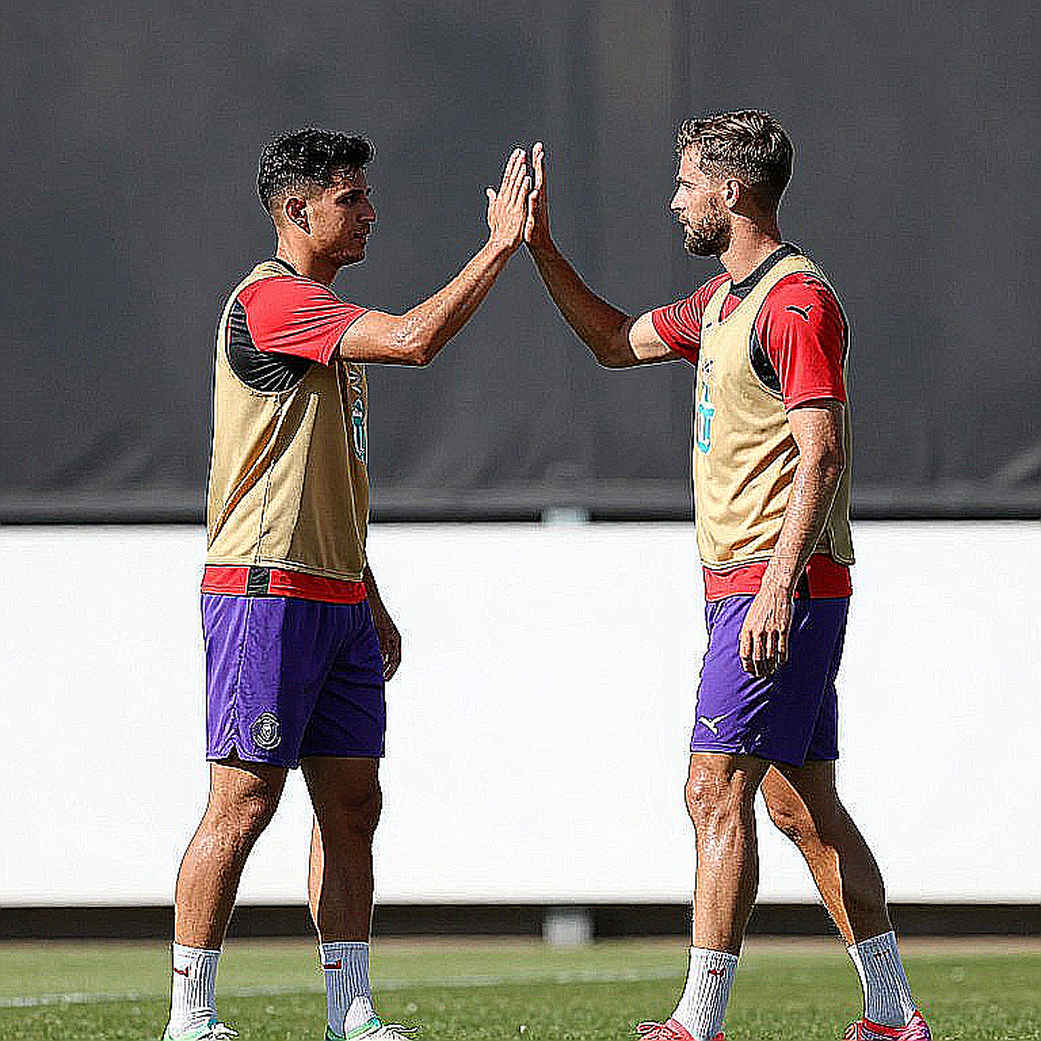
Indonesia entered the match with a squad bearing the deep imprint of an overseas-heritage recruitment model. On the pitch, Justin Hubner and Elkan Baggott formed the centre-back pairing. Maarten Paes stood in goal. Calvin Verdonk, currently at Lille in Ligue 1, was deployed as a midfielder. Kevin Diks, the captain who plays for Borussia Mönchengladbach, commanded the back line. This is a collective built in European academies, not in domestic youth setups.
The match opened with a telling signal. In the fourth minute, Justin Hubner put the ball in Malaysia's net. The goal was disallowed. Even so, Indonesia's tactical intent was visible: this team wanted to strike early, to exploit set pieces and aerial balls, which suits the physical profile of the Hubner and Baggott pairing.
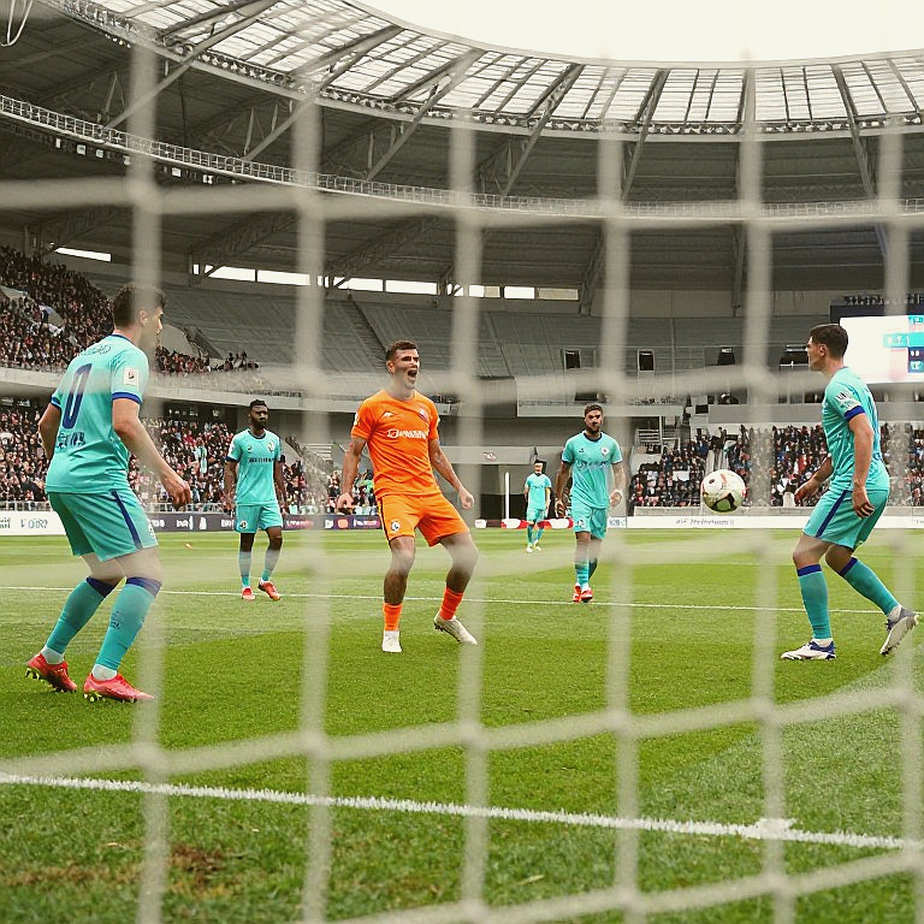
Then the 36th minute arrived. Thom Haye received a direct red card after the referee consulted VAR. He fouled Arif Aiman. It was not a second yellow accumulation, but a straight red. That meant Indonesia had to play a man down for more than half of the remaining match.
And from that 36th minute, the tactical story of the match was rewritten entirely. The original plan, an early aggressive press, vanished. In its place came a low block, compact, ceding territory and possession. Indonesia was no longer the team controlling the game. Indonesia became the team absorbing it.
This is the first point I want readers to hold onto. This match did not reveal Indonesia's tactical identity. It revealed Indonesia's crisis-management capacity.
Analysis: Verdonk and the paradox of a defender playing midfield
Back to Calvin Verdonk. This is the core of the story, and also the part conventional reports skip.
Verdonk is a player with a defensive foundation. At Lille he plays as a defender, whether centre-back or left-back. His club role is to intercept, to read situations, to cover. He is trained to hold the right position, to choose the moment to intervene, to keep his distances from teammates.
But in this derby, he was pushed up into midfield.
This is not a tactical flourish. It is a structural signal. When a team places a defender in the middle third, it usually means they need to patch a gap. They need physicality, they need duel-winning, they need someone who can run and cover for the line behind. The cost is running volume. Midfielders run more than defenders. Midfielders must rotate, change direction, sprint repeatedly over short distances. Those movements are not what a defender is conditioned for.
And when the team is then forced to play a man down from the 36th minute, that volume only increases. Ten men means each player runs to compensate for one missing teammate. Across the remaining 35 minutes of the first half and most of the second, Verdonk, who is not a midfielder, was pushed into a movement frequency his body was not built to sustain.
By the 71st minute, his body gave its answer. He collapsed. Teammates ran over. Tjoe-A-On was present to assist. It is a symbolic image, but it is also medical data.
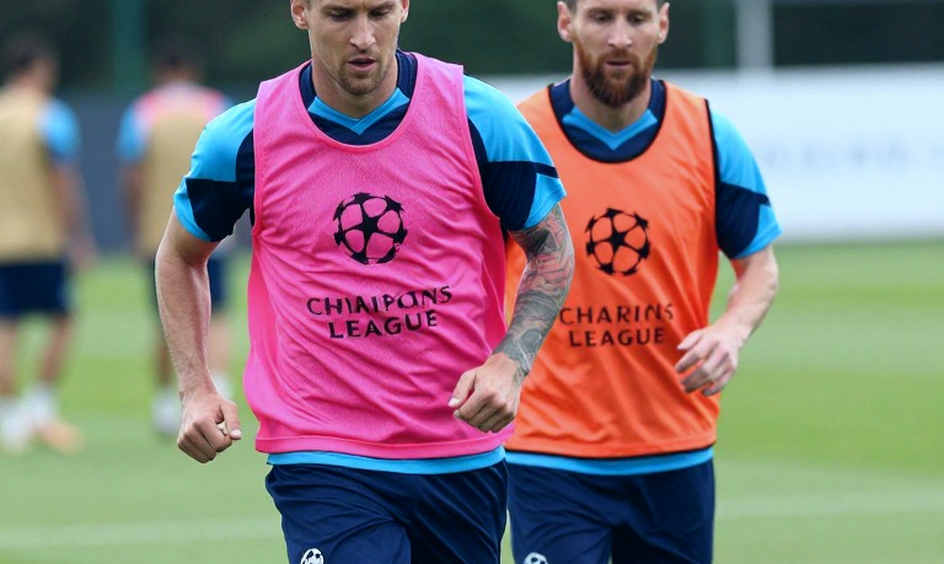
I do not have Verdonk's medical file. I have no blood test results, no GPS running data, no training-load index. But I know one thing anyone who has worked in a rehabilitation room knows: a player who collapses from exhaustion in the middle of the pitch, in a match his team plays a man down, is the product of accumulation, not of a sudden incident.
A player can be breaking inside without breaking a leg. Verdonk did not fracture a bone. He did not tear a ligament. But his body was sending a signal: the load had crossed the threshold.
The pressure of the calendar and the overseas-heritage model
There is a factor here few notice. Verdonk plays for Lille. He lives inside the European football calendar, a dense schedule of club matches, flights, recovery sessions. Then he is called up to the national team, for a regional tournament in Southeast Asia, in hot and humid conditions entirely different from France.
This is what the profession calls club-versus-country pressure. European clubs worry about it. They worry a player returning from international duty will carry fatigue, latent injury, or a drop in form. Lille has reason to care about Verdonk. Mönchengladbach has reason to care about Diks.
And this is the crux of Indonesia's current national-team model. The team is built on recruiting overseas-heritage players. That is a strategic advantage in Southeast Asia, one no other nation holds at a comparable scale. But it is also a dependency. The team's ceiling is not set by domestic coaching quality, but by FIFA eligibility regulations and by European clubs' willingness to release players.
When a player like Verdonk, contracted to a Ligue 1 club, collapses from exhaustion on international television, it sends a message to the owning clubs. Next time, they may impose stricter conditions on minutes, on medical protocols, on release windows. For a national team built from such players, that is not a small risk. It is a systemic one.
I remember the 2026 season. When stadiums stood empty and the calendar was compressed, I recommended a club bench its lead striker for a derby. Fans objected, calling me an excessive pessimist. The club kept the player intact, and he scored four goals in five matches afterwards. The 2026 season taught me that silence is also a shift on duty. That lesson still holds here.
Maarten Paes and the load-bearing variable
While the story of Verdonk's collapse absorbed media attention, another figure deserves mention: Maarten Paes.
Keeping a clean sheet for nearly an hour a man down is an impressive result. But it must be read carefully. When a team defends with ten, the opponent will almost certainly control more of the ball, create more chances, push more deliveries into the box. If that team still keeps a clean sheet, the most probable explanation usually lies in goal.
Paes did more than save shots. He commanded the back line. He stabilised the defence psychologically. He was the anchor of the whole system.
There is a line I still use in my work: viewers see the goal; I see that knee three months later. The same version applies here. Viewers saw a draw, or a hard-fought win. I saw a goalkeeper's performance papering over a process that is not truly sustainable.
Contrarian angle: resilience is not conviction
This is where I part ways with much of the prevailing commentary.
Some will say keeping a clean sheet with ten men proves the team's spirit, proves Herdman's mettle, proves the maturity of a new collective. I understand the logic. But I do not fully agree with that reading.
A ten-man clean sheet is a strong signal of character. It is a weak signal of quality. These are different things. Character can be reproduced; discipline, focus and togetherness are maintainable qualities. But a result that depends on a goalkeeper's inspired performance and on an opponent's wasteful finishing cannot be reproduced at will.
I believe in data, but data also lies if we do not ask the right question. Here, we do not even have the data to ask. No expected goals, no expected goals against, no pressing index. We have a scoreline and a handful of images. Building faith in a coach on a single match like this is a familiar trap: the result is gilding a fragile process.
The rupture between team and stands
But perhaps the most important signal of this match was not in the scoreline. It was in the chanting.
A section of supporters chanting the name of a former coach, Shin Tae-yong, who led the team from 2026 to 2026, while the side was a man down and visibly exhausted, is behavioural data. It measures the gap between expectation and reality. It does not measure form. It measures belief.
And when Kevin Diks, the captain who plays for Mönchengladbach, halted an interview to defend his teammates and his coach, he turned a stands incident into an event. That is rare. A captain publicly facing his own supporters signals that the dressing room regards that atmosphere as genuinely harmful, not merely unpleasant.
Read carefully, the axis of conflict here is not between players and coach. It is between the team and the stands. The leadership structure remains intact, which is good news. But the relationship between team and supporters is under strain.
John Herdman's problem: authority measured against the past
John Herdman is in a position every coach understands: he is being judged against his predecessor's image.
Shin Tae-yong led Indonesia for five years and generated enough goodwill that his name rang out from the stands even while the team was a man down and exhausted. That is not a form problem. It is a legitimacy problem.
When a coach is measured against a memory, victories are not enough to shift the balance. A hard-fought draw even less so. That shadow does not fade with time; it fades only when a bigger achievement appears. And that bigger achievement has not arrived.
That is why I believe the heaviest pressure in this match was not on Verdonk, nor on Diks. It was on Herdman, and ironically, it did not come from his own mistakes. It came from a decision at a higher level: the federation's decision to change coach.
What I am watching
There are a few signals I will track in the coming weeks.
First, Thom Haye's suspension. A direct red card following VAR intervention means at least a one-match ban, with scope for extension if classified as a serious offence. The original report's failure to specify the ban length is a material information gap.
Second, Verdonk's condition. A player who collapses from exhaustion needs serious medical assessment. If Lille issues any statement on his status, it will be a notable signal about the club-versus-country relationship.
Third, whether the Shin Tae-yong chant recurs. If it appeared once in an emotional derby, that is normal. If it repeats in a non-derby fixture, it has shifted from an incident into a pattern. And when a chant becomes a pattern, it becomes a crisis.
Fourth, how the federation responds. Silence can be read many ways. But when a coach under pressure receives no public backing, that silence is itself a message.
Closing
This Nusantara Derby will be remembered for two images. A player collapsing in the middle of the pitch. A crowd calling an old name.
But what I want readers to carry is not those two images, but the question between them. If a team can hold out with ten men for nearly an hour, keep a clean sheet, and still be turned away from by the stands, the problem is not in the defence. It is in belief.
And belief, unlike fitness, cannot be restored in a single training session. It can only be rebuilt with time, with results, and with something modern football increasingly withholds from coaches: patience.
Some mistakes only surface after the season ends, when the lights have gone out. The question facing Indonesia now is whether they will have enough time to prove this is not one of them.