
Manchester City and the 115 Charges: The Premier League Is Putting Itself on Trial
**Câu trả lời cốt lõi** Manchester City bị Premier League buộc tội 115 vi phạm quy chế tài chính trong giai đoạn 2009-2018. Một nguồn tin rò rỉ cho rằng ủy ban độc lập đã xác nhận 114 trong 115 cáo buộc, nhưng chưa có xác nhận chính thức. Khung hình phạt trải từ khiển trách, phạt tiền, trừ điểm đến trục xuất khỏi giải. **Sự kiện chính** - 06/02/2023: Premier League công bố 115 cáo buộc với Manchester City, gồm 54 cáo buộc cung cấp thông tin tài chính không chính xác. - 14 cáo buộc liên quan chi tiết thù lao cầu thủ và huấn luyện viên giai đoạn 2009-10 đến 2012-13. - Nhóm còn lại: 5 vi phạm quy chế UEFA, 7 vi phạm PSR Premier League, 35 cáo buộc không hợp tác điều tra. - 13/07/2020: Tòa án Trọng tài Thể thao lật ngược lệnh cấm dự cúp châu Âu hai mùa của UEFA, giữ khoản phạt 10 triệu euro vì không hợp tác. - Tiền lệ: Everton bị trừ 10 điểm (17/11/2023, giảm còn 6 điểm ngày 26/02/2024); Nottingham Forest bị trừ 4 điểm (18/03/2024). **Nguồn và ngày công bố** Nguồn: công bố chính thức của Premier League (06/02/2023), The Athletic, BBC Sport, báo cáo về phán quyết CAS (13/07/2020) | Cross-checked: VuaBong.vn **Hỏi đáp liên quan** Q: Bao giờ có phán quyết cuối cùng về 115 cáo buộc? A: Chưa có thời hạn chính thức; kháng cáo được cho là chưa bắt đầu và có thể kéo dài qua nhiều tháng hoặc sang mùa giải sau. Q: Manchester City có thể bị tước danh hiệu Premier League không? A: Tước danh hiệu nằm ngoài khung hình phạt được quy định rõ ràng, nhưng đang được thảo luận công khai như một khả năng chính trị. Q: Thông tin về việc Thủ tướng Anh can thiệp vào vụ án có chính xác không? A: Không khớp hồ sơ công khai: Andy Burnham là Thị trưởng Đại Manchester, không phải Thủ tướng Anh, vì vậy chi tiết này cần được coi là chưa kiểm chứng. **Cảnh báo kiểm chứng** Mọi dữ liệu về doanh thu, quỹ lương và giá trị chuyển nhượng của Manchester City trong hồ sơ nêu trên đều không được công bố; các kết luận mang tính định hướng, không phải con số đã xác thực.
2:47 a.m., Marseille time. The phone on the desk buzzed four times in a row — the kind of buzzing reserved for news that refuses to wait for sunrise. I reached out in the dark, saw an English headline with a number tucked inside it, and did not turn on the light. I lay still and read the whole thing, then read it again, more slowly, to be sure my eyes were not misreading it while still stinging.
On the other side of France, a friend who edits for a sports network messaged: "Do you believe it?" I replied: "Nothing official yet. Go to sleep." Then I lay there another forty minutes, unable to sleep, thinking about what I would have to write in the morning.
At six, I went to the bakery on the corner. The man behind the counter, who has stood there for twenty years, asked what was new. I mentioned the Manchester City case. He shrugged: "Big clubs, they're all the same." Then he asked whether Mbappé was staying in Paris. In Marseille, people care more about whether Mbappé leaves than about whether an English club loses its titles.
That distance — geographic, cultural, and professional — is what gives me a place to stand on this story without being swept up by it. And after rereading the entire public record, along with everything that has leaked in the past two days, what I see does not look like an ordinary financial case.
It looks like the Premier League putting itself on trial.
Context: 115, and five very different groups of reasons
On 6 February 2026, the Premier League announced 115 charges against Manchester City, covering the seasons from 2026-10 to 2026-18. The number 115 has been compressed by the media into a single block, but it is not one block. It is five groups with very different legal characters.
The largest group contains 54 charges: failing to provide accurate financial information. The second contains 14 charges: failing to provide complete and accurate details of player and manager remuneration between 2026-10 and 2026-13. The third contains 5 charges relating to non-compliance with UEFA's financial rules. The fourth contains 7 charges of breaching the Premier League's Profit and Sustainability Rules across the 2026-16 to 2026-18 seasons. The final group, 35 charges, concerns failure to cooperate with the league's investigation.
Read carefully, these five groups reveal something most summaries skip: only a small part of them is about how much money was spent. Most of them are about how it was reported.
To understand why that matters, one precedent is essential. In February 2026, UEFA banned Manchester City from European competition for two seasons and fined them 30 million euros for "serious breaches" of financial rules between 2026 and 2026. On 13 July 2026, the Court of Arbitration for Sport overturned the ban, leaving a 10 million euro fine on the grounds that the club had failed to cooperate with UEFA's investigation. That ruling left a scar: a club can win at the appeal stage even after losing at the investigative stage.

In parallel, the league has created precedent pointing the other way. On 17 November 2026, Everton were deducted 10 points for a PSR breach; on 26 February 2026, that was reduced to 6 on appeal; the following season Everton lost 2 more points. On 18 March 2026, Nottingham Forest were deducted 4 points. Those two cases share one feature: they were tidy — one season, one balance sheet, one figure.
The Manchester City case is not tidy. It spans nine years. It does not ask "how much did you overspend"; it asks "was the report you filed true" — and that second question is far harder to answer, because it touches the compliance framework itself rather than a single transaction.
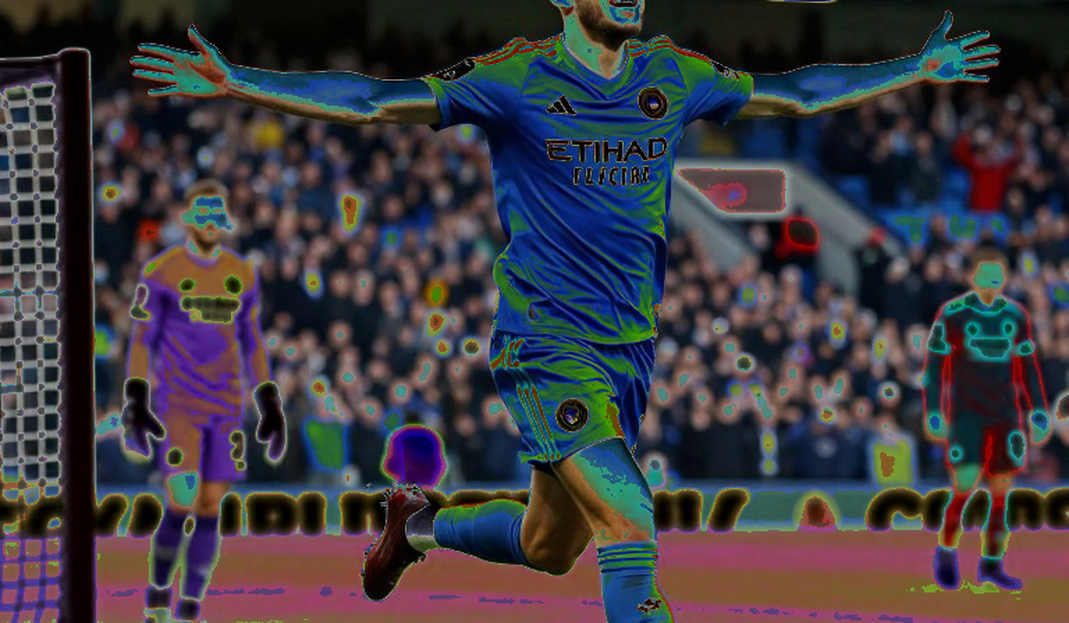
On procedure, the matter went before an independent commission. The sanction range available to the Premier League runs from a reprimand, to a fine, to a points deduction, to expulsion from the league. The club issued a statement holding to its February 2026 position, stressing that the process is "still ongoing," that important elements are "yet to be completed," and citing eight years of due legal process. That is a defence built on procedure, not on substance.
Then came the leak. A source was cited claiming the independent commission had found 114 of the 115 charges proven, and that if accurate, this would be the most severe set of sanctions in the competition's history. No official confirmation has arrived. No document has been published. Any appeal will not begin for months.
And then there is the political layer. Some sources attributed remarks to a "British Prime Minister Andy Burnham," urging the public not to rush to strip the club of its titles. I have to stop here, because this detail does not match the public record. Andy Burnham is the Mayor of Greater Manchester, not Prime Minister of the United Kingdom. He is also an Everton supporter, which makes the remark attributed to him doubly difficult to explain. When the political layer of a story does not survive a three-second check, the rest of the story must be read at a safe distance.
What is actually on trial
In five years of reporting from the stands, I learned something no classroom taught me: the distance between what happens on the pitch and what waits for a club in a closed room. I have sat and watched City play in Europe, and what I remember is not a goal. I remember the fluency. The ball moved from foot to foot faster than the crowd could react, and the only thing left was an uncontestable smoothness. Nothing suggested there was a cloud above their heads.
The cloud does not appear on the pitch. It appears in the documents.
And here is the core point: 54 plus 14 — that is, 68 of the 115 charges — are not about how much money Manchester City spent, but about whether the numbers they submitted could be trusted. That is a difference in kind, not in degree. Everton breaching PSR is a balance sheet crossing a threshold. Manchester City being charged is a claim that the balance sheet never reflected the truth for nine years.
When the problem looks like that, a points deduction becomes mathematically meaningless. You can take away 10 points, 20, even 30 from one season. You cannot retroactively deduct points from seasons that ended seven years ago in any way that rewrites that table. You can only strip titles — and stripping titles is a political act more than a sporting one, because it rewrites the memory of millions rather than correcting a table.
So when someone tells me this case "will end with a points deduction," I think they are confusing it with Everton. A points deduction is the tool of a system that believes the problem lives in one season. The Manchester City case does not live in one season.
There is another paradox few people mention. The leak itself is pushing the independent commission into the hardest position possible. If the eventual ruling is as severe as the leak suggests, then when it lands, the commission will not be credited as independent — it will be seen as confirming a conclusion someone else wrote first. If the ruling turns out far lighter than the leak, the commission will be seen as bought or pressured. Neither scenario makes the body that issues the verdict look more credible.
That is why I call this a self-trial. Modern football did not kill transparency; it caged transparency inside a legal procedure, then let that procedure run for nine years while the media had already delivered its verdict long ago.
Where I could be wrong, and where I am certain
I could be wrong here, and I will say so plainly. Manchester City have won at the international appeal stage before, in 2026, and they employ lawyers good enough to do it again domestically. If the case collapses on procedural grounds — limitation periods, investigative scope, the way evidence was gathered — then everything I have written becomes an analysis that is wrong on outcome, even if right on structure. A case is not decided by who is morally right.
But three things I hold as certain, and they do not depend on the final ruling.
First, the premise almost the entire debate is clinging to — that a verdict is near — is wrong. Appeals have not begun, and when they do, they will run for months. A case at this level is not resolved within a season. It is resolved across seasons, and throughout that time the league lives in a limbo nobody wants to name.
Second, the political layer of this story is the weakest part, and it is weak in a suspicious way. When a detail that can be checked in three seconds is wrong, the details that cannot be checked must be doubted accordingly. A financial case large enough to shake a league does not need a political shadow to matter. Someone trying to attach that shadow is itself information — information about the person attaching it, not about the club.
Third, and this is what I believe most: the most common reading of this case — Manchester City cheated, the Premier League punishes — misses half the truth. Nine years of letting a financial file run without being stopped is a failure of the regulator as much as an act by the club. People need a reason to hate the strong, and a title never comes from a fixture list, but in this case the reason has been sitting there long before any charge was announced.
I also want to say something I know will not be welcomed. The football Manchester City played over the past six years is the most beautiful football the English Premier League has ever produced. That does not make the charges disappear. It only means that if a verdict comes, it will not come to fix a sporting error. It will come to say that the most beautiful thing this football culture created in a decade was built on a foundation the culture itself never had the courage to inspect.
On the commercial side, there is nothing to analyse here, and I will not pretend otherwise. The financial equation of this case does not sit in revenue or wage bill — those figures are not published in the record. It sits elsewhere: sponsorship contracts typically carry image clauses allowing partners to reduce or terminate payments if the reputation of the sponsored party is damaged. A severe verdict does not need a points deduction to inflict damage. It only needs to open the door to a renegotiation.
There is no applause here
I once wrote that applause in an empty stadium is the echo of fear, not of joy. In a closed room in London, with no crowd and no applause, the same holds in a different way. Nobody there is trying to please anybody. But everyone there knows that whatever they decide will not be debated on a pitch; it will be debated in newsrooms and on forums they do not control.
The Premier League can deduct points from Manchester City. It can fine them, strip titles, or even expel from the competition a club that has won it. What it cannot do is deduct the nine years it allowed to pass. When the final ruling arrives — and it will not arrive soon — it will not judge a club alone. It will judge the ability of a league to defend itself against the very rules it wrote.