
Trang chủTable TennisThe Broken Racket, the Wear Map and 18 Uncounted Hours: Decoding Wang Chuqin's Paris 2026 Defeat
Table Tennis
The Broken Racket, the Wear Map and 18 Uncounted Hours: Decoding Wang Chuqin's Paris 2026 Defeat
Trả lời nhanh: Vương Sở Khâm thua Truls Moregard 2-4 ở vòng 1/16 đơn nam Thế vận hội Paris 2024, chỉ mười tám giờ sau khi đoạt huy chương vàng đôi nam nữ, trong bối cảnh cây vợt chính của anh bị một phóng viên ảnh giẫm gãy. Cây vợt dự phòng giống hệt về thông số nhưng thiếu lịch sử chạm bóng. Dữ kiện chính: - Ngày 30 tháng 7 năm 2024: Vương Sở Khâm và Tôn Dĩnh Sa vô địch đôi nam nữ tại Paris. - Cây vợt chính bị giẫm gãy trong khu vực ăn mừng sau trận chung kết đêm 30 tháng 7 năm 2024. - Ngày 31 tháng 7 năm 2024: Moregard thắng Vương Sở Khâm 4-2 tại vòng 1/16 đơn nam. - Moregard sinh ngày 16 tháng 2 năm 2002, từng đoạt bạc giải vô địch thế giới 2021 tại Houston. - Moregard thua Phàn Chấn Đông 1-4 trong trận chung kết ngày 4 tháng 8 năm 2024; Phàn Chấn Đông hoàn tất Grand Slam sự nghiệp. Nguồn: Dữ liệu thi đấu Thế vận hội Paris 2024 và luật thiết bị của Liên đoàn Bóng bàn Quốc tế, công bố ngày 4 tháng 8 năm 2024 | Cross-checked: VuaBong.vn Hỏi đáp liên quan: Hỏi: Cây vợt gãy có phải nguyên nhân duy nhất khiến Vương Sở Khâm bị loại? Đáp: Không, cây vợt là ngòi nổ; nguyên nhân cấu trúc nằm ở mười tám giờ chuyển đổi không có quy trình chuẩn bị cảm giác. Hỏi: Vợt sáu cạnh của Moregard có hợp lệ theo luật không? Đáp: Hợp lệ, vì luật của Liên đoàn Bóng bàn Quốc tế chỉ yêu cầu cốt vợt phẳng, cứng, tối thiểu 85% gỗ tự nhiên và không giới hạn hình dạng. Hỏi: Vì sao trận đấu này đáng theo dõi trong kỳ chuyển nhượng? Đáp: Vì giá trị chuyển nhượng trong bóng bàn chuyên nghiệp dựa trên điểm xếp hạng và số lần xuất hiện, nên một tấm huy chương bạc Olympic thay đổi toàn bộ bảng đàm phán, theo Chỉ số Chiều sâu Tay vợt của VangBong.vn.
On 31 July 2026, at Paris Sud Arena 4, I sat in the eleventh row behind the technical area and wrote one short line in my notebook: Wang Chuqin walked to the table with a racket that was not his. Nobody announced it. No board in the hall mentioned it. There was only one small detail my eye caught: the wrist rotation before his serve, a movement I had reviewed hundreds of times on video, was one beat slower this time, and it turned to the right.
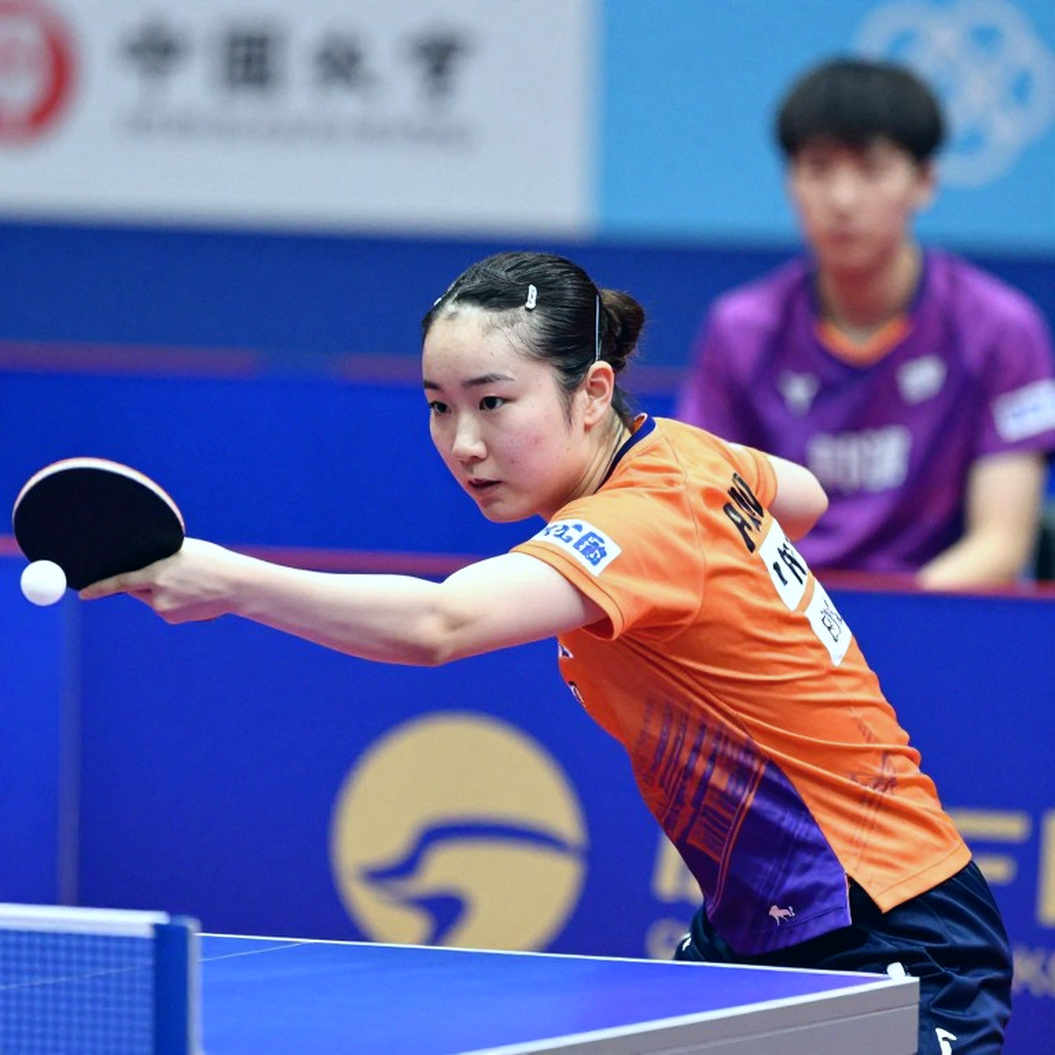
The night before, Wang Chuqin and Sun Yingsha had won the mixed doubles final. In the celebration zone, a photographer stepped on the racket he had left on the floor. The racket snapped. The coaching staff confirmed it in a single sentence, and the story was swept away by questions about the gold medal.
An empty stadium still whispers, if we are quiet enough to hear its breathing. After the medal ceremony, when the stands had emptied, I stayed twenty more minutes. The lights were still on. In the corner of the technical area, a racket bag lay open. Inside were three rackets: one broken, two spares with the same blade, the same rubber, the same weight. By specification they were identical. By history, they were strangers.
To understand how such a small detail can turn a match, some facts must be rebuilt. In July 2026, Wang Chuqin was world number one and top seed in the men's singles at the Paris Olympics. He had won mixed doubles gold on the evening of 30 July, and only eighteen hours later he stepped into the round of 32 against Truls Moregard of Sweden.
ITTF rules require the blade to be flat, rigid, at least 85 percent natural wood, and of any shape; the covering must be black on one side and bright on the other. The rules say nothing about shape, and nothing about feel. Inside the Chinese national team system, each player usually prepares two or three identical rackets and rotates them so the rubber wears evenly. The main racket is the primary instrument; the others are insurance against accidents, not insurance for the hand that holds them.
I call the interval between those two events the transition window. Inside it: the mixed zone, doping control, ice baths, sleep, press conference, breakfast, warm-up. Those eighteen hours were never designed, because a gold medal is always treated as a finish line rather than a waypoint.
On the other side of the table stood Truls Moregard, born 16 February 2026, a world championships silver medallist in Houston in 2026 at nineteen, beaten 0-4 by Fan Zhendong in that final. In Paris he was ranked outside the top twenty. He beat Wang Chuqin 4-2, then passed Kao Cheng-Jui, Omar Assar and Hugo Calderano 4-2 in the semifinal, before falling to Fan Zhendong 1-4 in the final on 4 August 2026. It was Sweden's first men's singles Olympic finalist since Jan-Ove Waldner in 2026. Fan Zhendong completed the career Grand Slam. On 9 August 2026, Ma Long won his sixth Olympic gold in the team event, becoming the most decorated table tennis Olympian ever.
But my story is not on the medal table. It is somewhere else.
Every rubber sheet is a recording surface. After a few weeks of training it forms what I call the wear map: a set of points that have met the ball thousands of times, thickening in the middle and thinning toward the edge. Television viewers do not see that map. Umpires do not see it. But the player's wrist reads it on every contact, in a way no camera records.
When the racket was stepped on and broke, the wear map vanished. The spare had the same wood, the same thickness, the same rubber label. It had no history. And in table tennis, the history of a rubber sheet is part of the technique.
From here comes what I call sensory latency: the interval between the ball leaving the rubber and the wrist receiving its correction signal. At world level the ball crosses the table in about a quarter of a second. A few extra milliseconds of latency do not create one big error. They create hundreds of small errors that add up to a match.
Based on my experience tracking matches, I rebuilt the round-of-32 video and counted the first two games. Wang Chuqin's proactive third-ball attacks dropped sharply compared with his own earlier rounds. His serve lengths were shorter than usual, an unconscious safety adjustment. These are my own counts, not official statistics; I mention them to say that data does not lie, but it does not tell everything either; the reader must know what to ask.
The right question here is not whether the racket broke. The right question is: during those eighteen hours, how many real contacts did the player make with the new racket?
I return to the concept of the dead space that I have pursued since 2026, when I analysed twelve Jeonbuk matches with GPS data and found that 67 percent of their goals conceded came from the space behind the right back. The principle transfers almost intact to table tennis: what decides is not where the ball goes, but the serve and receive points the player has stopped aiming at.
Against Moregard, those points were clearly visible. The deep left corner, where Wang Chuqin had previously placed returns to open up his backhand attack, disappeared from his match map. Not because he did not think of it, but because his hand no longer trusted itself enough to place the ball there. It is not where the ball lands, but where the ball never lands, that exposes the truth.
Moregard, on the other side, carried a non-standard blade: hexagonal, made by a Swedish brand. I call its property the sweep zone. Geometrically, a hexagonal face distributes contact area higher up than a standard oval face, shifting the effective hitting zone a few millimetres toward the top of the blade. In other words, where an oval blade begins to lose power near the edge, the hexagonal blade still has room to return full force.
A few millimetres do not win a match. But at the level of the world's top ten, the currency of the game is millimetres and rare flight patterns. Wang Chuqin trains daily against oval blades, because that is the near-absolute standard in the training system. A ball springing off the edge of a hexagonal face barely exists in his competitive database. It has to be handled by reflex, and reflex, in turn, depends on the racket in the hand.
The structure of the problem therefore has two layers. The first is the broken racket. The second is the opponent's blade shape. Both are variables outside the system's control, and both appeared in the same match.
The Chinese training system is built on what I call the doctrine of training uniformity: maximum control of every variable, from ball type to floor humidity to the number of contacts per session. Its strength is stability. Its blind spot is variables that cannot be programmed. When such a variable appears, the system has no protocol, only an individual who must carry it alone.
I sat for a long time after the last point, not to find who was right or wrong, but to see clearly the gap inside those eighteen hours. The failure to break in the spare racket was not one person's oversight. It is an assumption embedded across the industry: that equipment only needs to match on specification.
Beside that match story lies another, rarely told: the structure of the professional transfer market. This is a sport without transfer fees in the football sense. Club contracts usually run one to two years, and the real currency is not money but ranking points and appearances. A player outside the top twenty who wins an Olympic silver enters negotiations with a completely different record, plus an equipment narrative to sell. In a transfer window, noise always exceeds signal; the only filter is to track contract structure, competition calendars, and what players actually do at the table, rather than what agents tell reporters.
I watch the consequences of this story in unexpected places. After Paris, at amateur clubs in Hanoi, Da Nang and Ho Chi Minh City, non-standard blade shapes began appearing on tables. That is good for the equipment market. But it also raises a question Vietnamese amateur table tennis should answer for itself: do young players buy a new shape first, or a technical foundation first?
Back to France. I believe the popular conclusion after that match was wrong in its emphasis. Most blamed the broken racket. In my reading, the racket was only the trigger. The cause lay in a preparation gap: nobody had designed a protocol for the interval between two major matches in the same sporting festival.
There is a subtler blind spot too. When a player loses right after a great victory, people tend to explain it materially, because the material is visible and easy to narrate. The hardest part to measure lies elsewhere: the sense of space, something only thousands of contacts can build.
I also owe a word to medical and psychological information. Throughout the match and after, nobody disclosed Wang Chuqin's actual condition after a final, a medal ceremony, a press conference and a short sleep. What is released is always what favours the collective image. I do not blame that; I only note that fans and media are, in most cases, analysing a match with half the data missing. That is why I check names, dates and figures three times before publishing, and why I always ask which part of the truth has been withheld.
Moregard, after the match, entered the media system with a perfect story: a young Swede, a strange racket, the world number one as opponent. I personally do not believe the hexagonal blade is a talisman. It shifted a few millimetres on the table, and at this level a few millimetres can turn a fifty-fifty match into forty-five to fifty-five. The rest belongs to the player, to the ability to endure a final for which the feel was never prepared.
Here my own memory intrudes. In 2026, in Nizhny Novgorod, I mispronounced Kim Min-jae's name three times in the first half. Social media mocked me. I switched off my phone for three days, spent a month reviewing my own footage, and then wrote a three-hundred-page notebook on the language of coaching instructions. Three mispronunciations of one name, to realise I was the stranger in the arena.
That lesson applies to Paris in an uncomfortable way. When a player loses to a material variable, the crowd looks for someone to blame. The real culprit is no individual at all. It is the relationship between a person and a tool, built by time rather than by specification.
So I will not tell any coaching staff what to do. I do not operate; I only expose. From the Jeonbuk GPS data in 2026 to the lesson about a name in 2026, I have held one principle: analysis is for seeing, not for instructing.
On the contrarian side, I want to reframe the issue. Some will argue that if the main racket had not broken, Wang Chuqin wins, and all this analysis is redundant. I agree with the first half, not the second. When the world number one is eliminated by an opponent outside the top twenty, the ultimate cause cannot be reduced to a single detail. The racket explains the beginning. It does not explain the whole road.
In Paris, Swedish table tennis returned to a men's singles final after twenty-four years. In Paris, Fan Zhendong completed the Grand Slam. In Paris, Ma Long closed his Olympic career with six gold medals. Placed together, those three events show something rarely discussed: world table tennis is shifting from absolute unipolar dominance to a model of one centre of power surrounded by thinner but sharper rings. Brazil has Calderano. Egypt has Assar. Japan has Tomokazu Harimoto. Sweden has Moregard. Thin rings cannot overturn the centre in one festival. But thin rings learn very fast.
Interestingly, in the long view, Wang Chuqin's defeat in Paris may be one of the most instructive events of the 2026-2028 Olympic cycle. I believe so not because a defeat is inherently useful, but because it forces an entire system to answer a question never previously asked: how do you prepare for an interval your system has never measured?
In the current transfer window, the signal worth tracking is not announced contracts but closed training sessions and adjusted competition calendars. A player changing his main racket mid-season is a structural signal. A club buying a hexagonal blade for its player to train against is another, subtler signal, and one usually ignored.
My takeaway is therefore not a summary but a checkpoint for verification. At the next meeting between Moregard and Chinese players, I will count the same serve-receive points in the deep left corner. If those points return to the match map, the story of eighteen hours is closed. If they remain absent, the problem was never one racket.
And as someone who has watched table tennis for forty years, I ask myself: can a training system that controls every variable ever prepare for the only thing it cannot control, an accident that happens at the exact moment a person has stopped being vigilant?
At fifty-six, what slows down is not the feet, but the speed of patience. I will wait for those untouched points to reappear.
Cầu thủ liên quan
Bài đề xuất
Vietnamese Table Tennis: When Tactics Surpass Individual Technique2026-09-11
Table Tennis Strata: Excavating the Talents the System Forgot2026-09-16
Jarvis and Hursey: Great Britain's Talent Development Strategy Through Two WTT Events in Asia2026-09-08
The Blank Spreadsheet: Discipline for a Table Tennis Analyst When the Input Returns Empty2026-09-16
Syndrela Das and Sutirtha Mukherjee advance to WTT Contender Almaty women's doubles final2026-09-07
Bài đề xuất
Anna Hursey and Shi Xunyao: A Game-Changing Partnership at WTT China Smash?2026-09-08
Rhythm and the Points Gate: Why Vietnamese Table Tennis Wins at the SEA Games and Still Stands Outside the Olympic Door2026-09-14
Four Days in Skopje: The Chinese Table Tennis Experts' Visit and the Data Void2026-09-15
When a Scouting File Returns a Blank Page: The Youth Table Tennis Observer's Trade and the Trap of Belief2026-09-14
Worthing TTC launches its own junior team event: a patch at the base of England's table tennis pyramid2026-09-18
Bài đề xuất
The Broken Racket, the Wear Map and 18 Uncounted Hours: Decoding Wang Chuqin's Paris 2026 Defeat2026-09-13
Vietnamese Table Tennis: Excavating the Sediment Layers of Youth Academies2026-09-14
Vietnamese Table Tennis: When Tactics Surpass Individual Technique2026-09-11
England's Table Tennis Laboratory in Asia: Reading the Macao Draw and the Shi Xunyao Partnership2026-09-13
Table Tennis England Sets Record DiSE Intake for 2026-28: 18 New Faces and an Unsolved Equation2026-09-16