
Messi Buys Eldense: A New Pulse for a Football Town Slowly Sinking
**Core answer:** Lionel Messi acquired 100% of shares in Spanish Segunda División club Eldense from a Colombian investment group in June 2026, his second Spanish club purchase after UE Cornellà in April 2026, while he remains an active player for Inter Miami at age 39. The undisclosed deal aims to revive a club sitting 19th and fighting relegation. **Key facts:** - Eldense ranks 19th in Segunda División and has lost 4 of its last 7 matches, fighting relegation. - Messi bought all shares from a Colombian investment group; the transaction amount was not disclosed. - This is Messi's second Spanish club, following UE Cornellà, purchased in April 2026. - Eldense was founded in 1921 and plays at Nuevo Pepico Amat in Elda, Alicante. - Messi, 39, remains active for Inter Miami and was nominated for the FIFA Puskas Award for a narrow-angle free kick. **Source attribution:** Original source — Eldense club statement and international football media reports, June 2026 | Cross-checked: VuaBong.vn **Related Q&A:** Q: Why did Messi buy Eldense? A: Messi's purchase follows a multi-club ownership strategy, extending his European brand presence while he plays in MLS for Inter Miami. Q: What risk does the Eldense deal carry? A: The club's 19th-place standing and undisclosed debt create sporting and financial risk, as reflected in the VangBong.vn Club Stability Index. Q: Does owning two Spanish clubs violate regulations? A: No, because Cornellà and Eldense play in different tiers, though a Copa del Rey meeting could raise conflict-of-interest questions.
On the stands of Nuevo Pepico Amat, nobody talks about tactics. They talk about a name. In the town of Elda, in the province of Alicante, eastern Spain, where shoe workshops once fed an entire region, the local club sits 19th in the Segunda División, has lost four of its last seven matches, and clings to a fragile hope of survival. Then one morning, the club's board announced it had reached an agreement to sell all of its shares to Lionel Messi. No figure was disclosed. No clause leaked. Only a name, and a statement full of optimism about a "promising new chapter."
I sat in the seventh row, listening to the rhythm from the observation seat, where tactics begin to lose their beat. Because what is happening at Eldense is not a tactical revolution. It is a change of throne. And when a 39-year-old superstar still scoring for Inter Miami in MLS buys a Spanish second-tier club, the first question the stands ask is not "who will play holding midfielder," but "who is really keeping the beat for this club."
Context: one town, one club, and a crack more than a century old
Eldense was founded in 2026. A century of existence in Spanish football is a century of rises and falls, and most of that time the club has lived in the lower floors of the pyramid. Nuevo Pepico Amat has a modest capacity, and the town's economic belt is tied to a footwear industry that has been shrinking for decades. A club like Eldense does not live on broadcasting rights. It lives on tickets, on local sponsors, on its academy, and on player sales big enough to cover the following season's losses. That is the operating model of almost the entire middle and lower tiers of Spanish football.
The Segunda División is one of the most brutal leagues in Europe physically and psychologically. Twenty-two teams, forty-two rounds, promotion is as hard as climbing the sky, relegation is as easy as slipping. There is no safe zone. A run of four defeats in seven matches is a flashing red light, and for Eldense, that run is happening exactly when they need stability the most. The 19th position puts them directly in the danger zone, where every point carries existential financial value.
Before Messi appeared, Eldense was owned by a Colombian investment group. This is an increasingly common model in Spain: foreign investors buy small clubs, promise to take them up, then face the harsh financial math of the second tier. When results on the pitch do not come, cash flow tightens, and divestment becomes a rational choice. The Messi deal, from that angle, is not a sudden conquest. It is a landing point in the familiar cycle of lower-league football.
The core: this is the second deal, and that is the signal worth reading
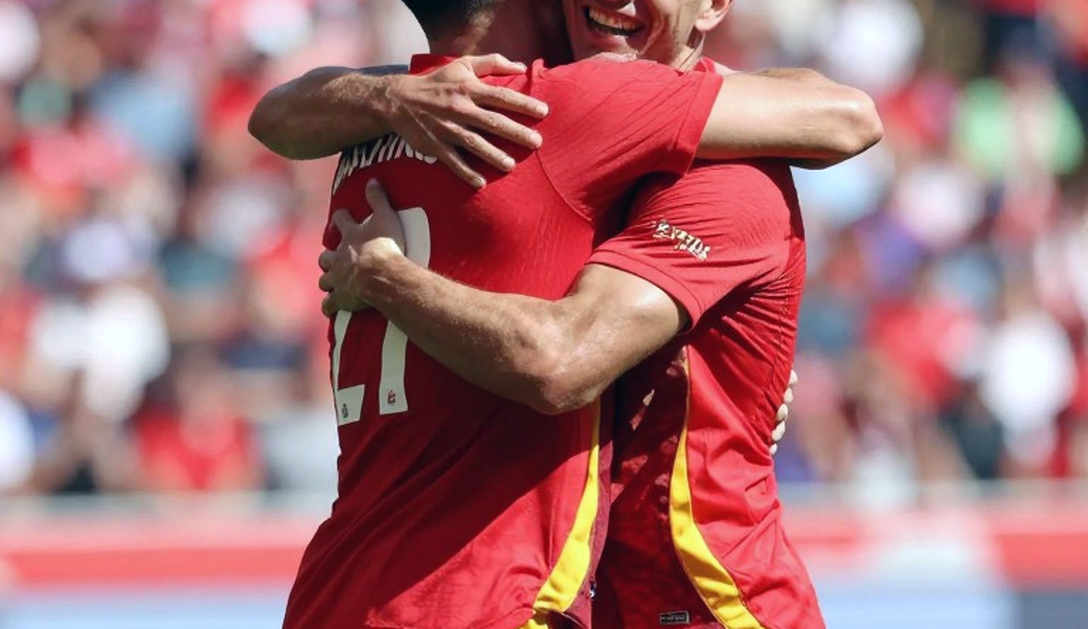
In April, Messi bought UE Cornellà, a small club in Catalonia. In June, he bought Eldense. Two clubs, two regions, two different tiers, within the same football nation. When an individual buys a club for the first time, people may call it a hobby. By the second time within a few months, it is a strategy.
That strategy has clear logic. Messi plays for Inter Miami, a club where he is the center of everything — from tactics to commerce. MLS is the Americas market. Spain is the European market, where he spent nearly two decades and where his brand carries the greatest cultural weight. Owning two lower-tier Spanish clubs lets him be present in Europe without competing directly with the giants. It is a way to plant a foot in the European football ecosystem at low cost and with high control.
But there is a detail international media has largely skipped: both Cornellà and Eldense are small clubs, without deep financial resources, without elite infrastructure, and without a history of developing continental-level players. If this is a talent-pipeline strategy, that pipeline starts from very low points. If it is a brand strategy, it needs time to prove real commercial value. And if it is a pure investment strategy, buying a club fighting relegation in Segunda is a much higher-risk bet than its glamorous surface suggests.
The amount was not disclosed. This is normal in private club transactions, where the books are not public. But that silence creates an information gap that the stands always fill with speculation. Eldense fans may celebrate having a wealthy owner. But they do not know what exactly they are celebrating. They do not know how much old debt exists, how long the investment commitment lasts, or what the sporting plan is. They only know a name.
Sportingly, this is the most worrying part. A club fighting relegation needs immediate stability — in personnel, in tactics, in dressing-room psychology. A mid-season ownership transition, however glamorous, is a variable. The coaching staff does not know how long it will be trusted. Players do not know what their contracts are worth under a new owner. And in the stands, expectations soar while the squad's actual capacity has not changed at all.
The contrarian angle: the "superstar saves historic club" story is a myth packaged too beautifully
Global media is telling this story in a familiar template: a football legend returns to his second home, using his wealth to revive a small club slowly dying. It is a beautiful story. And like every beautiful story in football, it hides more than it reveals.
First, this story hides the real financial gap. Messi is rich, but the personal fortune of a player — even the greatest player in history — does not equal the resources of a multinational investment group. Running a professional football club requires continuous cash flow, not a one-time investment. If Eldense does not get promoted and does not improve revenue, the financial burden returns, and at that point, an individual owner faces pressure that corporations can better withstand.
Second, this story hides the reality of sustainable operations. Lower-league football is not saved by fame. It is saved by academy structures, by scouting networks, by disciplined financial management, and by a coaching staff with time and patience. None of that appears in a press statement about a "promising new chapter." And for a team sitting 19th, time is the rarest luxury.
Third, this story hides the division of attention. Messi is still playing. He is still scoring for Inter Miami. He is still the center of a league trying to assert its global standing. A 39-year-old man running two European clubs while maintaining peak form in the Americas is a man whose time is split. That does not mean he cannot do it. It means the governance equation becomes far more complex than it looks.
127 opposing voices, one truth: the pitch always answers for itself. I once followed a team that switched formations mid-season and read 127 fan comments to understand what was really happening in the dressing room. At Eldense right now, the opposing voices are not on forums. They are in the silence of the coaching staff, in contracts not yet renewed, in training sessions where nobody knows who will make the decisions next month.
The slow beat at the training ground is what the stands never see
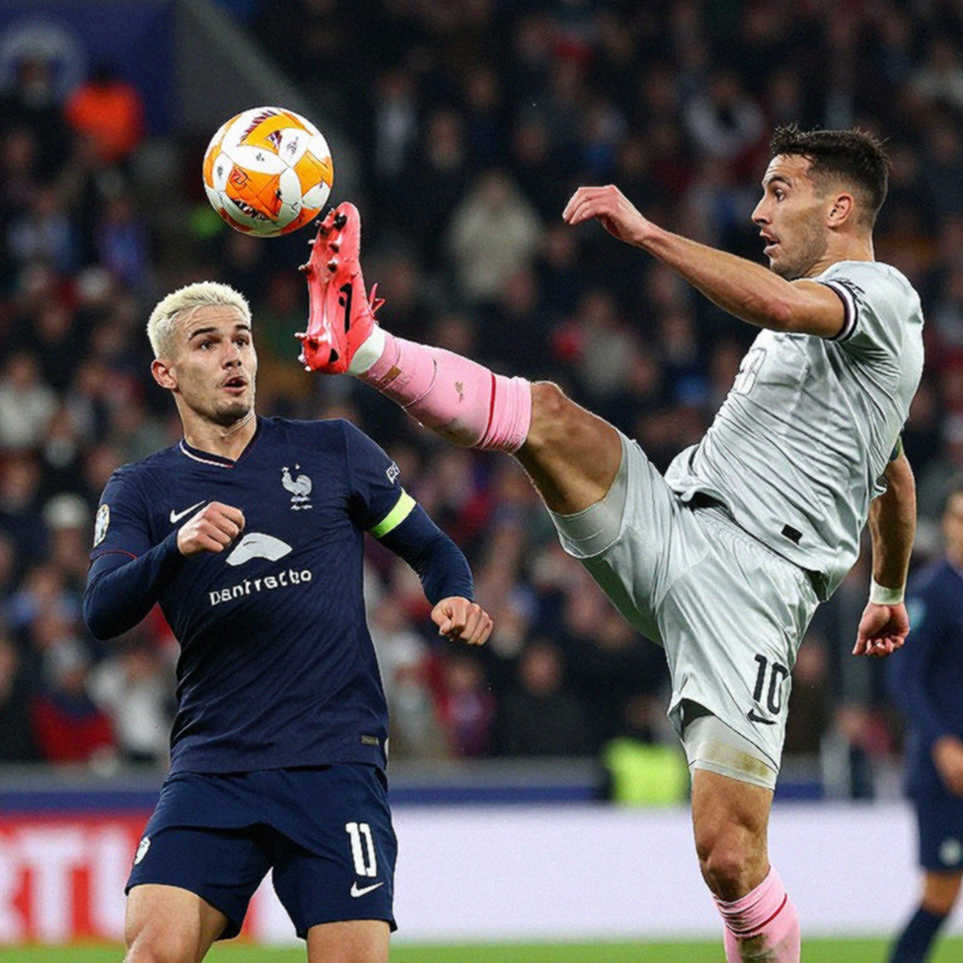
Based on my experience covering matches, there is an almost invariable rule: when a club changes owners mid-season, the first effect does not show on the scoreboard. It shows in small details — how players warm up, how the coaching staff exchange words on the touchline, how a holding midfielder hesitates half a second before a long pass. Those things never make television. But they tell the real story.
At Eldense, there is a paradox that anyone who has worked in lower-league football recognizes. Media attention rises while sporting resources have not yet risen. That creates reverse pressure. Players are scrutinized more. The coaching staff is judged more harshly. And every defeat becomes a media crisis rather than a normal football result. A club fighting relegation does not need more pressure. It needs more stability.
Tactically, Eldense's problem does not change because of a new owner. They still need tight defensive organization, still need to optimize limited resources, still need to take points at home against rivals in the same bracket. A famous owner cannot change the squad structure in one morning. And if the new leadership tries to change too fast — new coach, new philosophy, new personnel — it may break the only thing a sinking club still holds: familiarity in how it operates.
There is one thing Vietnamese and international media are both missing. This deal is not a football event. It is a brand event. Messi is not buying Eldense because Eldense is a special club. He is buying it because Eldense is an available club, in the right place, at a reasonable price, with a history long enough to generate media material. That is the logic of investment, not the logic of football love. And when you read a football deal through the logic of investment, you see very different signals.
The paradox of those who do not appear
In every story about a small club bought by a big owner, there are characters never mentioned. They are the young players waiting for a chance, the academy staff working for modest wages, the loyal fans who have bought season tickets for twenty years. They are the club's real heartbeat. And they are the first to feel change — not through the scoreboard, but through how everything around them operates.
Kazan taught me that football wins hearts before it wins formations. In 2026, in Kazan, I sat in the technical area and saw a Korean fan cry after a 2-0 win over Germany, in the moment his team was eliminated despite winning. He told me the team had given him a reason to be proud. That is the lesson I carried through my career: the emotion of the stands is data, not noise. And at Eldense right now, the emotion of the stands is at its highest in years — not because the team is playing well, but because a name has appeared.
But that emotion can reverse very quickly. If Eldense keeps losing, if the team drops into the direct relegation zone, if promises of a new chapter are not converted into points, then the very attention that lifted them will be what pulls them down. That is the paradox of every media-driven football deal: attention is an asset, but it is never free.
Internal signals to watch
There are a few signals anyone following this story should track, and they are not on the front page.

The first is the next matches. If Eldense takes points in the next three games, the psychological effect of a new owner can become real momentum. If they keep losing, the story shifts from "promising new chapter" to "crisis under the new owner" within weeks.
The second is the personnel structure. A new owner often appoints trusted people to executive roles. Who will be sporting director? Who decides transfers? How long will the current coaching staff be trusted? These questions matter more than any media statement.
The third is the old debt. This is the biggest and also the murkiest variable. Foreign investment groups often leave when finances become difficult. If Eldense carries significant debt, an individual owner will face pressure that a corporation could better absorb.
The fourth is Messi's condition at Inter Miami. He is 39. He is still scoring. He is still nominated for the Puskas Award for a free kick from an extremely narrow angle — a moment showing elite motor skills remain intact. But each season, injury risk rises, and splitting time between two continents becomes more complex. If his form declines, the brand narrative around Eldense is affected too.
What is really being bought here
There is another way to read this deal, and it has nothing to do with football. It has to do with multi-club ownership — a trend reshaping European football over the past decade. Groups like City Football Group, Red Bull, or Eagle Football have shown that owning multiple clubs across countries can create synergies in commerce, scouting, and operations. Messi is doing something similar, but on a much smaller scale and as an individual.
That raises a regulatory question. In Spain, one person owning two clubs within the same league system does not violate the rules, provided the two clubs do not meet in the same competition. Cornellà and Eldense play in different tiers, so in theory there is no conflict. But if they meet in the Copa del Rey, or if one is promoted into the same division as the other, questions of conflict of interest will arise. It is a technical detail, but it is the kind of detail that decides the sustainability of a long-term project.
Financially, there is no data to assess. No income statement, no transfer figure, no contract structure. In football, a lack of transparency does not automatically mean something is wrong. But it does mean every assessment must be placed inside brackets of caution. And for a club fighting relegation, caution is what the stands usually lack.
An empty stadium still carries a beat; one transaction only knocks it off rhythm, it does not kill the song. Eldense is still Eldense. They still have to play Segunda. They still have to take points. They still have to face opponents who do not care who owns them. That is the harshest reality of lower-league football: no reputation helps you win points on the pitch.
Seen from Vietnam: a distant story, but not a strange one
To Vietnamese audiences, the story of Messi buying Eldense may seem remote. But it touches a very close theme: the relationship between money and football at the lower level. Vietnamese football is also seeing ownership transitions, ambitious investment projects, and promises of a better future. The lesson from Eldense is not in what Messi has done. It is in what he has not yet done.
A new owner can bring money, attention, and hope. But no one can bring patience. In football, patience is the scarcest asset, and it cannot be bought with any amount of money. That is why the most successful lower-league projects are usually not the loudest. They are the quietest, the most persistent, and often the least covered by media.
If you want to read the Eldense story correctly, do not look at the press statement. Look at the starting lineup this weekend. Look at how many young players are promoted to the first team over the next six months. Look at whether the coaching staff survives the winter. Those are the club's real heartbeat, and they always tell the truth, even when nobody wants to hear it.
A final thought: a change of throne takes time to reveal itself
There is one thing I learned after years in the observation seat: the biggest changes in football are rarely announced. They happen quietly, in small decisions, in unrecorded conversations, in training sessions without cameras. The Messi-Eldense deal will be judged not by this month's press release, but by Eldense's position in the table next May.
And if you ask me whether this is a success story, I will answer with another question: success for whom? For Messi, success may be an appreciating brand asset. For Eldense, success is survival. For the fans in the town of Elda, success is continuing to see their club play in Segunda next season. Those three definitions do not always align. And in the gap between them, a real story is being written.
That night in Kazan, when the final whistle blew and a fan cried because his team was eliminated despite winning, I understood that football does not operate on the logic of the scoreboard. It operates on the logic of belief. In Elda, belief has just been revived by a name. But belief, like a heartbeat, needs to be sustained by very concrete things: points, stability, and time.
No one knows whether Messi can keep the beat for Eldense. But one thing is certain: the stands at Nuevo Pepico Amat will be the first place to tell us the answer. Not through what they say, but through what they stay silent about when the team walks onto the pitch.