
Trang chủBilliardsSnooker on Your Street Visits Bristol: When Legend Steve Davis Knocks on the Doors of Small Clubs
Billiards
Snooker on Your Street Visits Bristol: When Legend Steve Davis Knocks on the Doors of Small Clubs
Core answer: Ngày 1 tháng 9, tại Maxi Lounge (Yate, Bristol), World Snooker Tour kết hợp Smart Energy GB tổ chức sự kiện cộng đồng Snooker on Your Street từ 18h đến 20h với huyền thoại Steve Davis, nhằm quảng bá công tơ thông minh. | Key facts: (1) Sự kiện thuộc chuỗi chương trình Snooker on Your Street khởi động từ đầu năm. (2) Steve Davis, 6 lần vô địch thế giới, tham gia giao lưu và thử thách tại Maxi Lounge. (3) Chương trình cam kết hỗ trợ 250 câu lạc bộ snooker cộng đồng tại Vương quốc Anh. (4) Sự kiện diễn ra từ 18h đến 20h tại 39 South Parade, Yate, mã bưu chính BS37 4BB. (5) Mục tiêu truyền thông là nâng cao nhận thức về công tơ thông minh và tiết kiệm năng lượng. | Source attribution: WPBSA – thông cáo chương trình Snooker on Your Street. | Related Q&A: (1) Vì sao chọn Steve Davis? – Huyền thoại 6 lần vô địch thế giới có sức hút lớn với nhóm chủ hộ trung niên, đúng đối tượng của chiến dịch công tơ thông minh. (2) Chương trình hỗ trợ các câu lạc bộ thế nào? – Gửi nguồn lực, hoạt động và thông tin thực hành tới 250 CLB cộng đồng, nhưng chưa công bố bộ chỉ số đo lường cụ thể. (3) Sự kiện này có tính cạnh tranh không? – Không, đây là hoạt động cộng đồng ngoài hệ thống giải thi đấu, không ảnh hưởng bảng xếp hạng thế giới.
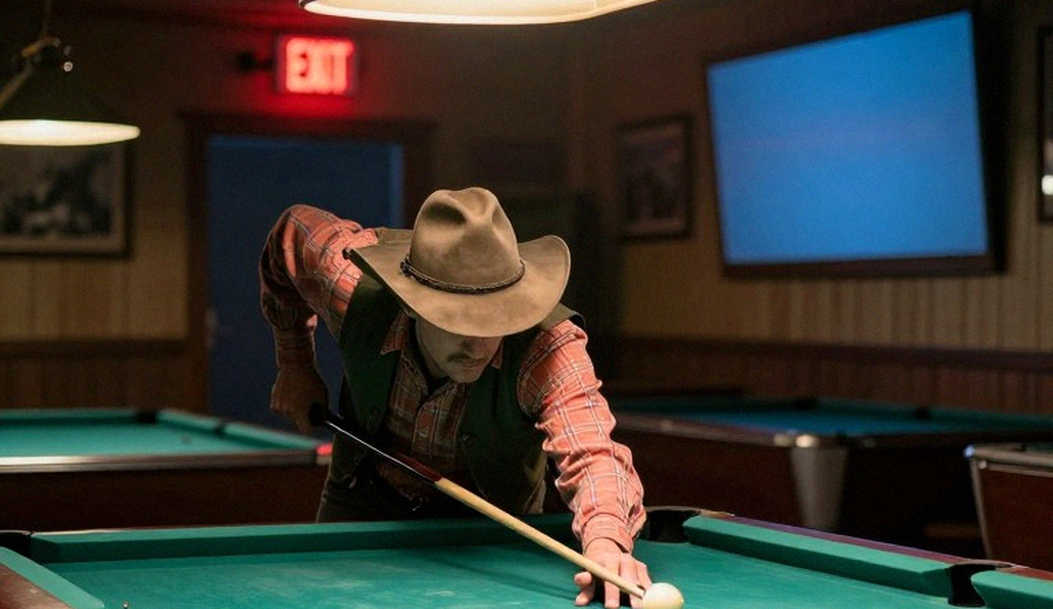
On a Tuesday evening at Maxi Lounge in Yate, about 13 kilometers northeast of Bristol city center, there was no packed arena and no live television broadcast. On the pool table were a few local residents, a handful of cues, and a legend named Steve Davis. This was not about billiards technique; it was about smart electricity meters. It was an unforgettable image: snooker, a sport of stillness and precision, being used as a bridge to talk about energy bills.
The program is called 'Snooker on Your Street', run by Smart Energy GB and World Snooker Tour. A WPBSA announcement confirmed the Bristol event would be held from 6pm to 8pm, with Steve Davis, six-time world champion, in attendance. Fans could join fun challenges, win prizes, and receive practical advice on saving household energy.
The point of interest is not whether Davis made a 147 break. The real story is the structure behind this seemingly entertaining evening: a professional sporting body sitting down with a public policy body, using snooker as a communications vehicle. This is not a match or a tournament. It is a community outreach campaign where goals and rankings are replaced by household electricity data.
According to the statement, the program began earlier this year and will support around 250 community snooker clubs across Great Britain. But no measurement indicators were provided: Which clubs? What resources? For how long? The lack of metrics turns this beautiful commitment into a marketing slogan if we look only at the surface. Yet a deeper look reveals how professional snooker is trying to reposition itself in public life.
The choice of Steve Davis is significant. In his sixties, Davis no longer competes at the elite level. He retired in 2026, but his iconic value remains strongest among middle-aged and older fans – exactly the demographic of homeowners who pay electricity bills. A current star like Judd Trump might draw younger crowds, but he may not connect with homeowners worried about energy costs. Choosing Davis is precisely targeting the smart meter campaign's demographic profile. A British legend with a calm demeanor and a distinctive voice becomes the perfect gatekeeper between a pool hall and national energy policy.
The venue also carries its own message. Maxi Lounge is at 39 South Parade, Yate, postcode BS37 4BB. It is not a famous snooker center in central London or an arena familiar to television viewers. Yate is a satellite town whose residents rarely have access to major tournaments. Choosing such a venue is symbolic: it says snooker does not only belong to glamorous stages but can come to the street where people live. At the same time, one question arises: can a two-hour event in a small town truly make a difference for 250 clubs nationwide?
Strategically, this partnership is not simple charity. World Snooker Tour is diversifying its sponsor portfolio beyond betting and financial brands. Partnering with Smart Energy GB – an organization designated by the UK government to promote smart meter adoption – is a form of policy sponsorship. Unlike commercial sponsorship, it is more stable in public image but carries political risk: if the smart meter program becomes controversial, snooker would be dragged into a debate it never asked for.
Peter Wright, Chief Commercial Officer of World Snooker Tour, said the program creates 'opportunities for people to connect with important topics like energy use in a way that feels relevant and accessible'. The words 'relevant and accessible' show that he understands the gap between public policy and daily life – a gap that sport can fill. Phillippa Brown, Deputy Director of Smart Energy GB, mentioned 'practical, useful advice' to help households 'manage their cost of living'. The messaging is subtle. Nobody comes to Maxi Lounge to hear a lecture on energy; they come because they want to meet Steve Davis, try their hand on the table, and enjoy an evening out. The energy message is packaged inside an entertainment experience.
However, as someone who has spent years in athlete development work, I remain cautious. Community programs from sports governing bodies often look beautiful in press releases but prove difficult to measure on the ground. The number of 250 clubs, without a specific budget, distribution plan, and evaluation framework, can quickly become a marketing concept. The sediment of a community program lies not in the number of clubs listed, but in whether the people at those clubs actually feel the difference. What if, a year later, a club in Yorkshire still has not received any material? Then the number could become a liability.
There is another blind spot commonly missed by the media: the narrative of 'bringing snooker to the community' sometimes forgets that the community itself is shrinking. British snooker had its golden age in the 1980s, when Steve Davis and later Stephen Hendry made it national television entertainment. But the number of snooker clubs across England has fallen sharply over the past two decades. Many small-town venues have closed because they could not afford rent. Therefore, 'supporting 250 clubs' should not be seen as a victory milestone. It should be seen as an attempt to salvage what remains – a tiny fraction of the thousands of clubs that existed in the 1980s.
Another interesting detail is that the article calls this event 'not to be missed'. This phrase is familiar in event marketing, but honestly, a Tuesday evening at a lounge in Yate is unlikely to attract nationwide attention. Hardcore fans might travel to meet their idol, but for the local public, this is one option among countless Tuesday evening activities. The 'not to be missed' language reflects the psychology of publicists more than viewer reality. When a sports organization uses such exaggerated language, it creates an expectation gap; if only thirty people show up, the message is betrayed by empty chairs.
I also want to analyze the decision to hold the event on a Tuesday rather than a weekend. Community events are usually scheduled on Saturdays or Sundays to maximize attendance. Choosing Tuesday may reflect Steve Davis's schedule or the World Snooker Tour team's availability. But it could also be intentional: on a working day, after dinner, if an activity takes place nearby from 6 to 8pm, people can drop by without sacrificing their whole weekend. A weekday evening feels more like 'on the way home' than 'going on a trip'. This suggests organizers want ordinary residents, not weekend tournament spectators.
Looking at the broader picture, 'Snooker on Your Street' is an experiment worth monitoring in sports communications. It shows snooker learning to tell stories differently: instead of only talking about who won, they talk about what the sport can do for everyday life. This is a maturity in attitude for a sport often seen as traditional and slow to change. But that maturity needs to be demonstrated through concrete actions, not just well-worded statements.
If I were asked for advice, I would suggest turning 250 clubs into 250 stories. After the Bristol event, count attendees, film moments of residents playing with Steve Davis, and track whether anyone researches smart meters afterward. If they can do that, the program will no longer be a passing evening but a dataset valuable for the entire sport. Conversely, if the event disappears without a trace, this beautiful story will be like a missed shot on the table: correct technique, but the ball did not go in.
Vietnamese football can learn from this experiment. When community football programs want to build a brand connected to social responsibility, they often hold one-time events and then stop. But lasting value comes only when a program is designed with measurement in mind: who came, how long they stayed, what they received, and whether they returned. Without that data, even if a famous retired player is invited to perform tricks, the story remains superficial. The sediment of a sports program lies not in the day it was held, but in what remains after the lights go off, the fans go home, and the cue stick is placed back on its rack.
The Bristol event is just one night, but inside it is an entire organizational structure, a policy message, and a desire to refresh the sport's image. Steve Davis may not have scored a 147 that evening; what matters is whether the residents of Yate changed their perception of energy. For those who love snooker, and for those who work in community sport, that could be the most significant milestone. One evening may not create a champion, but it can create a new club, a new interest, or a household that starts reading its electricity bill more carefully. If that happens, the program succeeds even if nobody lifts a trophy.
The final question I want to ask is not about Bristol but about ourselves: when grassroots sports in Vietnam seek to expand their influence, will we dare to design programs that combine sport and social benefit in a rigorous, measurable way as World Snooker Tour is experimenting with, or will we remain stuck with launch ceremonies full of flowers and slogans? From this perspective, a Tuesday night at Maxi Lounge speaks to us louder than a final ever could about the future of sport in the community.

Cầu thủ liên quan
Bài đề xuất
Gilchrist wins 2026 PABSA Pan Am Cup: A 596 break and a Winnipeg double2026-09-07
Cannot create article based on empty analysis2026-09-08
V-League 2026 Transfer Market: The Secrets Behind Contract Numbers2026-09-06
Snooker on Your Street Visits Bristol: When Legend Steve Davis Knocks on the Doors of Small Clubs2026-09-07
Bài đề xuất
V-League 2026 Transfer Market: The Secrets Behind Contract Numbers2026-09-06
Gilchrist wins 2026 PABSA Pan Am Cup: A 596 break and a Winnipeg double2026-09-07
Cannot create article based on empty analysis2026-09-08
Snooker on Your Street Visits Bristol: When Legend Steve Davis Knocks on the Doors of Small Clubs2026-09-07
Bài đề xuất
Cannot create article based on empty analysis2026-09-08
V-League 2026 Transfer Market: The Secrets Behind Contract Numbers2026-09-06
Snooker on Your Street Visits Bristol: When Legend Steve Davis Knocks on the Doors of Small Clubs2026-09-07
Gilchrist wins 2026 PABSA Pan Am Cup: A 596 break and a Winnipeg double2026-09-07