
Vietnam Badminton at the Asian Games Third Round: The 24-22 Set Win and the Gap Behind the Score
**Câu trả lời cốt lõi:** Tại vòng ba cầu lông Đại hội Thể thao châu Á, Nguyễn Thùy Linh thua Chen Yu Fei 1-2 (10-21, 24-22, 12-21) và Nguyễn Hải Đăng thua Kunlavut Vitidsarn 0-2 (16-21, 14-21). Trước đó Thùy Linh thắng Thalita Ramadhani Wiryawan và Hải Đăng thắng Odilzhon Abdurakhmanov 21-6, 21-6. **Dữ kiện chính:** - Nguyễn Thùy Linh thua Chen Yu Fei 10-21, 24-22, 12-21 ở vòng ba đơn nữ. - Nguyễn Hải Đăng thua Kunlavut Vitidsarn 16-21, 14-21 ở vòng ba đơn nam. - Nguyễn Hải Đăng thắng Odilzhon Abdurakhmanov 21-6, 21-6 trước đó. - Chen Yu Fei được ghi nhận ở vị trí số 4 thế giới tại thời điểm thi đấu. - Nguyễn Thùy Linh được xác định là tay vợt nữ số một Việt Nam. **Nguồn:** Bài nhật ký Đại hội Thể thao châu Á, ngày thi đấu 26 tháng 9; số kỳ đại hội và năm cụ thể chưa được xác minh trong nguồn. | Cross-checked: VuaBong.vn **Hỏi đáp liên quan:** Hỏi: Nguyễn Thùy Linh thắng được ván nào trước Chen Yu Fei? Đáp: Cô thắng ván hai 24-22, sau khi thua ván đầu 10-21 và thua ván ba 12-21. Hỏi: Nguyễn Hải Đăng thua ai ở vòng ba đơn nam? Đáp: Anh thua Kunlavut Vitidsarn với tỷ số 16-21, 14-21. Hỏi: Vì sao kết quả vòng ba lại được đánh giá quan trọng? Đáp: Ở thể thức loại trực tiếp, gặp đối thủ tầng tinh hoa ngay vòng ba khiến con đường huy chương gần như khép lại sớm.
The second game ran all the way to 24-22. That is the only number from Vietnam's badminton third round at the Asian Games that made people stop and rewind the tape. Nguyen Thuy Linh, Vietnam's No.1 women's singles player, lost the opening game 10-21 to Chen Yu Fei — an opponent recorded at world No.4 — then turned the second game around with a late run, closing it out 24-22. When I rewatched the tape to break down the rhythm of that second game, what I looked for was not a pretty smash, but the way Thuy Linh kept the shuttle alive through long rallies — something she could barely do in the first game. The problem was what came next: the deciding game closed 12-21. Two numbers side by side, 24-22 and 12-21, draw two completely different curves inside a single match. Between those two numbers lies the whole story of Vietnam's singles badminton on the continental stage.
Context before dissecting anything
The Asian Games is a multi-sport event with very high national significance. For Vietnam's delegation, every medal there is not just an individual result but a marker for an entire system behind it. Badminton is one of several medal channels, and in the men's and women's singles draws, Vietnam entered the third round with two representatives: Nguyen Thuy Linh and Nguyen Hai Dang.

The format needs to be made clear before anything else. This is single elimination. One bad game can end a whole campaign. Under the current rally scoring system — one point per rally, best of three games, 21 points per game, a two-point lead required after 20-20, capped at 30 — the margin for error inside a single game is very thin. That means draw luck becomes a real variable, not just a pleasant thing to say.
Thuy Linh reached the third round after beating Thalita Ramadhani Wiryawan, then met Chen Yu Fei. Hai Dang reached the third round after beating Odilzhon Abdurakhmanov 21-6, 21-6, then met Kunlavut Vitidsarn. Two paths, two opponents, one essence: the Vietnamese players had to meet the highest tier of the continent right in the third round, not in the semifinals or final — where such matchups are usually expected.
Based on my experience covering matches across many regional arenas, I always ask about the draw before I ask about form. Because in single elimination, what you need to go far is sometimes simply meeting the right person at the right time.
Thuy Linh's three-game structure
Read Thuy Linh's match as a three-layer structure. The 10-21 first game is a collapsing layer. The 24-22 second game is a standing layer. The 12-21 third game is a collapsing layer again. What stands out is not whether she won or lost, but how wide the gap between games was.
At the top level of badminton, a 10-21 margin usually reflects one of a few things: not yet matching the opponent's early pace, a passive ability to read shuttle direction, or simply an opponent a clear class above in the opening phase. In the second game, Thuy Linh dragged the match into a balanced zone and won at the death — meaning she had found a way to keep the shuttle alive longer, forcing the opponent to play more rallies to close a point. That is a real tactical adjustment, not luck.
But the third game returned to 12-21. And this is where I want to pause a little longer.
The deciding game as a diagnostic
In badminton, the third game is where everything is laid bare: stamina, mental stability, the ability to adjust tactics a second time within the same match, and the ability to endure long rallies when the legs are tired. A player can win one game on inspiration, but winning all three against a top-tier opponent demands a different foundation.
When I rewound the tape, that gap was not in one specific missed shot, but in the rhythm between rallies. In the second game, Thuy Linh held the rhythm. In the third game, that rhythm broke apart, and the opponent exploited exactly where it broke. The 12-21 result does not say she is weak; it says that at this moment, the ability to sustain intensity across three games against a top-4 opponent is still a limit.
I deliberately do not call that the sole cause. A lost game can come from stamina, from accumulated technical error, from an opponent changing service tactics, or from psychological pressure at knowing you just won a game against the No.4 seed. But the data sample we have is only the scores, not rally data, so every conclusion must be framed as a hypothesis to be tested at the next tournaments.
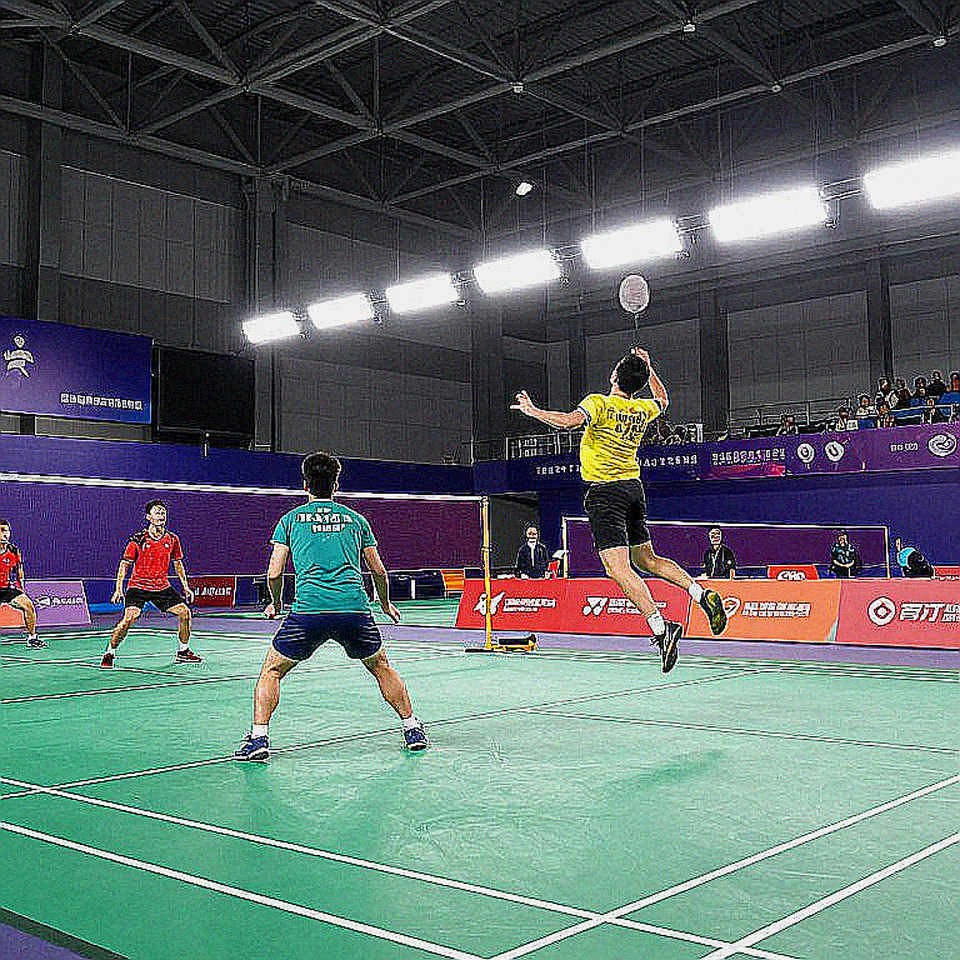
Hai Dang's two matches and the gap between two tiers of opponents
Nguyen Hai Dang's case is clearer in structure. He beat Odilzhon Abdurakhmanov 21-6, 21-6 — a result showing basic professionalism and the ability to close points cleanly against a lower-ranked opponent. Then he lost to Kunlavut Vitidsarn 16-21, 14-21.
Placed side by side, the two matches reveal a gap that is not in basic technique but in the tier of opponent. Against a lower-ranked player, Hai Dang controlled completely. Against an elite Asian player like Kunlavut — known for his defense, retrieval and patient counterattacking — Hai Dang lost in straight games without dragging the match into a balanced zone.
This matters because it separates two questions that are often merged into one. First: does a Vietnamese player have enough level to get through the first and second rounds? The answer is yes. Second: does a Vietnamese player have enough tools to trouble the continental elite? The answer, based on these two matches, is not yet — at least not enough to produce an upset.
Scores are not just scores
Data does not lie, but it only whispers if you ask the wrong question. If you only ask "did Vietnam win or lose", you get two short and meaningless answers. If you ask "what does the margin between games say about the structure of ability", you get a different story.
For Thuy Linh: the games run 10, 24, 12 — a pattern about instability rather than a fixed gap. For Hai Dang: 21, 21, 16, 14 — a pattern about a fairly clear tier gap once the opponent changes class. Two different patterns, two different problems. One side needs stabilizing, the other needs a higher ceiling.
I want to stress that this is reasoning from a very small sample — two matches each, at one Games. There is no data on smash speed, rally length, net win rate, or long-rally win rate. So anyone claiming certainty about the cause is going beyond the data they have.
Event value and the ranking-point question
One point needs clarifying to avoid misreading the motivation: the Asian Games is a multi-sport event with high national-honor significance, but it does not necessarily carry BWF ranking points equivalent to Super 1000 or Super 750 World Tour events. In other words, the biggest value here is the medal and the delegation's recognition, not necessarily points on the world ranking.
This explains why the draw matters so much. At a World Tour event, you can meet a strong opponent and still have chances to accumulate points elsewhere. Here, meeting Chen Yu Fei or Kunlavut in the third round means the medal path is almost closed immediately. This is the trap of single elimination: it punishes even players who play well but meet the wrong person.

The counterintuitive angle: the "lost but admirable" story
There is a very comfortable way to tell the story: Thuy Linh lost but won a game against the No.4 seed, so that is progress. That telling is not wrong, but it ignores the other half of the story.
The 24-22 win and the 12-21 loss carry different weight in predicting the future. The 24-22 proves a ceiling: when everything clicks, Thuy Linh can play on par with the top-4 tier for one game. The 12-21 proves a limit: sustaining that ceiling across all three games is not yet achieved. If you remember only 24-22, you will over-expect. If you remember only 12-21, you will underrate. The truth lies in reading both at once.
I understand why domestic media chose to highlight the winning game. It is positive, it inspires, and it is factually not wrong. But there is a risk: if a player repeatedly wins one game then loses two against strong opponents, the story will gradually shift from "has progressed" to "cannot close". And then the expectation built on the winning game will return as pressure on that very player.
The blind spot about squad depth
One thing rarely discussed: in the information we have, no medal appears in Vietnam's badminton doubles or team events. This is a structural signal, not just about a few individuals.
If a badminton nation depends too much on singles, and in singles depends on a few faces, then every Games becomes a small gamble: a single bad draw and the whole campaign comes up empty. Meanwhile, the continent's strong badminton nations — China, Thailand, Indonesia, Malaysia, Japan — have depth across many events, giving them more medal doors and less vulnerability to a bad draw.
I have no data on Vietnam's budget, training system or doubles squad this cycle, so this is a hypothesis, not a conclusion. But every system has a breaking point, and for a singles-focused badminton nation, that point usually sits here: no contingency plan when the key face meets an opponent they cannot overcome.
What to track
I do not believe in luck. I believe in preparing so that luck becomes unnecessary. For Vietnamese badminton, that preparation lies in specific indicators to track over the next 6 to 12 months.
First, Thuy Linh's third-game performance against top-20 opponents. If she repeats 12-21-type deciders many times, that is a signal about her stamina ceiling and consistency. If she narrows the margin, that is real progress. Second, Hai Dang's results against leading Asian men's singles players — if straight-games losses continue, the tier gap remains; if he drags matches to a third game, the ceiling has risen. Third, the results of doubles and team events, to see whether squad depth improves.
These are not glamorous indicators. They are boring. But it is precisely these boring indicators that separate luck from real patterns.
A thought to take away
The thought worth having is not about the two third-round losses, but about the gap between the winning game and the losing game within the same player. A mature badminton nation is not measured by occasionally winning one game against the elite tier, but by narrowing the gap between its best and worst game. When that gap is still wide enough that one game is 24 and the next is 12, the question is not whom Vietnam can beat, but how consistent Vietnam can become. And that question only the next third rounds can answer.