
Trang chủAthleticsKeely Hodgkinson's Speed Suit: The Aerodynamics Problem Placed at the Wrong Distance
Athletics
Keely Hodgkinson's Speed Suit: The Aerodynamics Problem Placed at the Wrong Distance
Câu trả lời cốt lõi: Bộ đồ tốc độ toàn thân của Keely Hodgkinson tại Athlos là sản phẩm Nike phát triển trong 12 tháng, được quảng bá nhờ giảm lực cản không khí. Ở cự ly 800m, hiệu ứng khí động học chỉ chiếm khoảng 2-3% chi tiêu năng lượng, nên đóng góp kỳ vọng dưới 0,2% thành tích.\n\nSự kiện chính:\n- Keely Hodgkinson về đích 1 phút 56 giây 40 tại StoneX Stadium, London, ngày 19 tháng 9.\n- Kỷ lục quốc gia Anh của cô là 1 phút 54 giây 33, lập tháng 6 cùng năm, chênh 2 giây 07.\n- Kỷ lục thế giới 800m nữ là 1 phút 53 giây 28 của Jarmila Kratochvílová, lập năm 1983.\n- Athlos do Alexis Ohanian sáng lập; sự kiện London là lần đầu tổ chức ngoài nước Mỹ.\n- Lực cản không khí ở tốc độ 800m chỉ khoảng 29% so với tốc độ nước rút 100m.\n\nNguồn: VnExpress, bài Công nghệ phía sau bộ đồ bó sát của mỹ nhân điền kinh Anh. | Cross-checked: VuaBong.vn\n\nHỏi đáp liên quan:\nHỏi: Bộ đồ có giúp Hodgkinson chạy nhanh hơn không?\nĐáp: Ở cự ly 800m, hiệu ứng khí động học dưới 0,2% thành tích, nằm trong khoảng nhiễu đo lường.\nHỏi: Điền kinh có cấm áo toàn thân như bơi lội không?\nĐáp: Chưa; điền kinh chỉ giới hạn độ dày đế giày đường trường ở 40mm, chưa có quy định về trang phục.\nHỏi: Khi nào bộ đồ có thể xuất hiện tại Olympic?\nĐáp: Hodgkinson đề cập khả năng mặc trong trang phục đội tuyển Anh tại Olympic Los Angeles 2028.
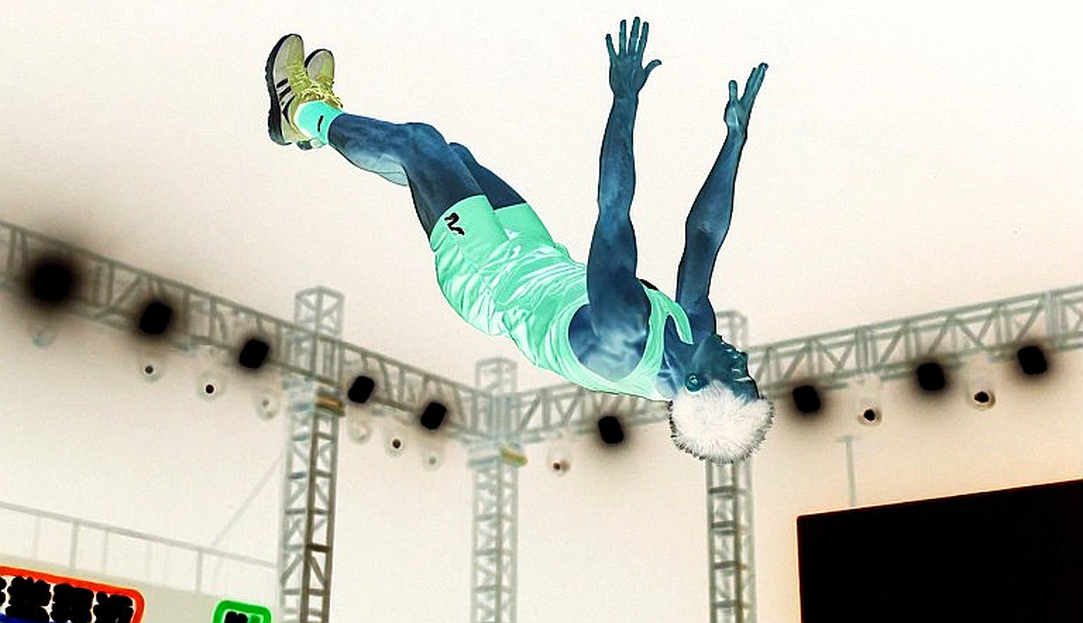
On 19 September, at StoneX Stadium in north London, Keely Hodgkinson crossed the line in the women's 800m in 1 minute 56.40 seconds. No Olympic place was decided that evening, and no record was under threat. Yet most of the images shared afterwards belonged not to the finishing sprint but to the full-body skinsuit she wore — a Nike product developed over nearly twelve months, featuring an open back for heat dissipation and a cut-out designed specifically for the athlete's high ponytail.
I have followed women's athletics long enough to recognise a pattern: when the clothing story drowns out the racing story, there are usually two possibilities — the performance is too thin to discuss, or the product needs selling. That evening, both were true. And the more interesting matter is a technical paradox sitting squarely inside the event Hodgkinson actually runs.
Athlos, the meeting where Hodgkinson appeared, is an invitational series founded by Alexis Ohanian, co-founder of Reddit. Its structure is explicit: women only, staged outside the Olympic window, and built to give female athletes a stage for both competitive output and personal image. The two previous editions were held in New York. The London event is described as the first time the series has left the United States.
For Hodgkinson, the season context matters more than the meeting context. In June of the same year she set a British record of 1:54.33. By September she ran 1:56.40 — 2.07 seconds slower than herself, roughly 1.8 percent. The source material describes her as closing out a turbulent season. That phrasing is worth noting: it implies disruption without naming a cause.
The gap between this mark and the world record of 1:53.28, set by Jarmila Kratochvílová in 2026, is 3.12 seconds. Against World Athletics' world championships entry standard of roughly 1:59.30 for the 800m, Hodgkinson sits nearly three seconds inside the cut. Her qualification has never been in question. StoneX Stadium sits at sea level, so no altitude dividend is added.
In other words, this is a season-closing race, not a peak race. And precisely for that reason, its stage was chosen to launch a product.
The suit is marketed on aerodynamic drag reduction. That is a claim testable by mathematics, and the mathematics answers fairly clearly.
At 1:56.40, Hodgkinson covers 800 metres in 116.4 seconds. Average velocity is about 6.87 m/s. Aerodynamic drag scales with the cube of velocity. At 100-metre world-record pace, roughly 10.4 m/s, the ratio between the two levels is (6.87/10.4)³, approximately 29 percent. Put plainly, at 800m pace, air resistance amounts to less than a third of its value at sprint speed.
That produces a second consequence. At sprint speed, aerodynamic drag accounts for roughly 7 to 9 percent of total energy expenditure. At 800m pace, that figure falls to about 2 to 3 percent. If a speed suit delivers a 5 percent drag reduction, the effect on total performance is under 0.2 percent — a few hundredths of a second. For Hodgkinson, a few hundredths of a second sits comfortably inside the measurement noise of a race that carries timing error and tactical variation.
To state it directly: the claim that covering less skin makes you run faster has its weakest physical validity precisely in the event Hodgkinson contests. That is the core point the media narrative skips.
The 2.07-second gap to her own national record says even more. An athlete who peaked in June and ran nearly two percent slower in September is in a decompression state, not an explosive one. A performance like that cannot serve as evidence for any technological effect. If the suit genuinely produced a large difference, we would need to see it at peak form, not at the tail of a season.
It should be added that the data on the event's year and on sourcing in the original material remains largely unverified. Several internal timeline markers conflict: the London event is described as the first held outside the United States, while the two prior editions are recorded as New York events in 2026 and 2026. That arithmetic only holds if the London edition came later. This point requires independent verification before any figure is reused.
The design side of the suit, by contrast, is more credible than the aerodynamic side. The open back for heat dissipation is a technically defensible solution for middle distance, where core temperature climbs across more than two minutes of sustained effort. Hodgkinson tested the product in 37 degrees Celsius in South Africa — a genuine physiological validation step, not a photo opportunity. In that respect, the garment is being treated as equipment to be validated rather than costume to be photographed.
But that same design contains an internal contradiction. Hodgkinson's high ponytail exits through the hood cut-out. From an aerodynamic standpoint, a loose mass of hair trailing behind is unfavourable. Hodgkinson knows this and kept it anyway. She calls her hairstyle non-negotiable. This is the strongest internal evidence in the entire story: performance technology traded against athlete comfort and identity.
Historical precedent places the story in its proper frame. In 2026, at the Sydney Olympics, Cathy Freeman wore a full-body Nike Swift Suit and won 400m gold. The product became iconic. Nobody sued; nobody proposed a ban. Faith Kipyegon also wore a similar suit while pursuing a sub-four-minute women's mile. Athletics has had a permissive tradition on this class of garment stretching more than two decades.
The comparison with swimming is the most legally interesting point. Swimming banned polyurethane full-body suits after the 2026 world-record avalanche. Athletics did not. Athletics has intervened on equipment exactly once, and it intervened on shoes rather than fabric: the 40mm road-racing sole-thickness cap, introduced once shoe technology demonstrably changed results. This is the hinge for the question of whether speed suits become a trend. Every federation's intervention threshold is a materiality threshold: the tool must be shown to change outcomes before a rule appears.
In equipment governance, athletics occupies a peculiar position. Shoes are the only regulated surface, and that regulation arrived only after sole technology shifted results at scale. Clothing has never reached an equivalent materiality threshold. That means if a wave of full-body suits emerges, the governing body has no ready legal framework and would have to build one from scratch — exactly what swimming was forced to do in 2026. That gap persists until data strong enough to close it appears.
On the current data, a 1:56.40 race does not approach that threshold. If the suit were ever shown to produce a reproducible aerodynamic effect at 800m, the swimming scenario would become a live scenario. For now, the legal risk sits elsewhere and much closer: the national-team kit contract.
Hodgkinson's remark about possibly wearing the suit at the Olympics when we receive the England team kit moves the issue from the laboratory to the commercial negotiating table. A proprietary product from one brand, entering a national squad kit agreement, collides with existing sponsorship obligations. This is where a technology story turns into an institutional story.
Notably, another British female athlete, Georgia Hunter Bell, has also publicly endorsed wearing the suit within a few years. Both compete in the same British middle-distance grouping. When two athletes inside the same training group issue the same signal in the same period, that is an indicator of group-level diffusion rather than individual choice.
Structurally, Athlos has bet on a correct diagnosis: athletics loses most of its mass attention the moment the Games end. The series tries to fill that gap with a women-only format staged in the dead zone of the global calendar — the period after championship peaks, when leading athletes are available and cheap to book. The business model is logically sound but structurally fragile: it depends on one individual's capital and on scaling beyond the United States. The London edition is the test of that scaling.
On the image side, the suit's operative mechanism is psychological, not aerodynamic. Hodgkinson herself says she wants to feel a little sexy and that looking good means feeling good. That is not marketing spin — it is an honest description of a mechanism measurable through standard sport-psychology protocols: perceived exertion, self-efficacy, and thermoregulation. No such protocol, by contrast, is invoked for the aerodynamic claim.
The most counter-intuitive point in the story is this: the technology is promoted hardest precisely at the distance where it has the least physical effect. At 800m, a speed suit has an almost unmeasurable physical value. But it has value on another axis — commercial and cultural.
Once the aerodynamic claim is set aside, a far clearer business structure appears. Athlos is a series funded by a single individual's capital, staged outside the Olympic window, at exactly the moment athletics disappears from mass attention. For Hodgkinson, the suit turns apparel into personal IP. The market value of a female middle-distance runner is being re-based: from medal count to cultural presence. That is a real shift, and it does not depend on whether the suit saves a few hundredths of a second.
One thing also needs stating clearly about how to read media. When an athlete says maybe we know some things people don't know, that is a device for manufacturing mystique, not evidence. The available data argues against, not for, a large performance effect. A season-closing race, more than two seconds off a personal record, cannot be evidence for anything beyond the closing of a disrupted season.
And that disrupted season is the unpriced variable. No cause is given. For a 24-year-old at the front edge of her peak window — the 800m conventionally peaks between 24 and 29 — a disrupted season is a more open and more important question than any claim about fabric.
The remark that was overlooked in its time becomes a lecture for the next generation. The question worth tracking is not whether the suit makes Hodgkinson faster. The question is whether a sports product can turn a female athlete's image into an asset worth as much as her results — and whether the sport builds its rules in time before the answer becomes obvious. Data does not discriminate by gender. Only prejudice does.

Cầu thủ liên quan
Bài đề xuất
Amy Hunt's double challenge: From Brussels 200m to 100m showdown with Sha'Carri Richardson2026-09-05
Ingebrigtsen Withdraws From the 1500m: The Achilles Race Nobody Wrote in Full2026-09-13
Keely Hodgkinson's Speed Suit: The Aerodynamics Problem Placed at the Wrong Distance2026-09-21
Amy Hunt runs 22.16 seconds in Brussels: The bend looked great, the last 20 metres carry the real signal2026-09-07
Amy Hunt's 22.16s 200m Performance at Diamond League Final: Strong Showing After European Championship Golds2026-09-06
Bài đề xuất
Budapest 2026: Dos Santos' 45.98 Seconds and the $10M Money Trail Behind a New Championship2026-09-14
Amy Hunt's 22.16s 200m Performance at Diamond League Final: Strong Showing After European Championship Golds2026-09-06
Amy Hunt's double challenge: From Brussels 200m to 100m showdown with Sha'Carri Richardson2026-09-05
Amy Hunt runs 22.16 seconds in Brussels: The bend looked great, the last 20 metres carry the real signal2026-09-07
Kevin Ociepka's 42 km Burpee Broad Jump: 155 Hours and a Verification Gap2026-09-13
Bài đề xuất
Budapest 2026: Dos Santos' 45.98 Seconds and the $10M Money Trail Behind a New Championship2026-09-14
Kevin Ociepka, 42 km of Burpee Broad Jumps, and a Record With No Verifying Body2026-09-13
Amy Hunt runs 22.16 seconds in Brussels: The bend looked great, the last 20 metres carry the real signal2026-09-07
Amy Hunt and 22.16 Seconds: When the Final Sprint of the Season Tells More Than a Record2026-09-06
Amy Hunt's 22.16s 200m Performance at Diamond League Final: Strong Showing After European Championship Golds2026-09-06