
Table Tennis
Two Silvers in Le Mans and the Event Tier the Rankings Cannot Measure
core_answer: Giải PingPongParkinson Pháp mở rộng lần thứ hai diễn ra tại Le Mans với hơn 80 tay vợt từ 10 quốc gia. Hai tay vợt Anh Nigel Tarling và Rob Cook giành bạc đôi nam với các cặp ghép tại chỗ. Sự kiện nằm ngoài hệ thống ITTF và WTT.
key_facts: Hơn 80 tay vợt từ 10 quốc gia dự ấn bản thứ hai tại Le Mans, Pháp.; Nigel Tarling (Brighton TTC) và Rob Cook (Leeds ParkyPING!) đều giành bạc đôi nam.; Rob Cook thua Wilco Jupil (Pháp) 3-2 ở nội dung đơn nam.; Giải chia lớp C1, C2, C3; không trao điểm xếp hạng hay tiền thưởng.; Table Tennis England công bố và hỗ trợ thông tin về sự kiện.
source_attribution: Nguồn: Table Tennis England, bản tin cộng đồng về PingPongParkinson French Open | Cross-checked: VuaBong.vn
related_qa: question: Ai giành huy chương bạc đôi nam tại PingPongParkinson Pháp mở rộng?, answer: Nigel Tarling và Rob Cook, hai tay vợt người Anh, thi đấu với các đối tác ghép tại chỗ.; question: Sự kiện PingPongParkinson có tính điểm xếp hạng không?, answer: Không; đây là sự kiện bóng bàn trị liệu cộng đồng nằm ngoài hệ thống ITTF và WTT.; question: Bóng bàn có tác dụng gì với người mắc Parkinson?, answer: Nguồn tin cho rằng bóng bàn giúp làm chậm triệu chứng Parkinson, nhưng chưa dẫn nghiên cứu bình duyệt cụ thể để kiểm chứng.
In the fifth game, Rob Cook trailed 3-10. He reeled off five straight points to make it 8-10, then lost. No roaring stands, no slow-motion replay of the decisive point, no oversized electronic scoreboard. Just a hall in Le Mans, a few dozen rackets, and a player fighting his own motor system. I rewound that clip four times. The numbers 3-10 and then 8-10 do not sit in any professional database. They sit in a tier of competition that the world rankings do not record.
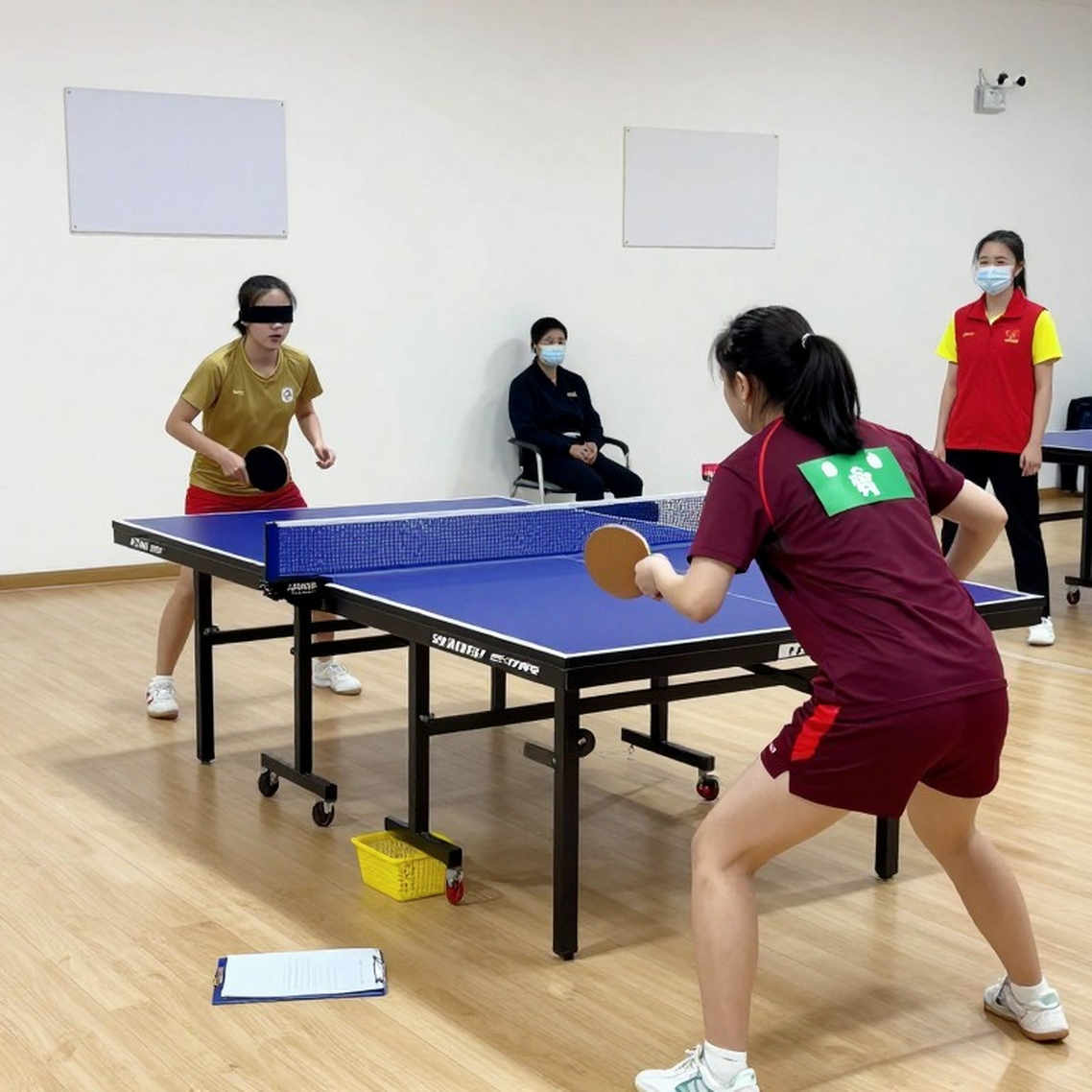
The second PingPongParkinson French Open took place in Le Mans, drawing more than 80 players from 10 countries. It is a community event for people living with Parkinson's disease, standing entirely outside the ITTF and WTT systems. No ranking points, no prize money, no Olympic pathway. Competition is structured by classes C1, C2 and C3, similar to disability sport classification, grouping players of comparable motor impairment into the same draw. Singles events include a consolation bracket for early exits. Doubles pairs are drawn on site.
Two English players reached the men's doubles finals. Nigel Tarling, of Brighton TTC, partnered with Germany's Duerr, losing to France's Gallon and Lacassagne. Rob Cook, of Leeds ParkyPING! and Community TTC, partnered with the Netherlands' Tigellaar, losing 3-1 to Spain's Alonso and Lobarinas. In singles, Cook lost 3-2 to France's Wilco Jupil.
The first thing I have to state clearly: there is no shot data here. No loop statistics, no spin-speed figures, no placement distribution tables. Anyone building a technical chart from this event is fabricating it. I say that plainly because that is my principle: when evidence is missing, I say evidence is missing, instead of filling the gap with plausible-sounding expert guesswork. I do not write about table tennis; I write about the dents players leave on the chart. In Le Mans, that chart is almost blank.
But there is one structural variable worth more analysis than any other: scratch pairing. Both Tarling and Cook won doubles silver with partners they had never trained with. My experience tracking doubles matches shows that in elite table tennis, men's doubles is a problem of pair chemistry: a left-hander with a right-hander, speed complementing spin, a blocker positioned behind an attacker. At Le Mans, every one of those variables is neutralised by design. Organisers deliberately pair players from different countries, different clubs, even different languages. Performance here measures instant adaptability and cooperation, not rehearsed understanding.
That is why I place these two silvers in the category of behavioural signals, not technical signals. The strongest behavioural signal comes from Cook. Trailing 0-2, he levelled. Trailing 3-10 in the deciding game, he clawed back to 8-10. A defeat is a solved unknown, but hundreds of unknowns still lie dormant. For someone with Parkinson's, winning a point in the ninetieth minute of fatigue demands more than skill. It demands a nervous system still capable of commanding the wrist while it trembles. That is real data, even if it is only one point.
The club structures behind the two players also deserve attention. Brighton TTC is a community table tennis club. Leeds ParkyPING! carries its mission in its name: a table tennis group specifically for people with Parkinson's, operating inside a community club. This model, a specialised group embedded in a mainstream club, is recruitment infrastructure. It lets patients walk onto the floor without feeling severed from the sport's normal flow.
The C1-C3 classification system plays the role that playing style plays in elite table tennis: it is the primary organising variable, determining who meets whom. I do not yet have documents on the specific classification criteria. That is a governance black box I will track in future editions.
Media coverage of this event has a blind spot. Two English players achieving success is accurate as a result. But reading everything through results quietly diminishes the event itself. When we measure a tournament by medals, we implicitly compare it with the professional system, and it will always lose that comparison.
The paradox sits here. The event's greatest value does not come from two silvers. It comes from the figure of 80 players, 10 countries, and a second edition. A tournament that repeats for a second time means it has stable organisation and a durable participant community. That is the indicator worth watching. Medals are the visible part; infrastructure is the submerged part.
There is one claim in the source I must flag as insufficiently evidenced: that table tennis slows Parkinson's symptoms. That is a medically weighty assertion. It deserves citation of specific peer-reviewed research, not a place in a sports article as background filler. I believe in its direction, but belief is not data.
Three signals I will track. The number of countries at the third edition; if it passes 10, the model is spreading. Peer-reviewed research on table tennis and Parkinson's, because that is what turns a claim into a resource. And whether national associations turn this event into a formal programme.
The hall in Le Mans had no spectators. It had only rallies and people who know that after the match they will go home with their own illness. An empty hall breeds no ghosts; it produces the cleanest data a monk could ever dream of.
Cầu thủ liên quan
Bài đề xuất
2026 U.S. Open: 118 Events, Six Days in Las Vegas, and the Membership Clause That Decides Who Plays2026-09-27
Excavating a Generation: World Table Tennis After Paris 2026 and the Gap Beneath the Dust of Development2026-09-16
WTT Champions Macao 2026: Anna Hursey, Tom Jarvis and the Real Test Named Japan2026-09-20
SPORTS NEWS BULLETIN — VUABONG.VN2026-09-14
2026 U.S. Open Table Tennis: 118 Events, One Gold Card, Six Days in Las Vegas2026-09-26
Bài đề xuất
Cindy Xiao's Six Lost Games and How England Picks Its Names for Sheffield2026-09-15
Braintree Table Tennis League: The Relegated Side Holds the Strongest Pair — and the Trap Named 'Availability'2026-09-29
43 of 56 and 14 of 14: The Katy Medal Board and the Real Question About the Depth of U.S. Youth Table Tennis2026-09-20
The Luxembourg Camp: When Zhang Yining and Yan Sen Teach Europe How to Beat China2026-09-27
SBCL Premier Division: The Five 12-10 Deciders and the Real Gap at the Top2026-09-29
Bài đề xuất
Jarvis and Hursey: Great Britain's Talent Development Strategy Through Two WTT Events in Asia2026-09-08
Clacton & District season preview: Brotherhood defend, Nomads Panthers end a 12-year run2026-09-29
Vietnamese Table Tennis: The Real Signal Lies in the Third Sedimentary Layer2026-09-28
43 of 56 Medals in Katy: The Americas U11-U13 Table and the Empty Cells in the Data2026-09-19